
Wreck of the Mithra
Description:
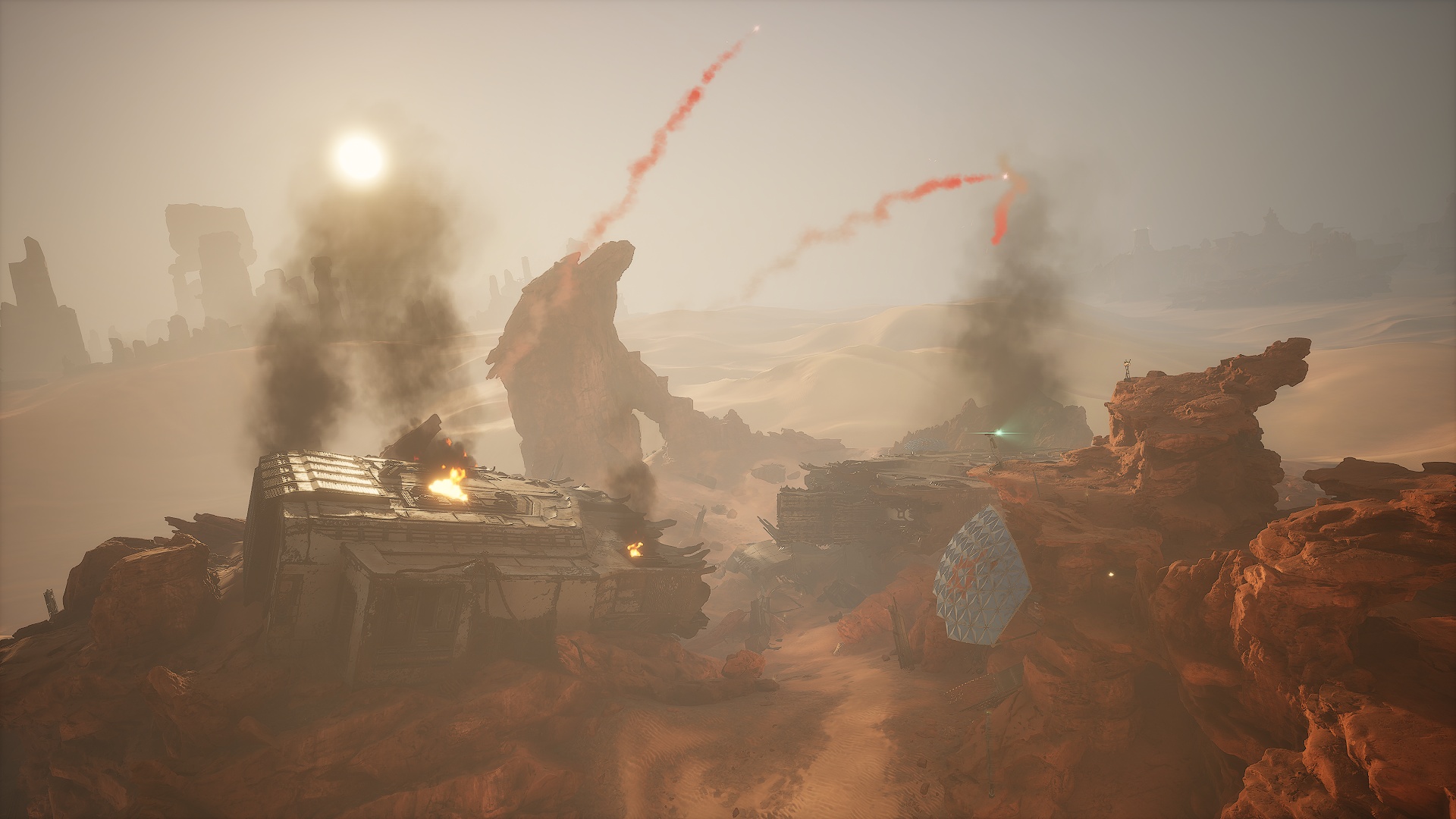
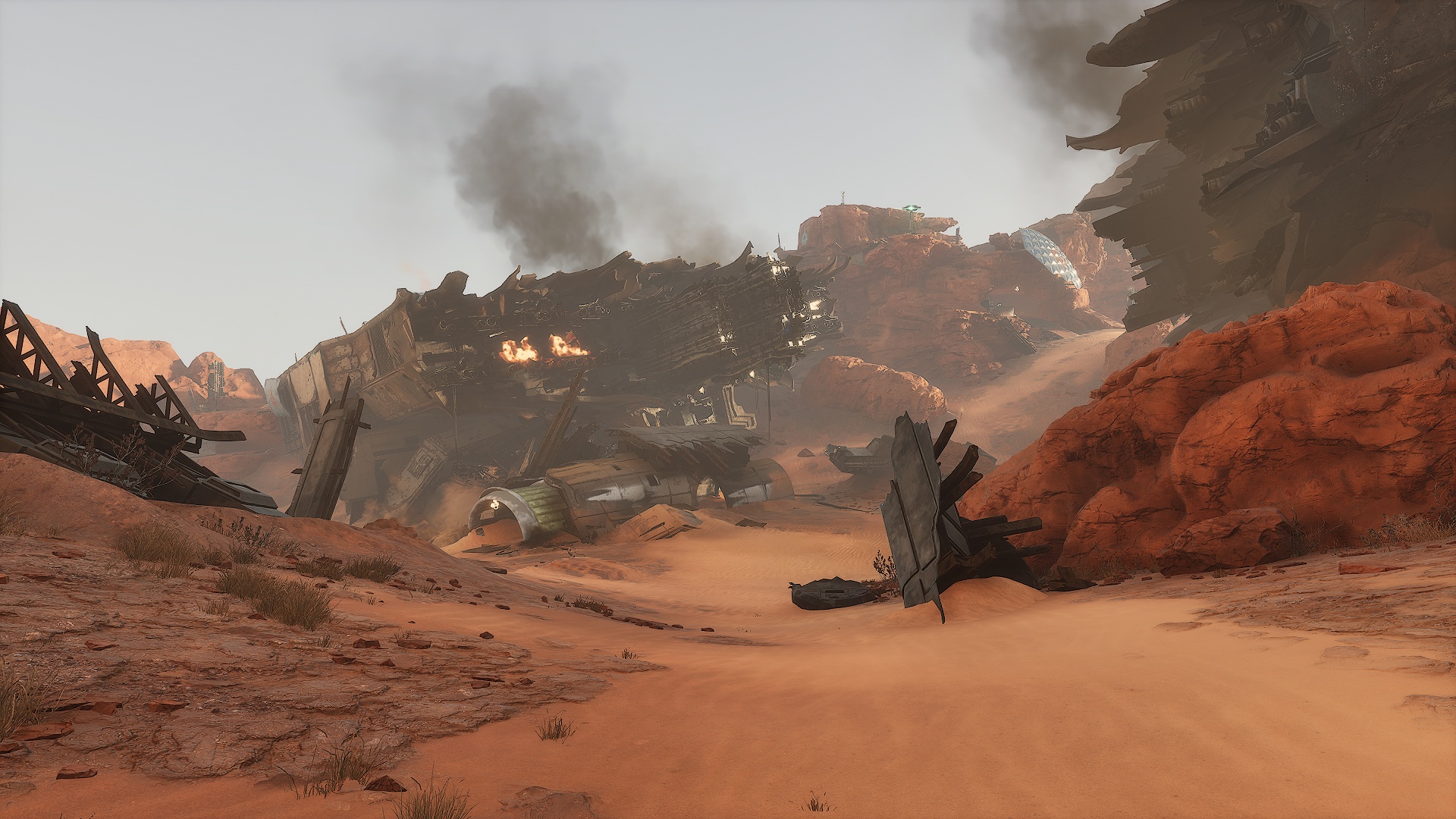
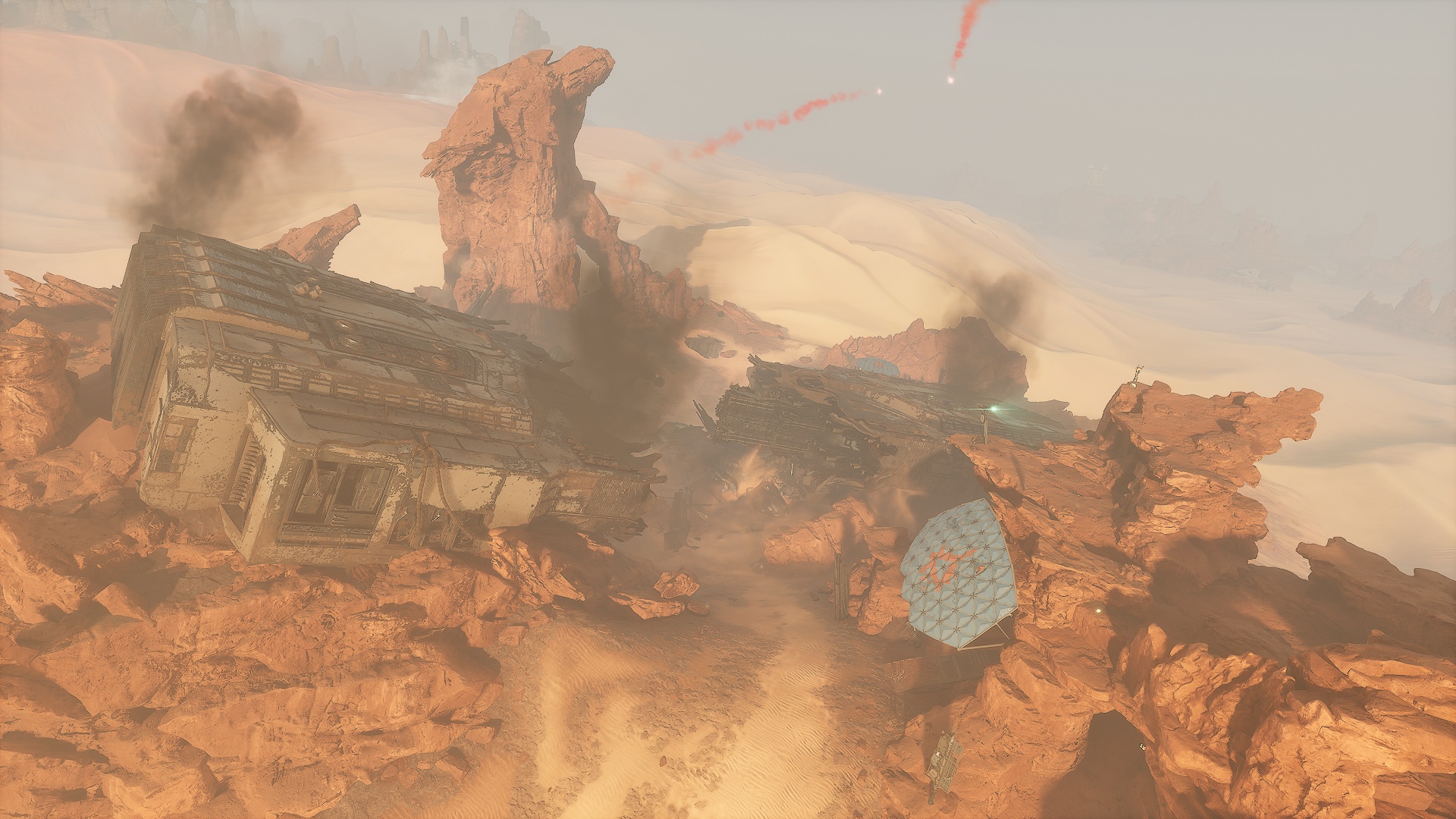
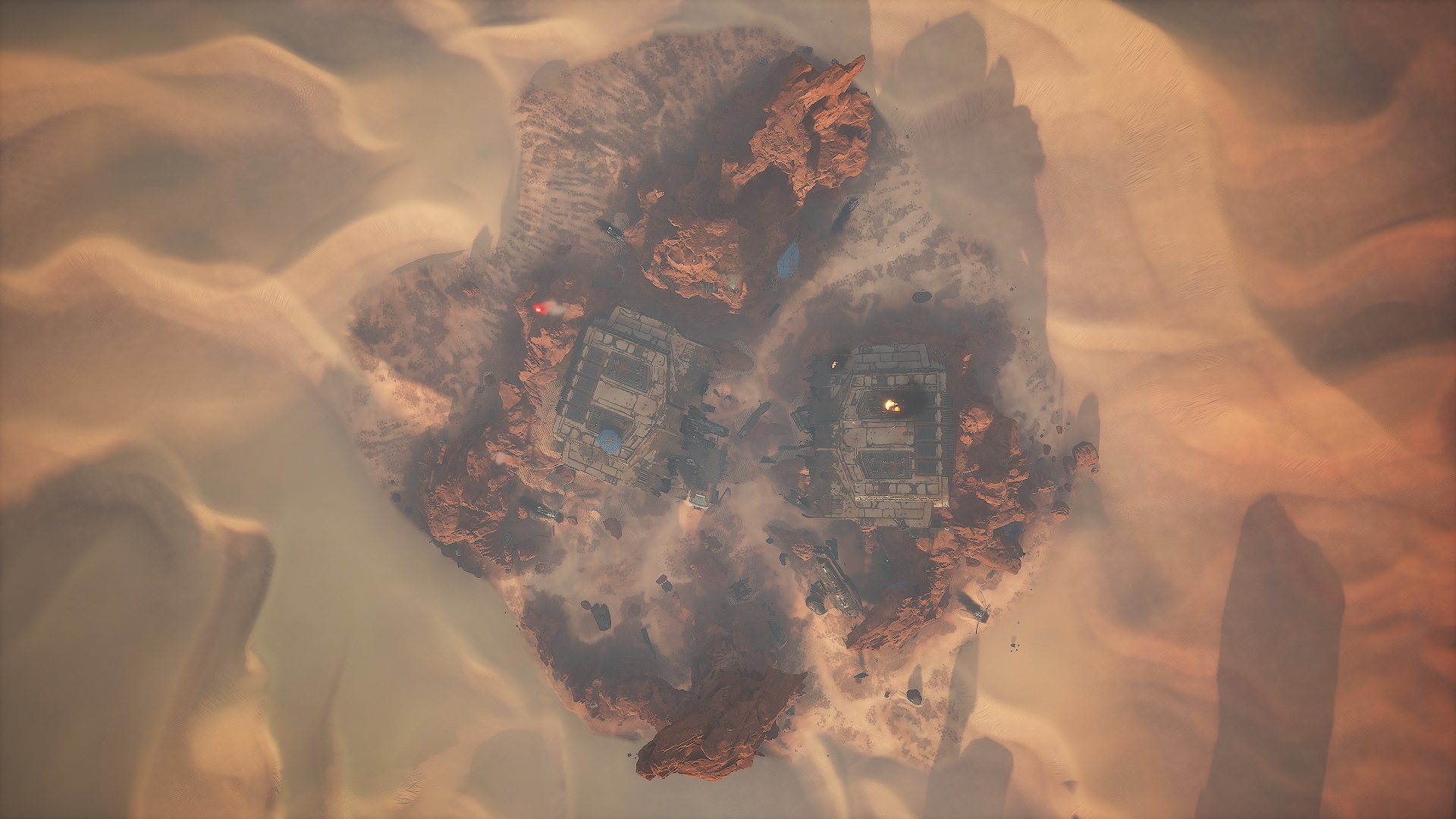
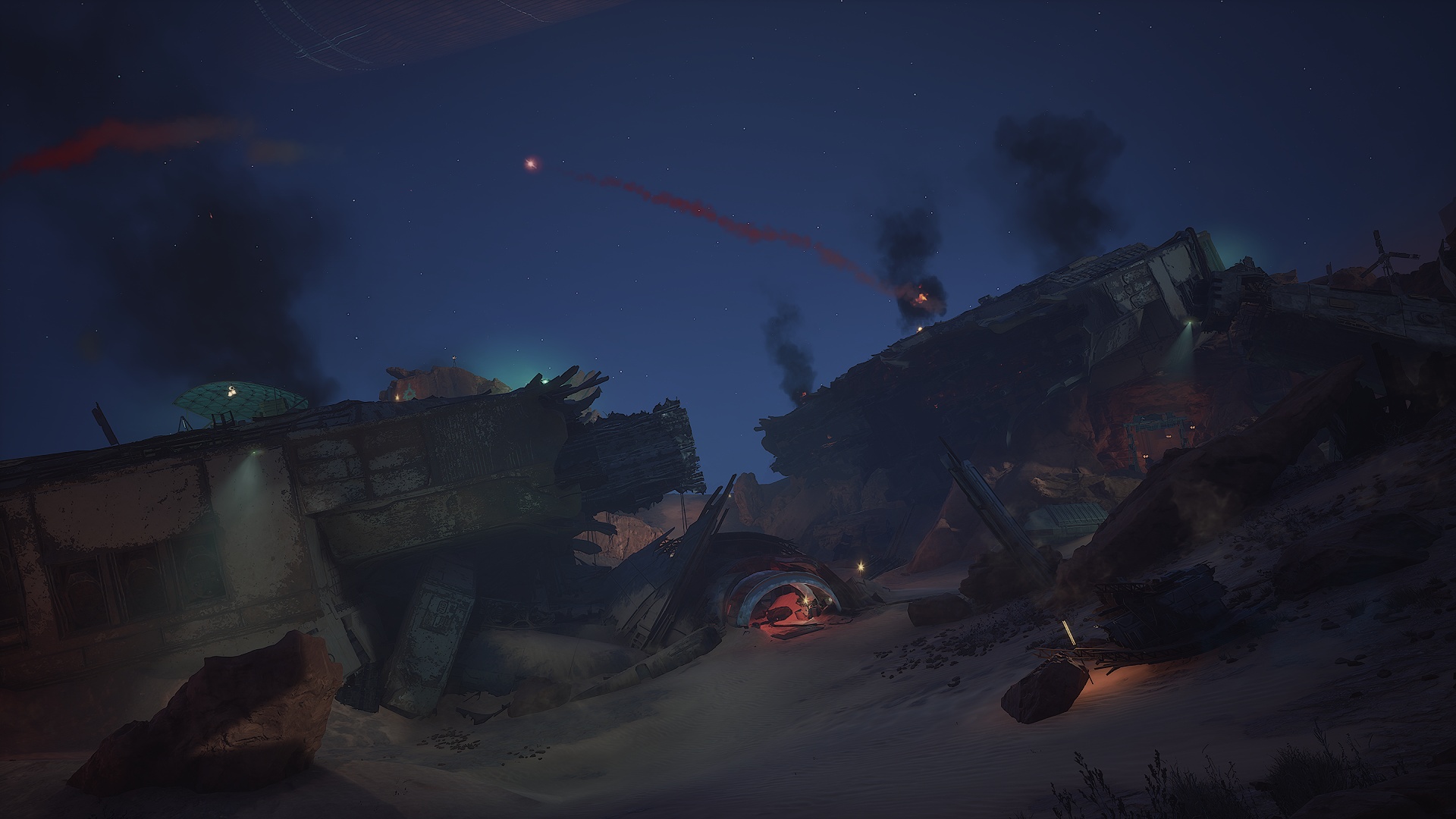
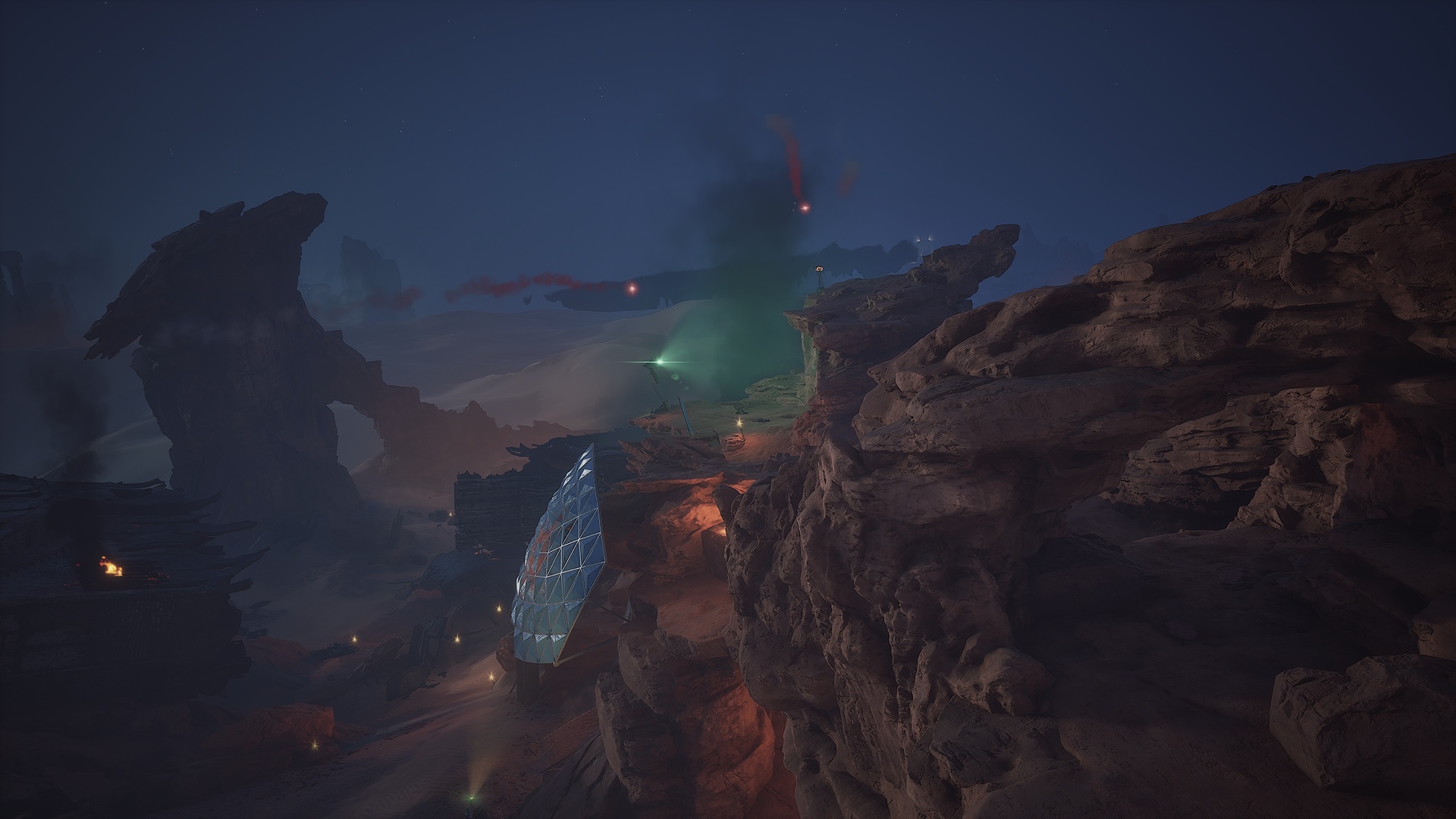
As part of the Chapter 2 Lost Harvest DLC, the player must respond to a distress call from a crew of Dunemen that are stranded at their crashed harvester, the Mithra. It was being transported by a carry-all when it was suddenly shot down by nearby Kirab. It’s up to the player to assist the Dunemen and save them from the unrelenting Kirab infesting the rock island.
Tone: Action, Adventure, Mystery
Gameplay: Exploration, Crafting, Combat
The Process
Crafting this POI started with answering multiple questions:
- Where on the map does this POI exist?
- What are its metrics?
- What quests are drawing the player here?
- What narrative requirements are there and how does that affect enemy types, obstacles, hazards, level flow, etc.?
Answering these questions involved meeting with all departments to align on what would be needed from art, design, code, and world design.


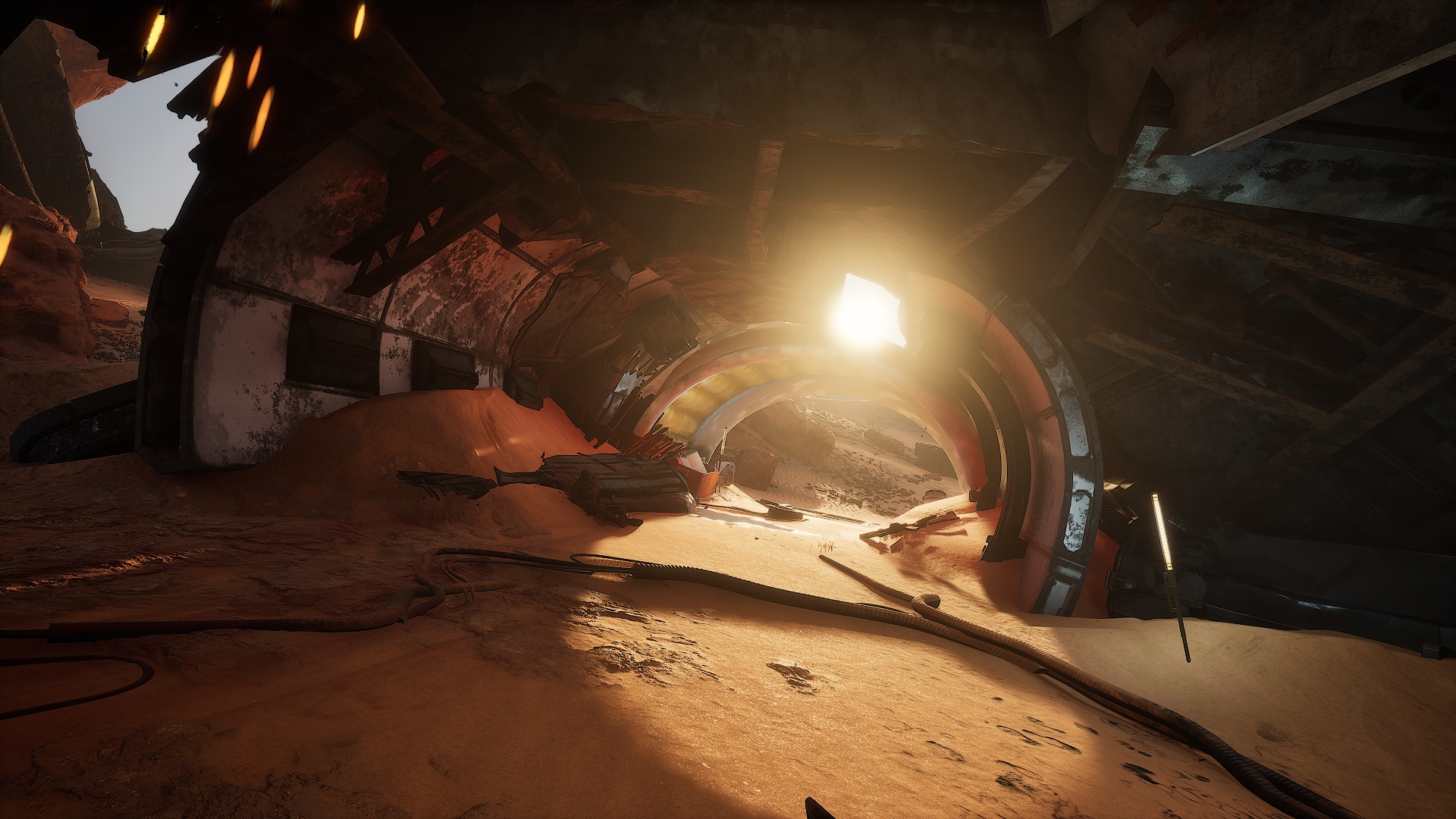
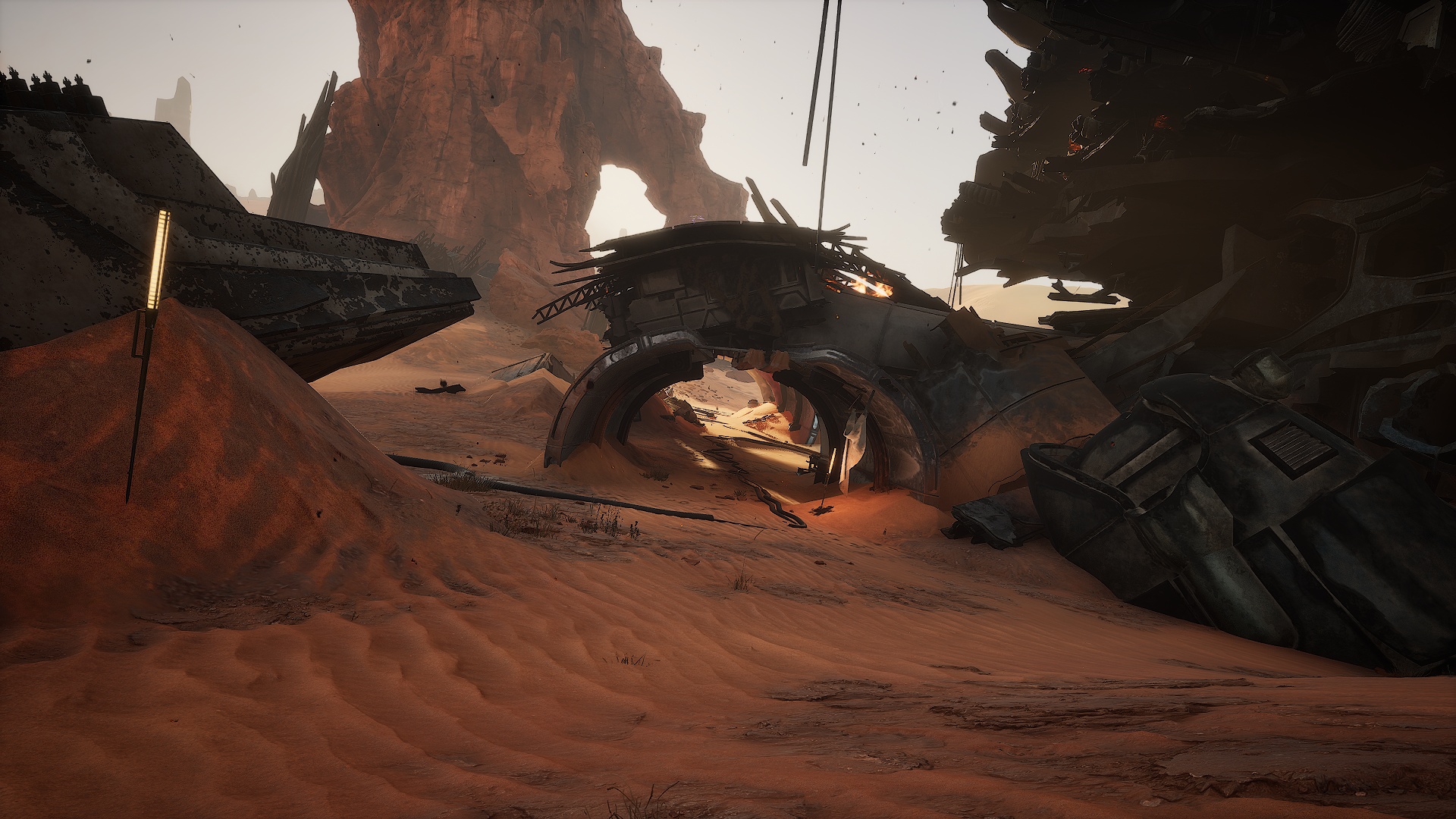
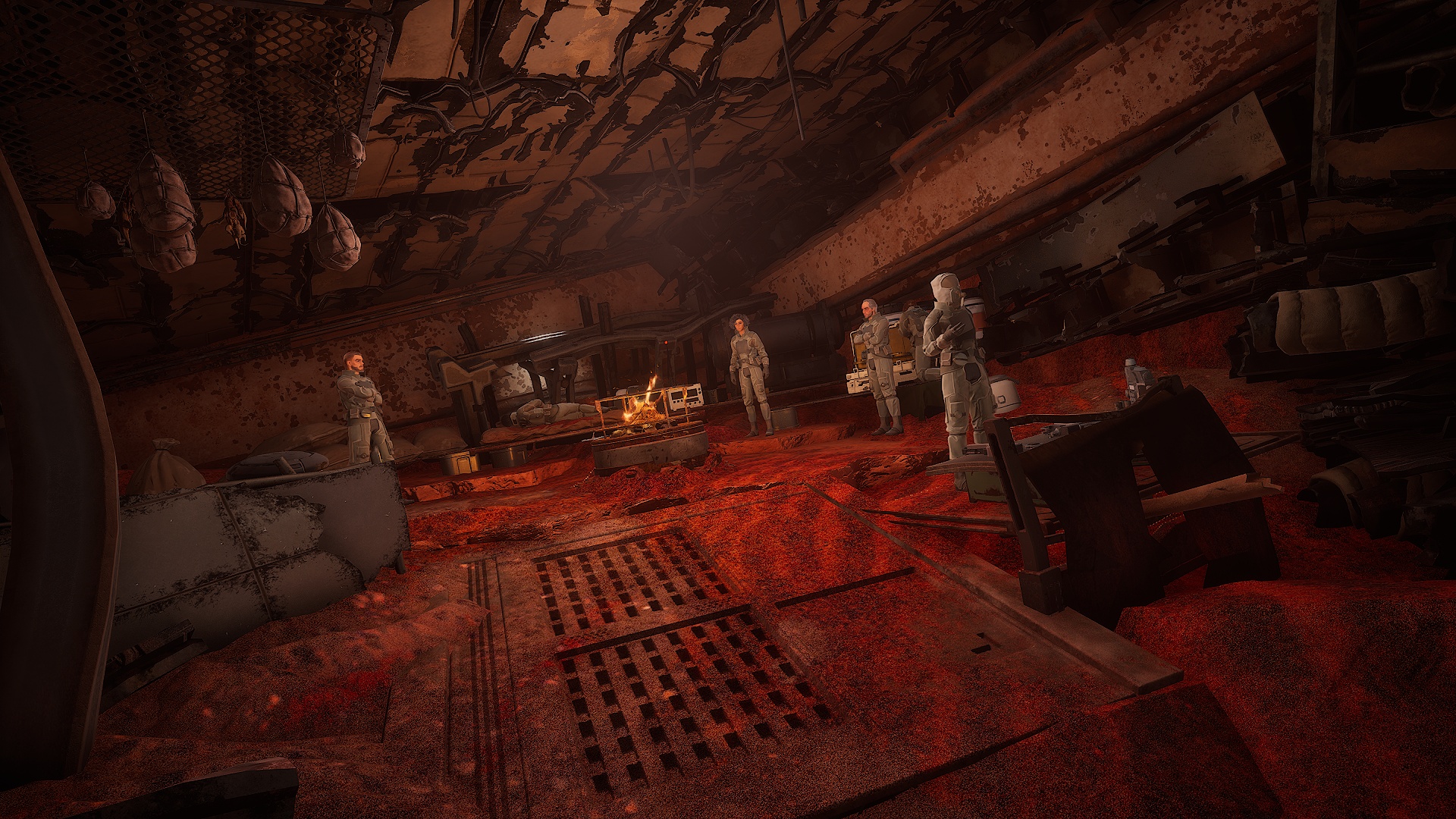
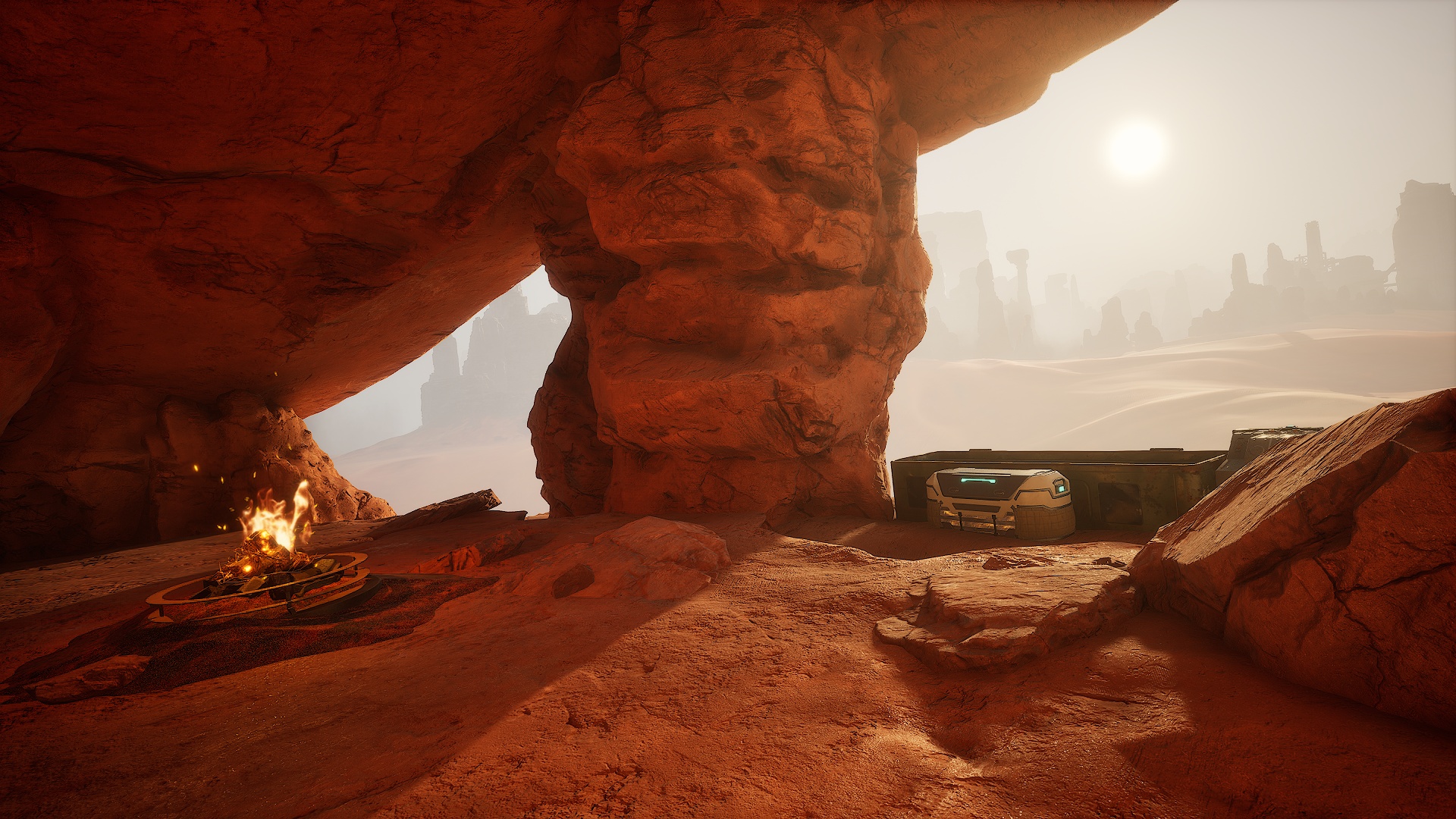
One big problem to solve early was figuring out how to guide the player properly to where the quest givers are: underneath the crashed harvester. I had to focus on utilizing sign-posting and guiding lines to draw the player’s eye to the quest giver entry point. I worked with other level designers to refine clarity of player flow and add other elements that helped breadcrumb the player in.
I worked alongside artists to figure out how to make this entry believable in the world while also accommodating gameplay needs.
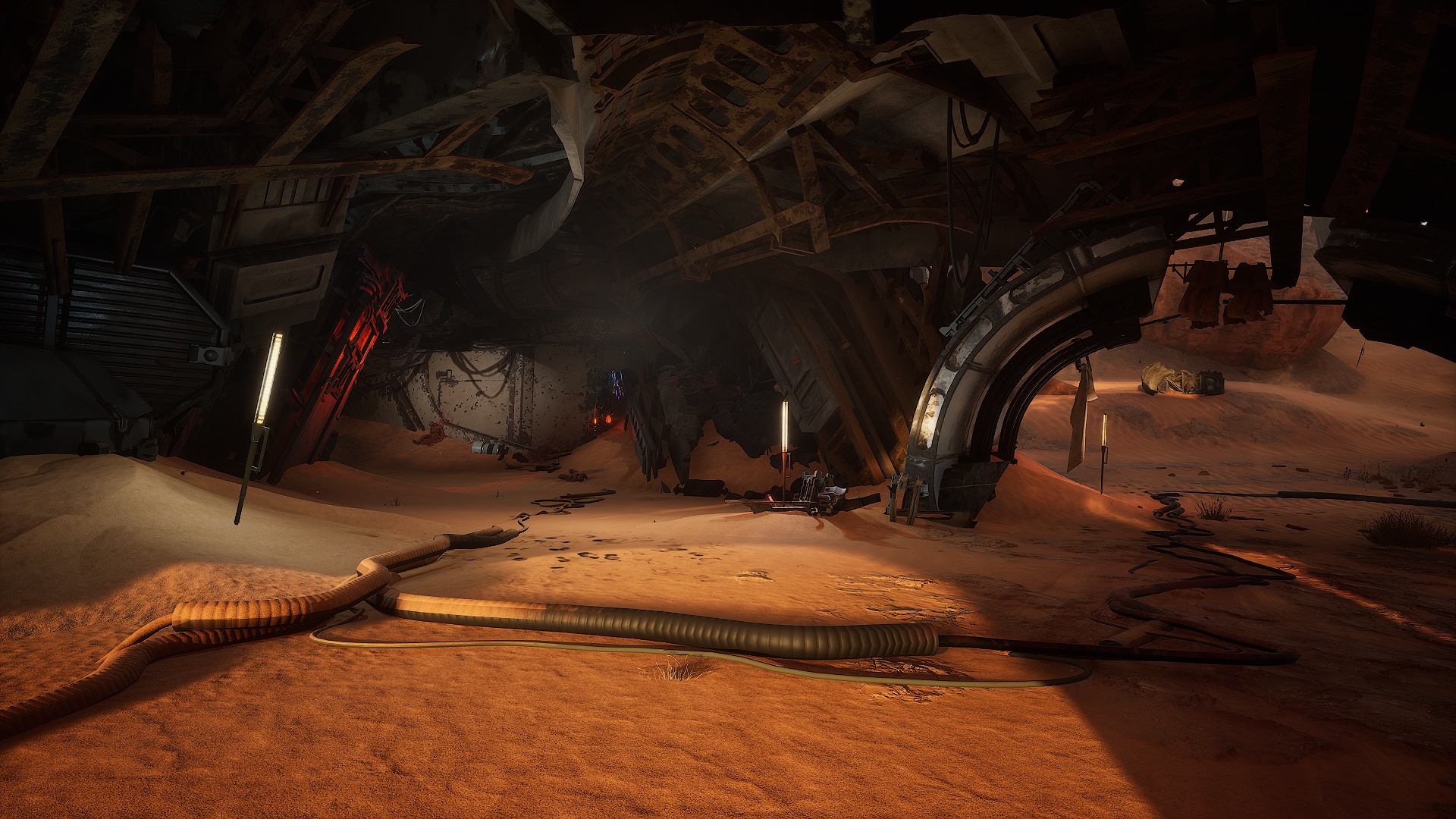
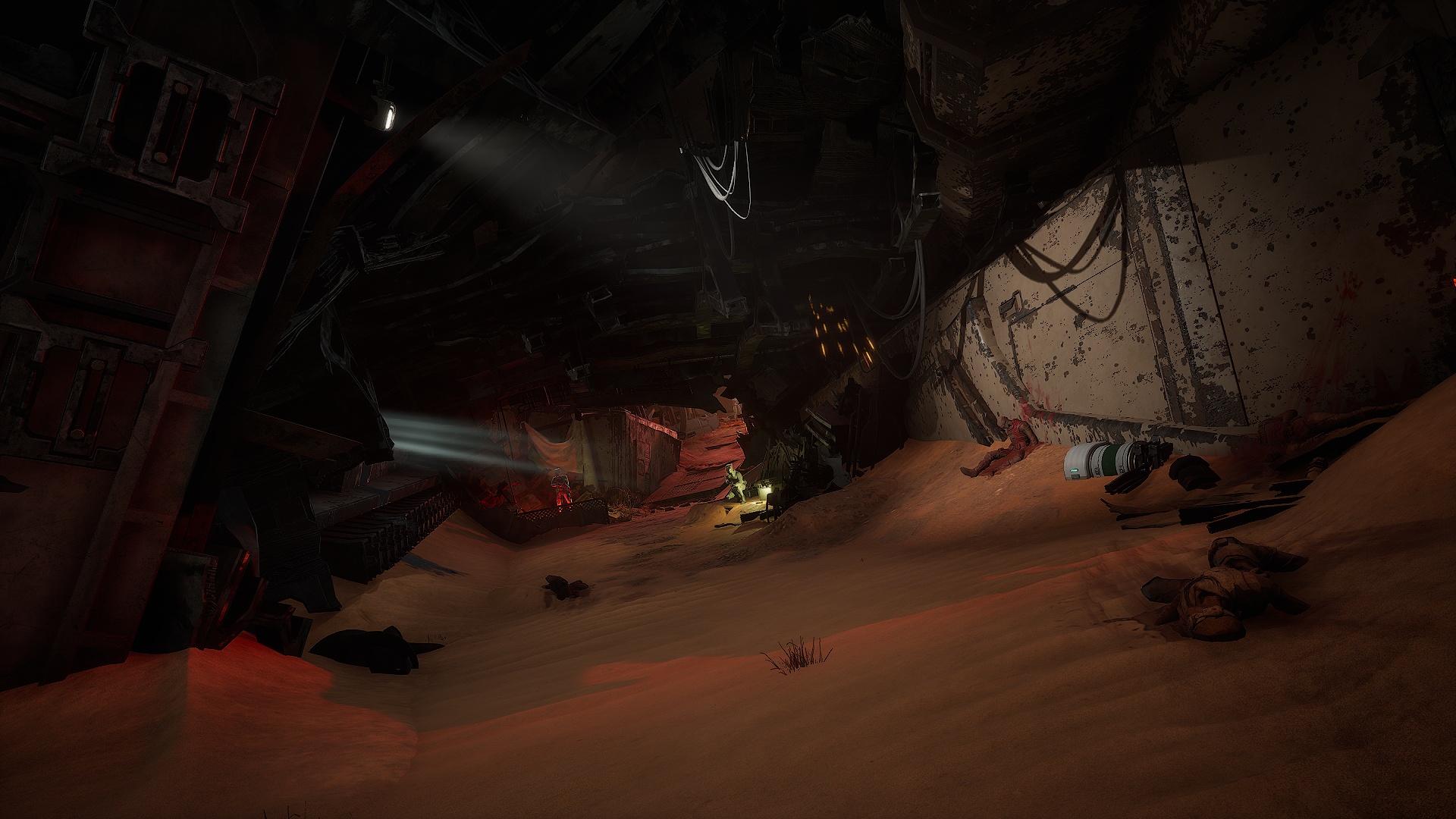
Underneath the Mithra where the quest givers are, I was tasked with:
- Implementing set-dress NPCs with custom animations to make it clear that the Dunemen are struggling to survive.
- Adding supplemental props, decals, and lighting to clearly highlight where to go.
- Ensuring smooth player navigation.

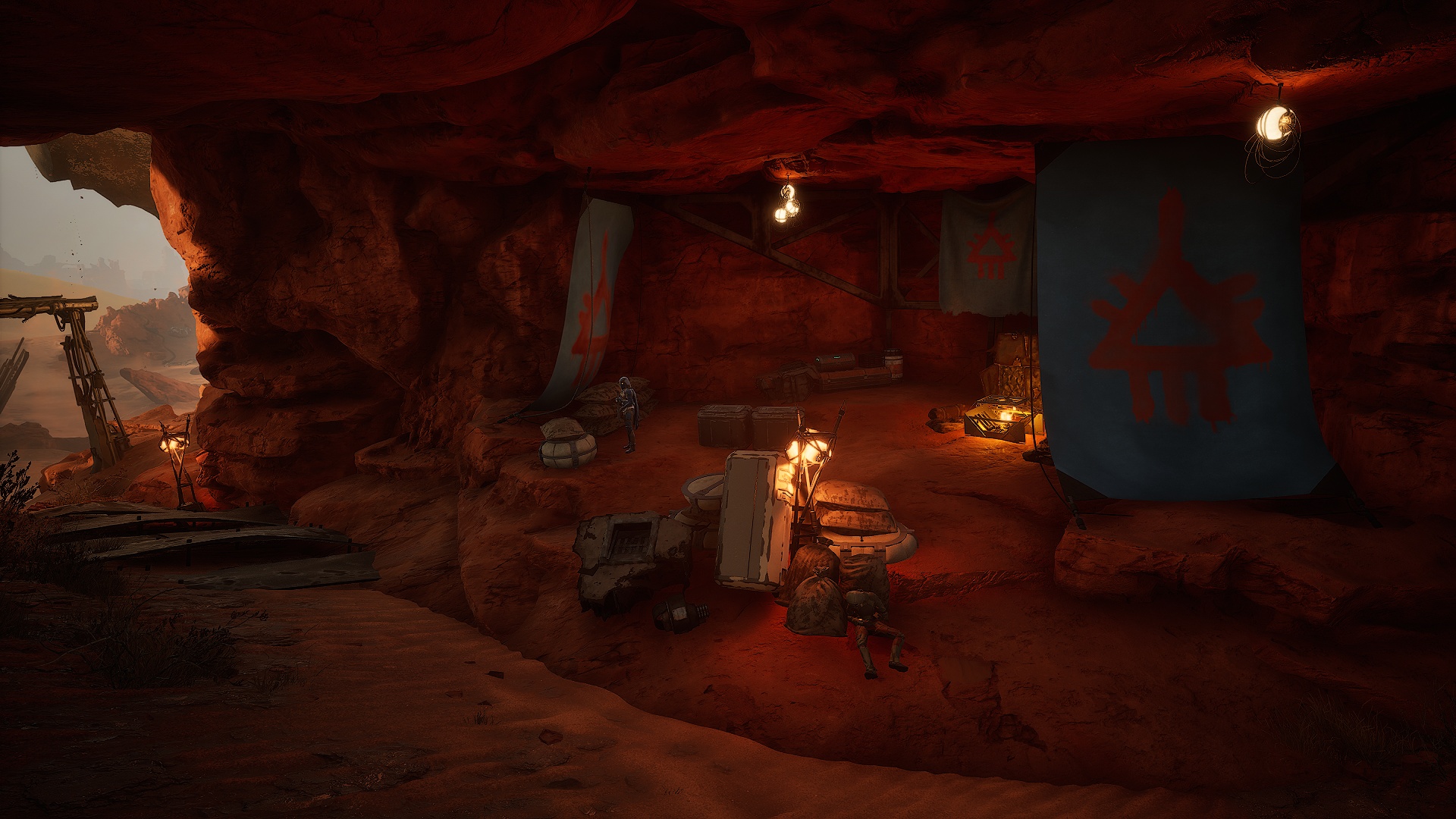
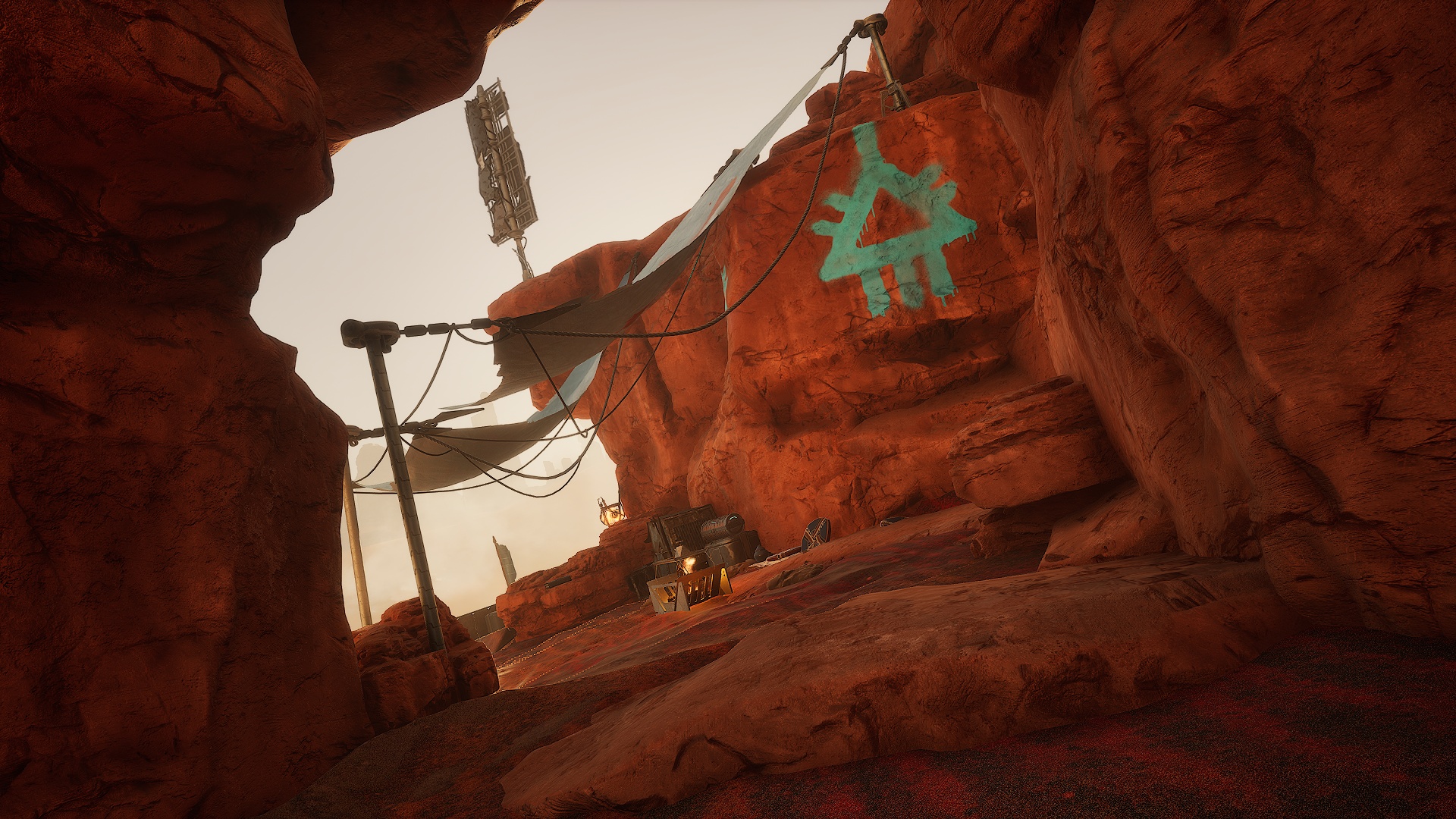
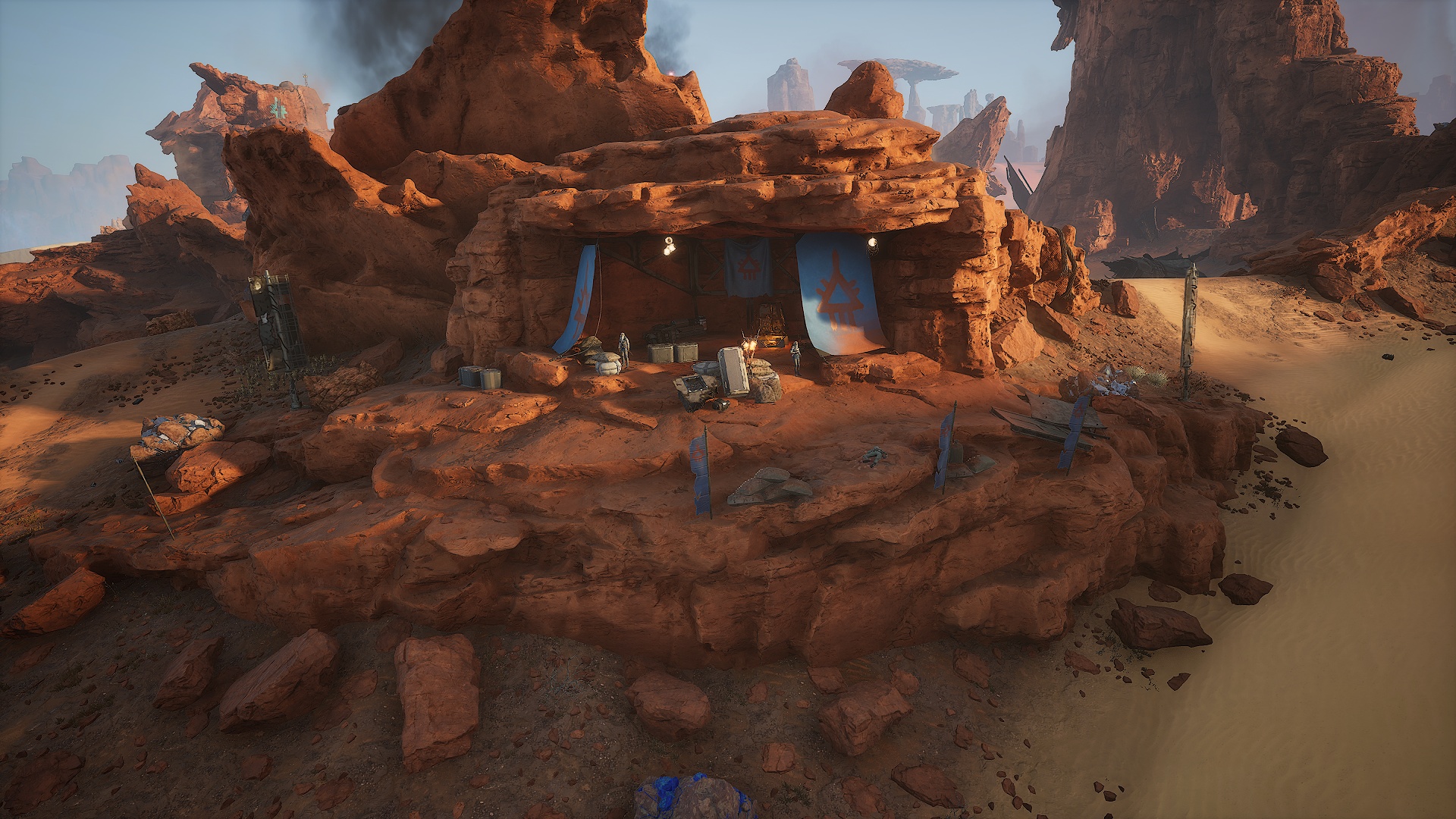
Around the rock island, it was important to include pockets of content for both quest objectives and engaging the player in combat as they explored.
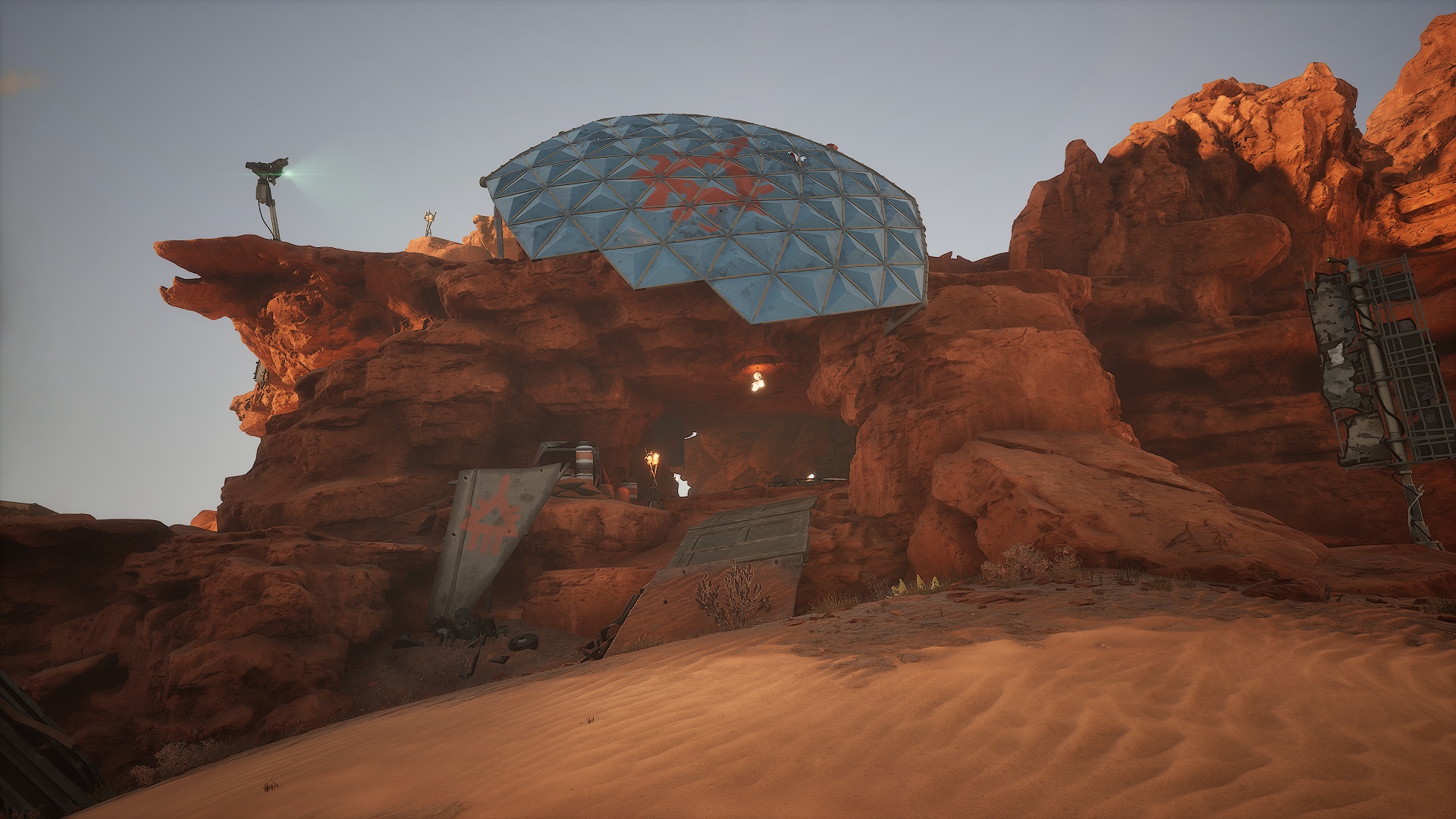
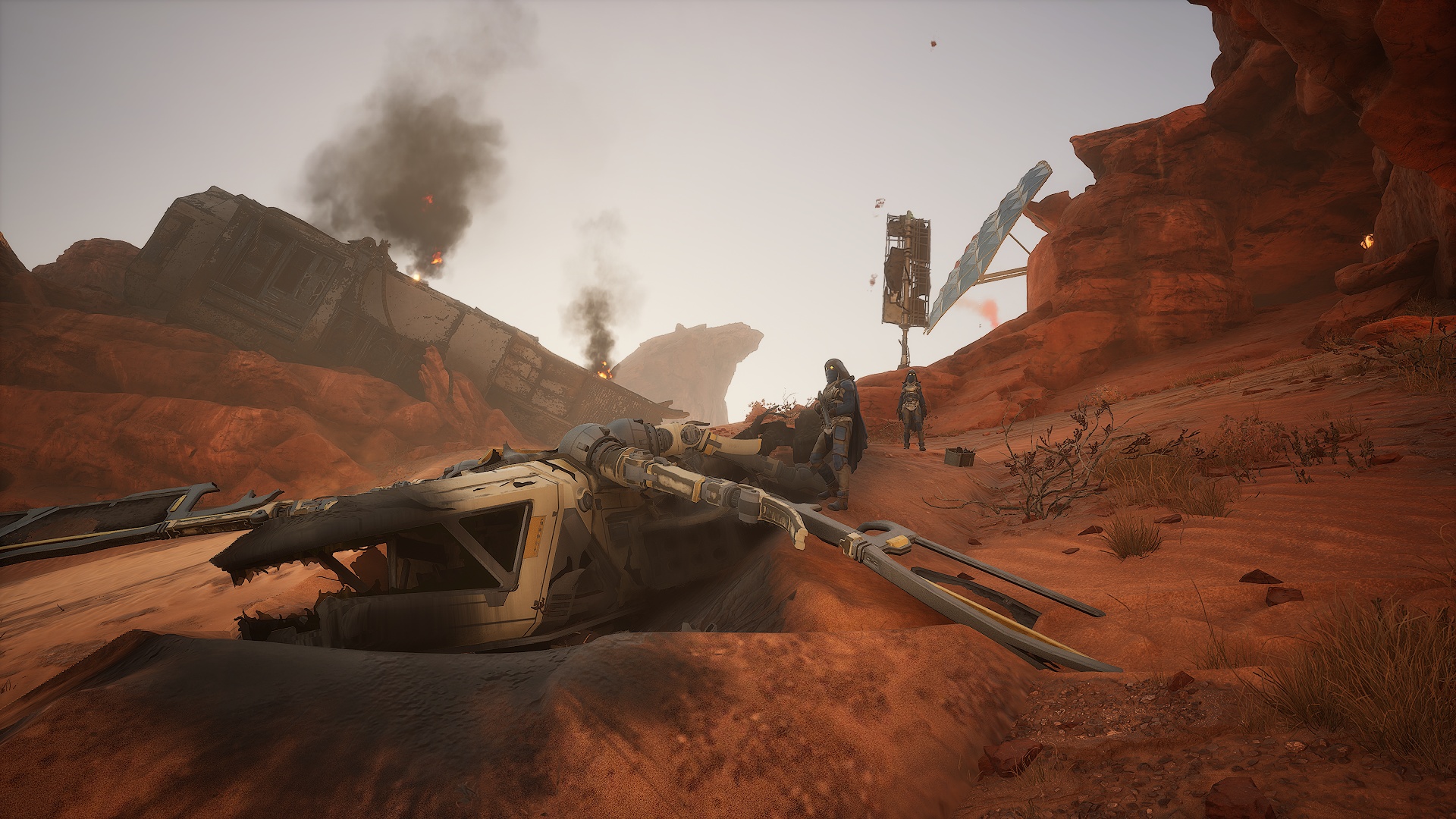
This came in the form of Kirab bandit camps, crashed ornithopters, and overlooks. At each of these smaller POIs, I focused on making sure they flowed into each other well while not crowding the space. I worked with our designer to figure out which places were best for quest interactables.


Another intricacy of working on this area was ensuring that our map markers and biome notifications made sense in the context of our already existing map structure. This process involved aligning with world design to make sure the player was awarded the right amount of XP upon discovery and that the map marker had the proper icon for the type of content this was.
Throughout all of this island’s development, we as a team would often lean on each other for feedback. I certainly grew immensely through working on this content, in particular with creating more open designs that must fit into an already existing map in a live environment.