
Operation Golden Arrow
(Ue5)

Description: The player becomes a stealth operative as they are tasked with infiltrating a terrorist leader’s mansion to stop a bioweapon from being launched, all while navigating stealth obstacles on the way. They must intercept the truck delivering a Hardware Authentication Module first before entering the mansion and finding the captain’s quarters where the bioweapon launch command is being initiated. They have the choice of being loud or stealthy at the cost of higher enemy presence.
Tone: Dark, mysterious, stealthy, covert, serious
Gameplay: Stealth, action, platforming, tactical strategizing, gun-play
Game Inspirations: Splinter Cell, Metal Gear Solid
The Process
Research
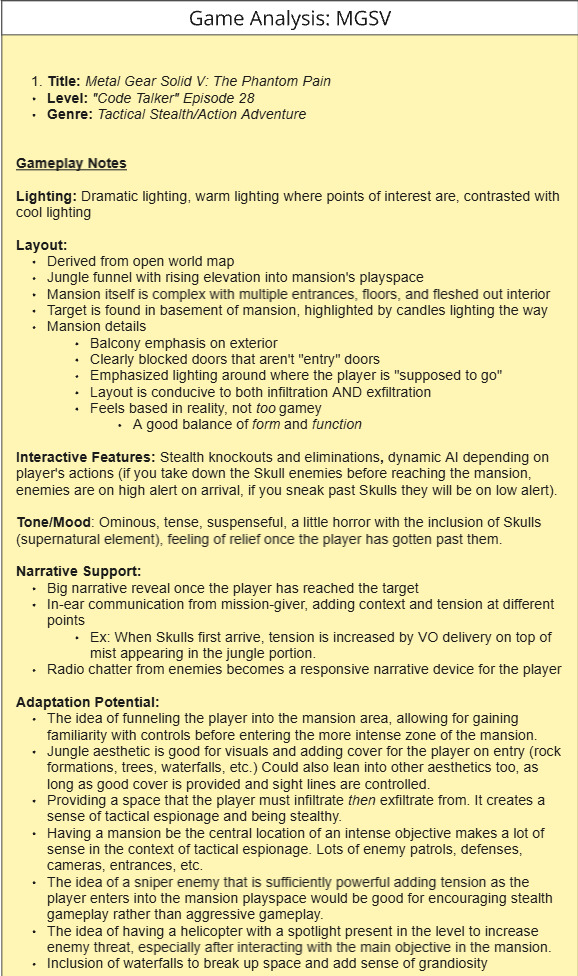
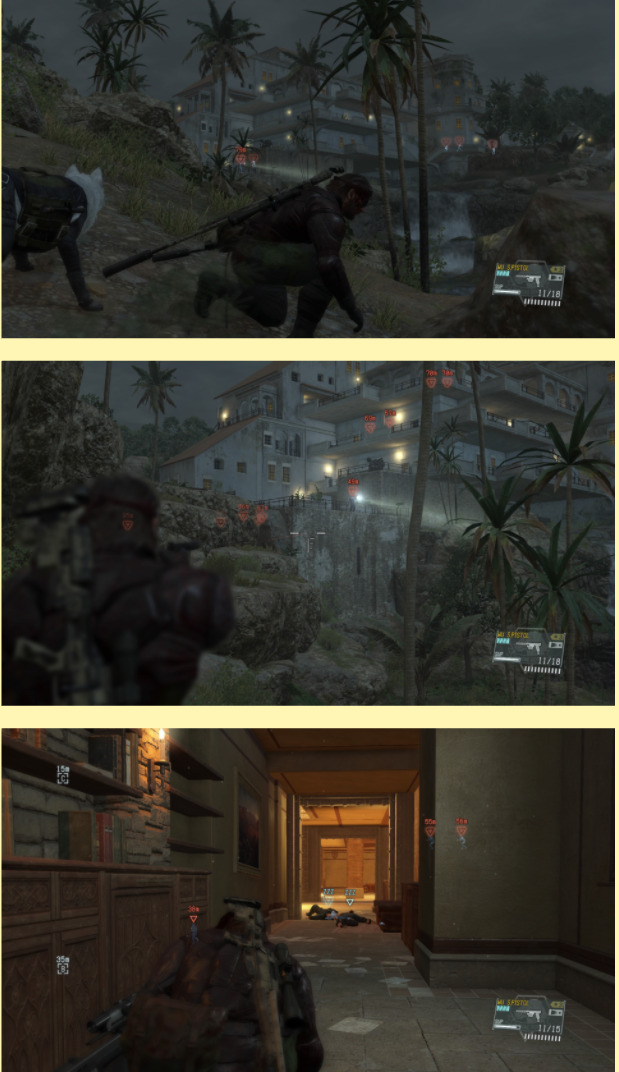
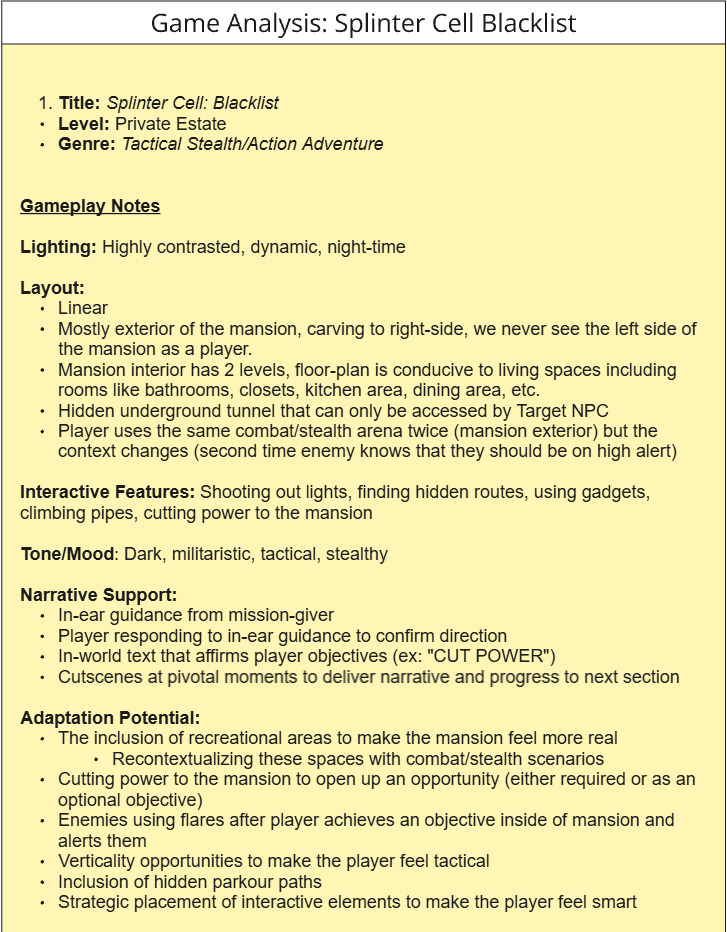
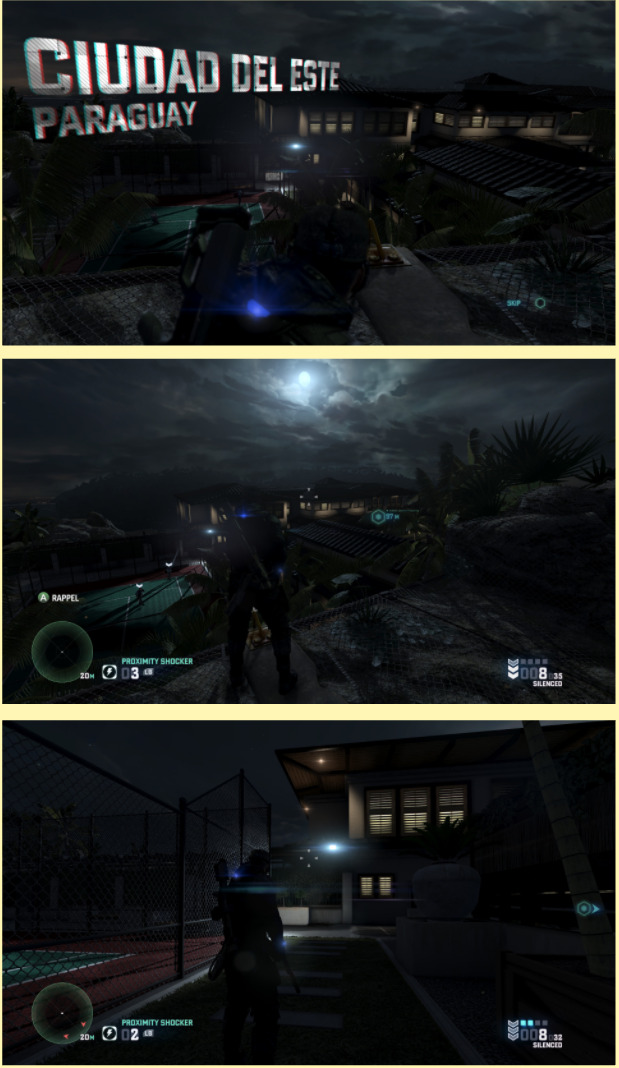
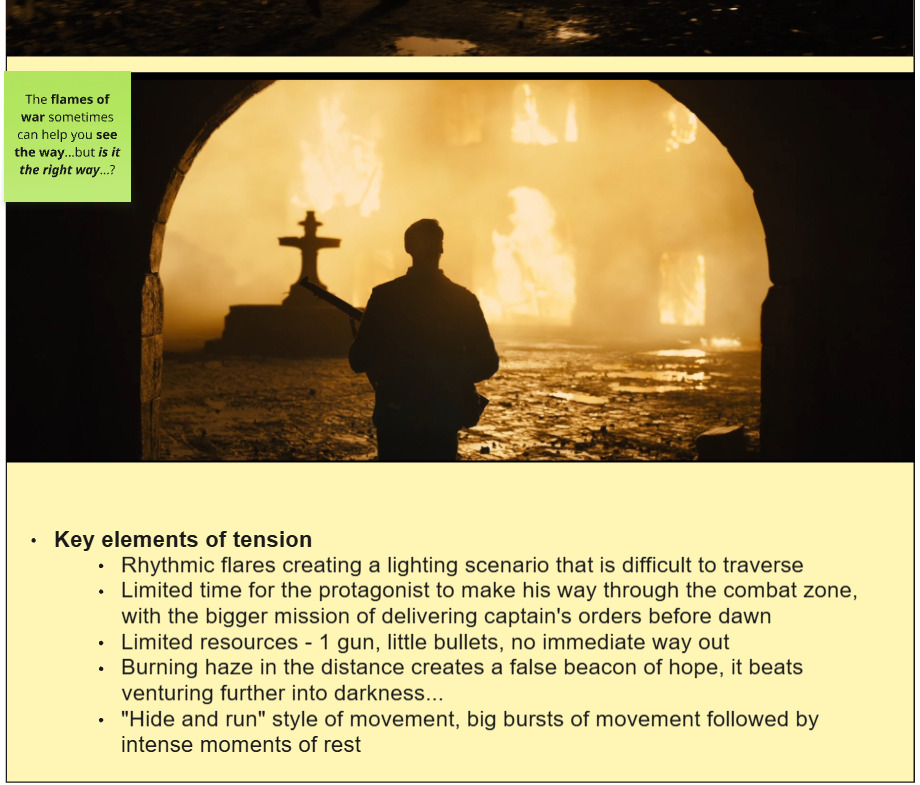
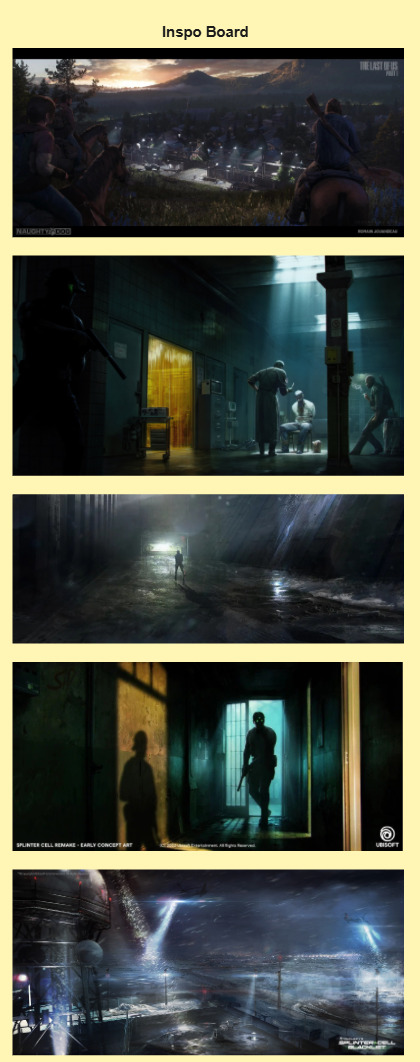
My very first step was immersing myself in multiple forms of media to get inspired and craft my level’s concept, mood, and structure. I did deep dives into games like Metal Gear Solid V and Splinter Cell: Blacklist to study how they merged engaging narrative scenarios with intense stealth-action gameplay.
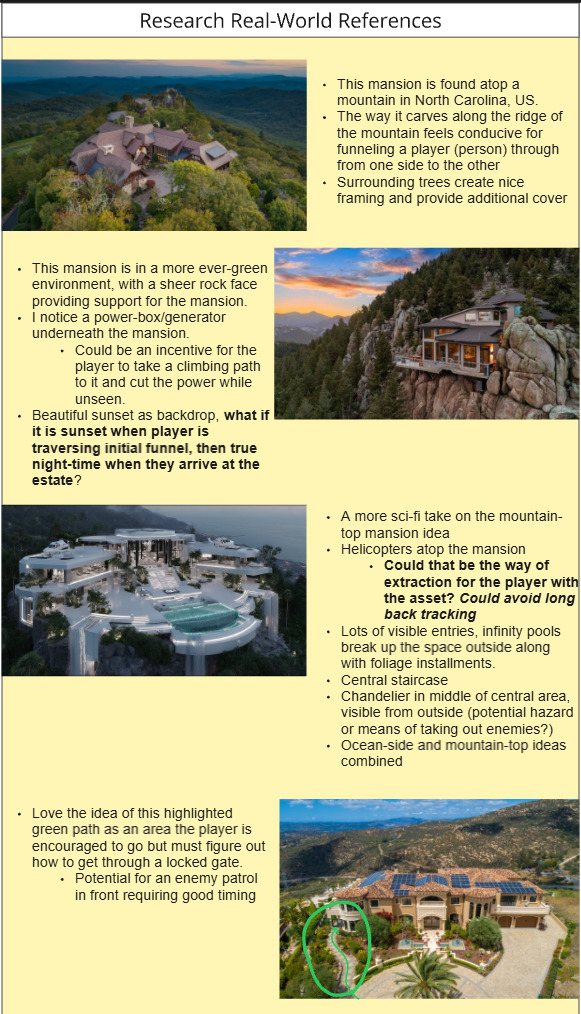
Since I knew I wanted to have my level based around a mansion infiltration, I picked levels in these games that involved tactfully planning an operation where the objective is inside the mansion. I found it very interesting how these 2 games approached the scenario differently – Splinter Cell is much more linear and has many more cutscene beats to make it feel more cinematic, while MGSV has fewer cutscenes and emphasizes player freedom because of its open-world focus.
Media Study
Beat Sheet
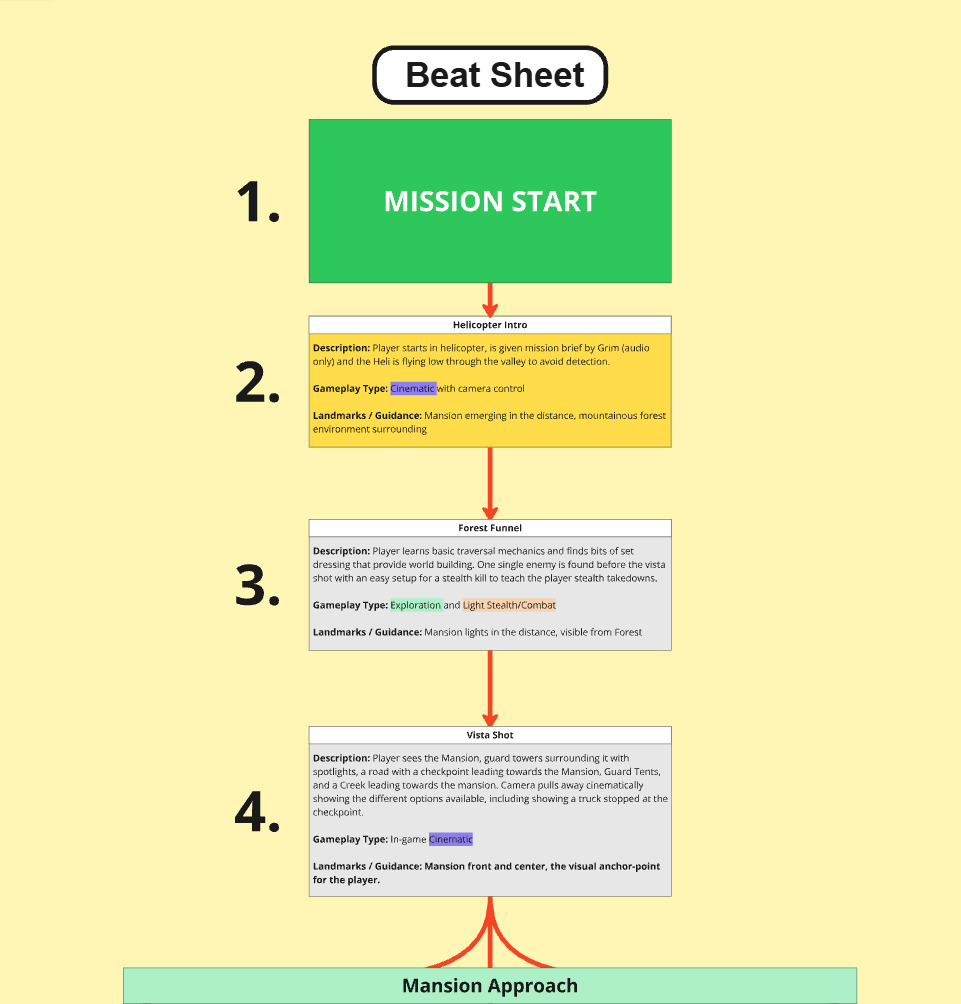
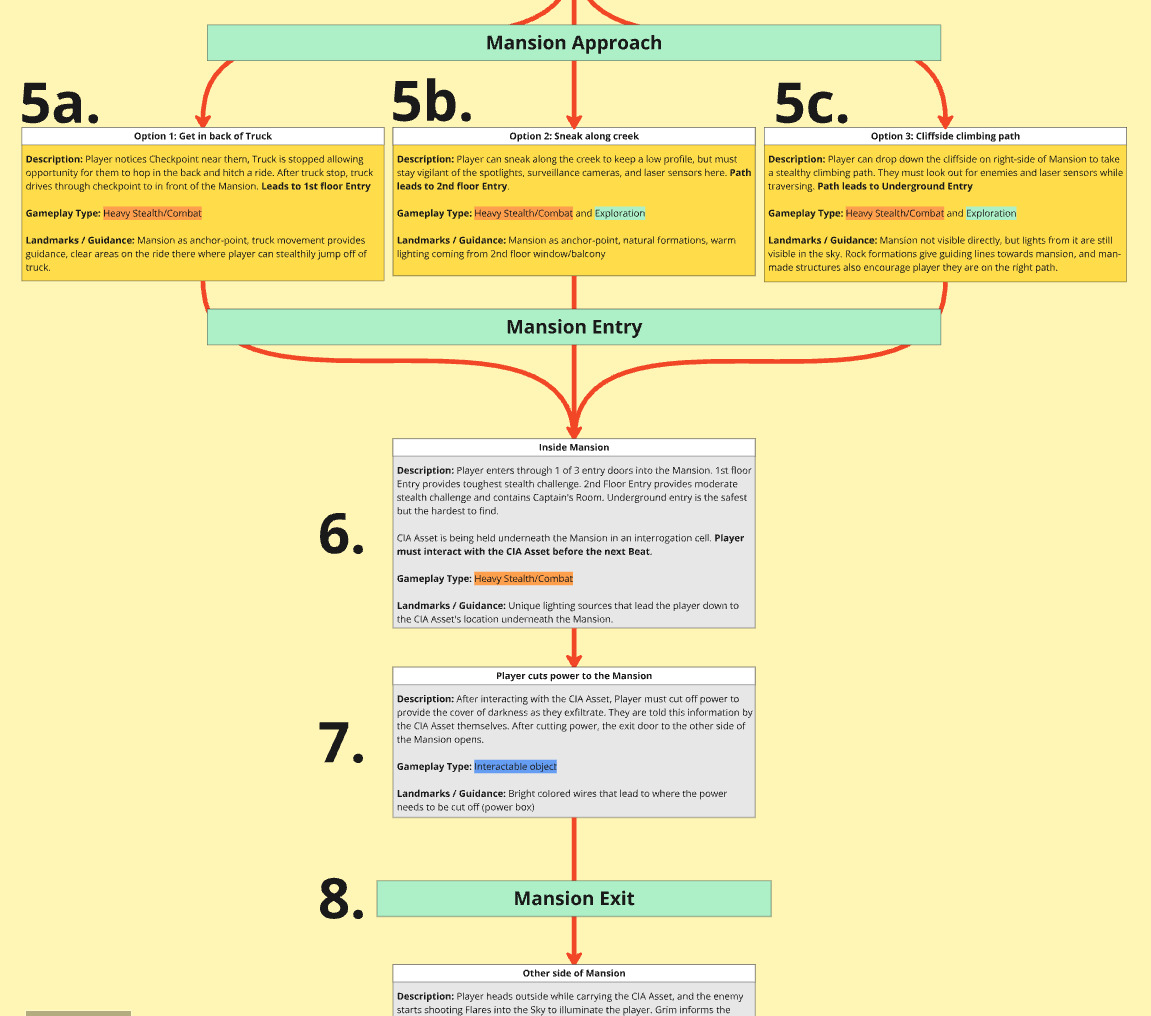
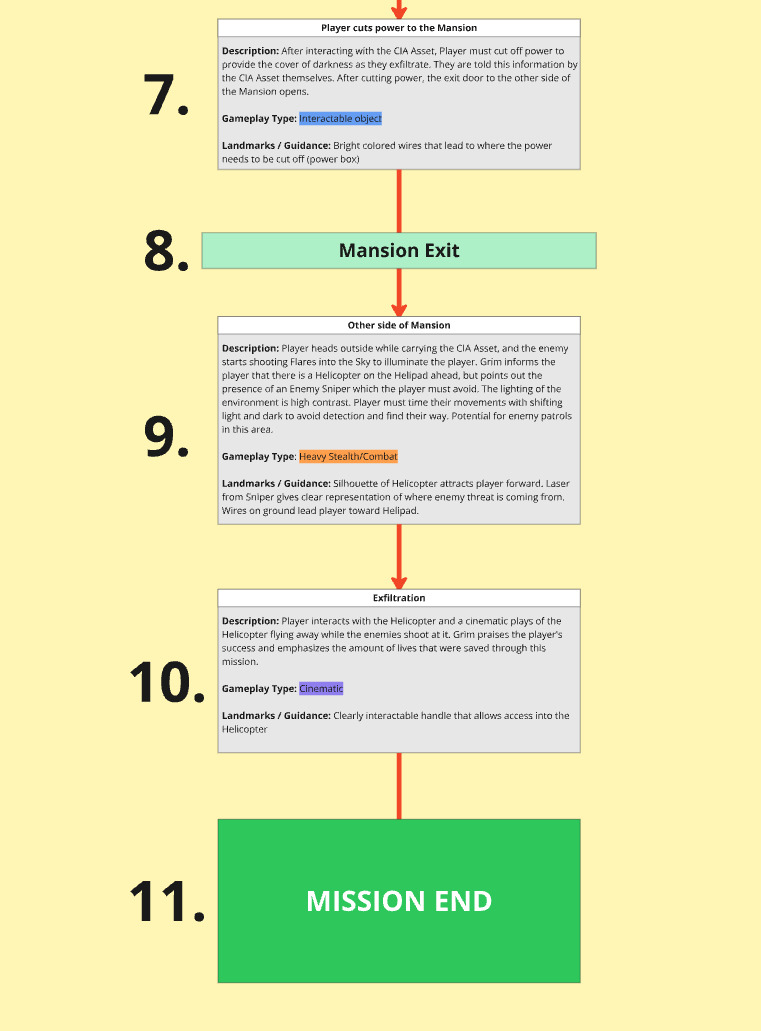

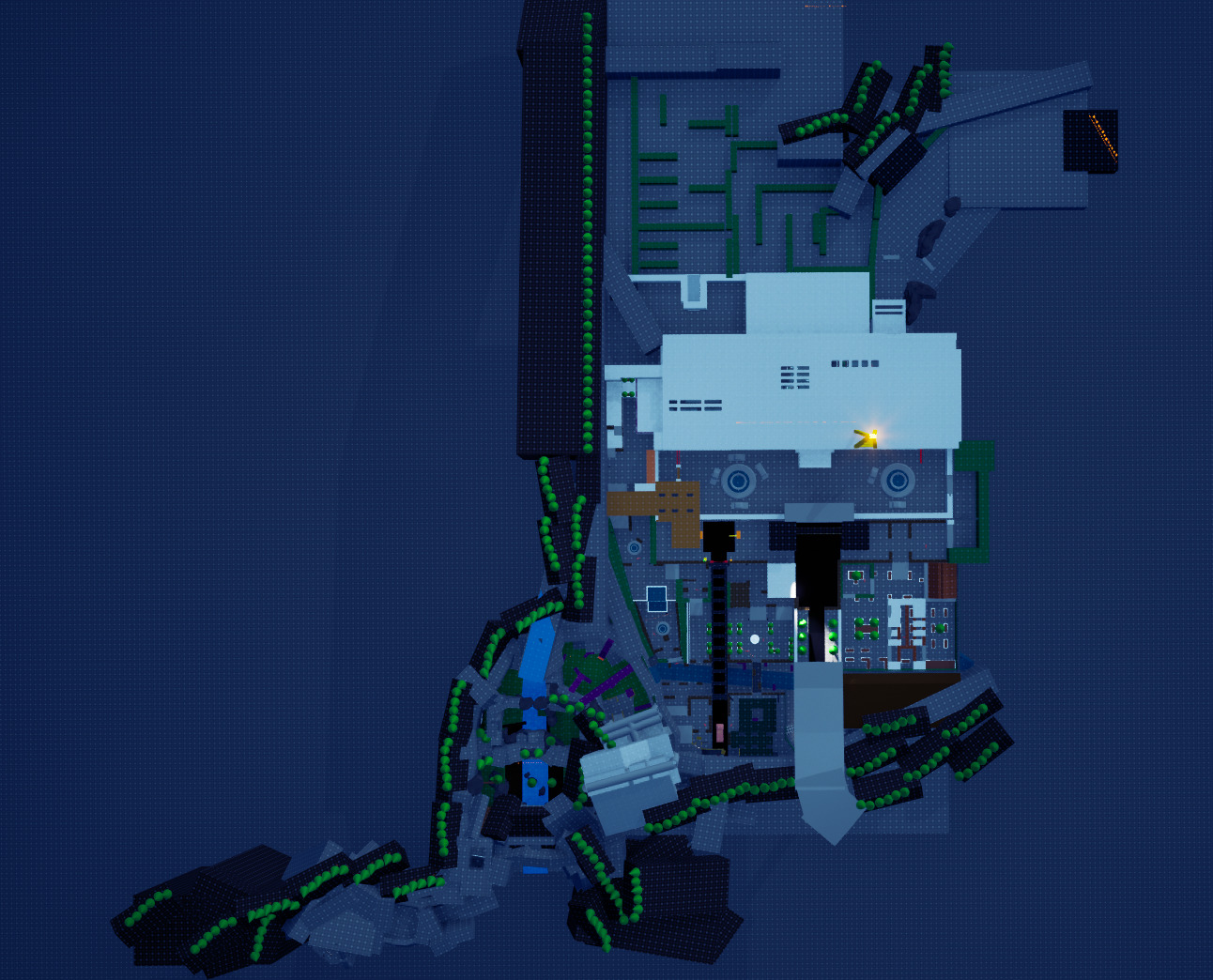
Top Down Map

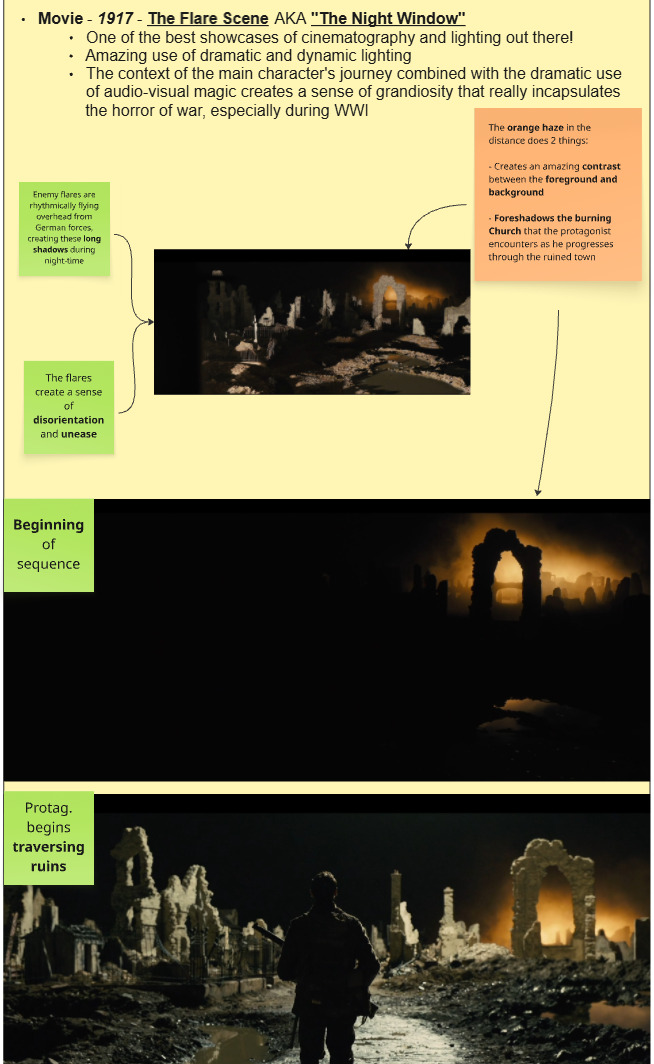
I also studied other media like the movie 1917 because I wanted to harness multiple inspirations. I specifically wanted to emulate the “flare scene” from that movie because of its extremely dramatic lighting and high level of tension.
This scene had a very interesting dynamic of the flares constantly shooting through the air while the protagonist flees the scene, creating a feeling of rising and falling tension every time the flare flies overhead. Light and shadow are incredible communicators of tension and potential threat, so I knew I wanted to bring this element into my level.
Iteration 1: Setting the scene
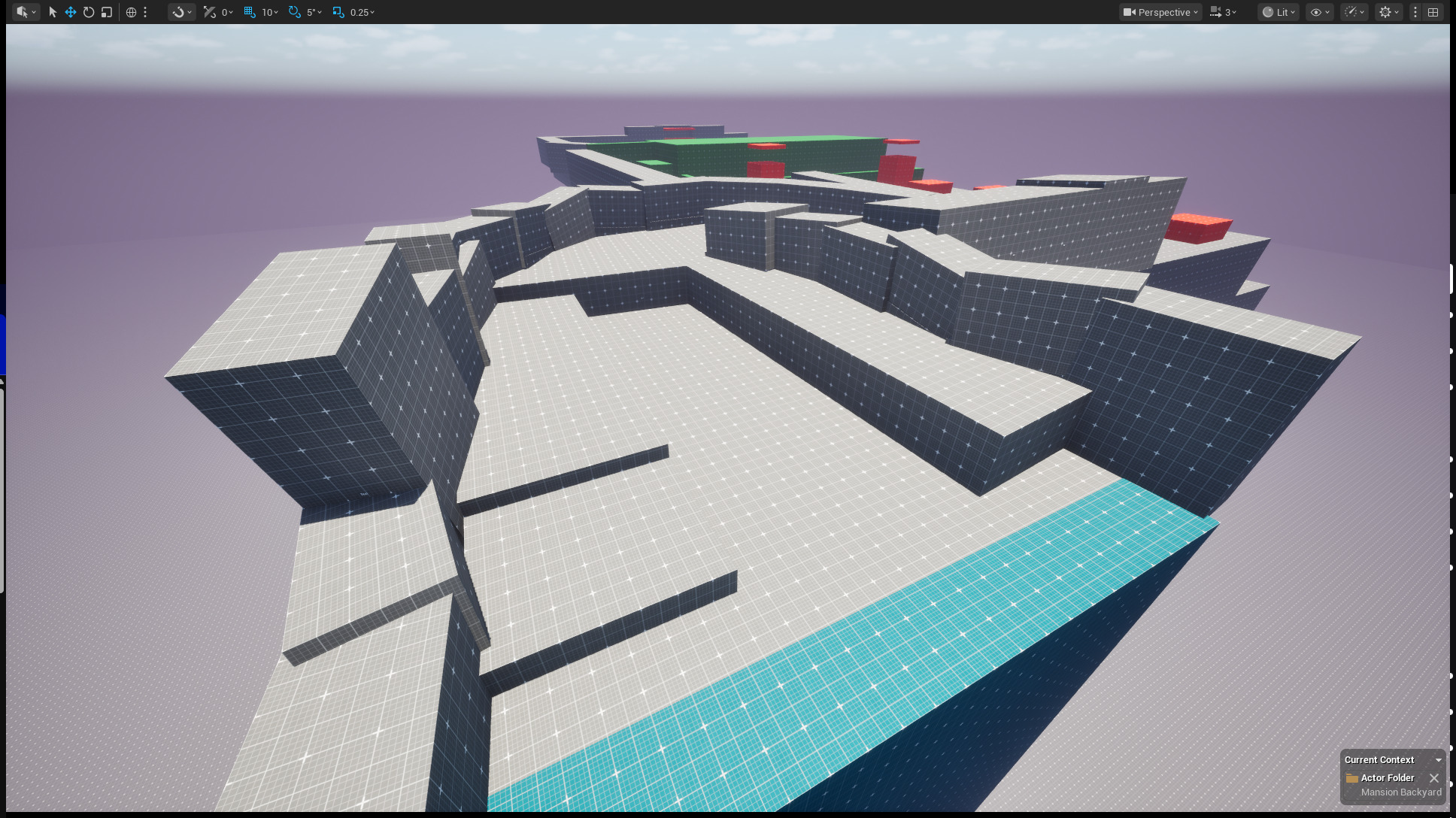
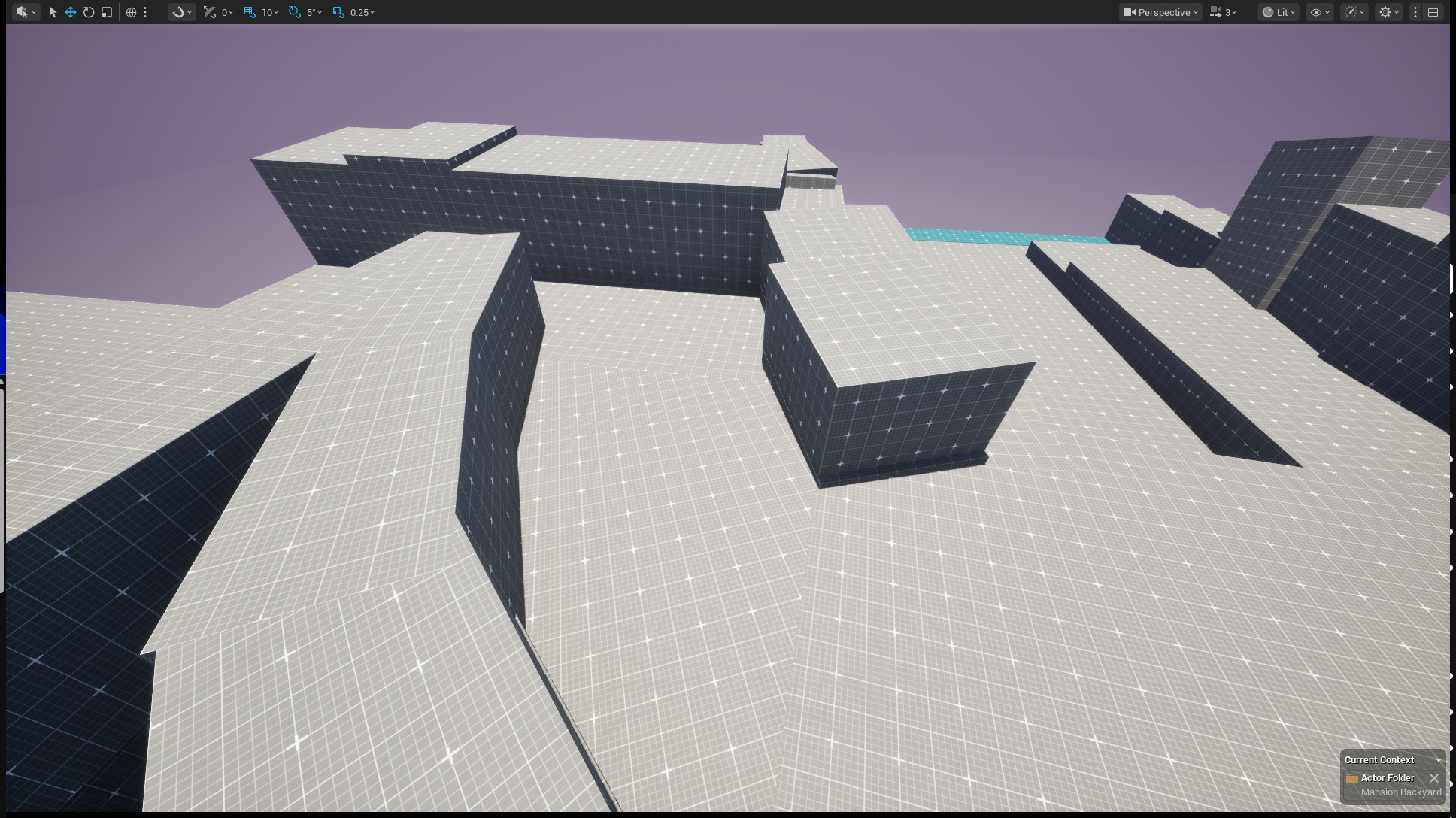
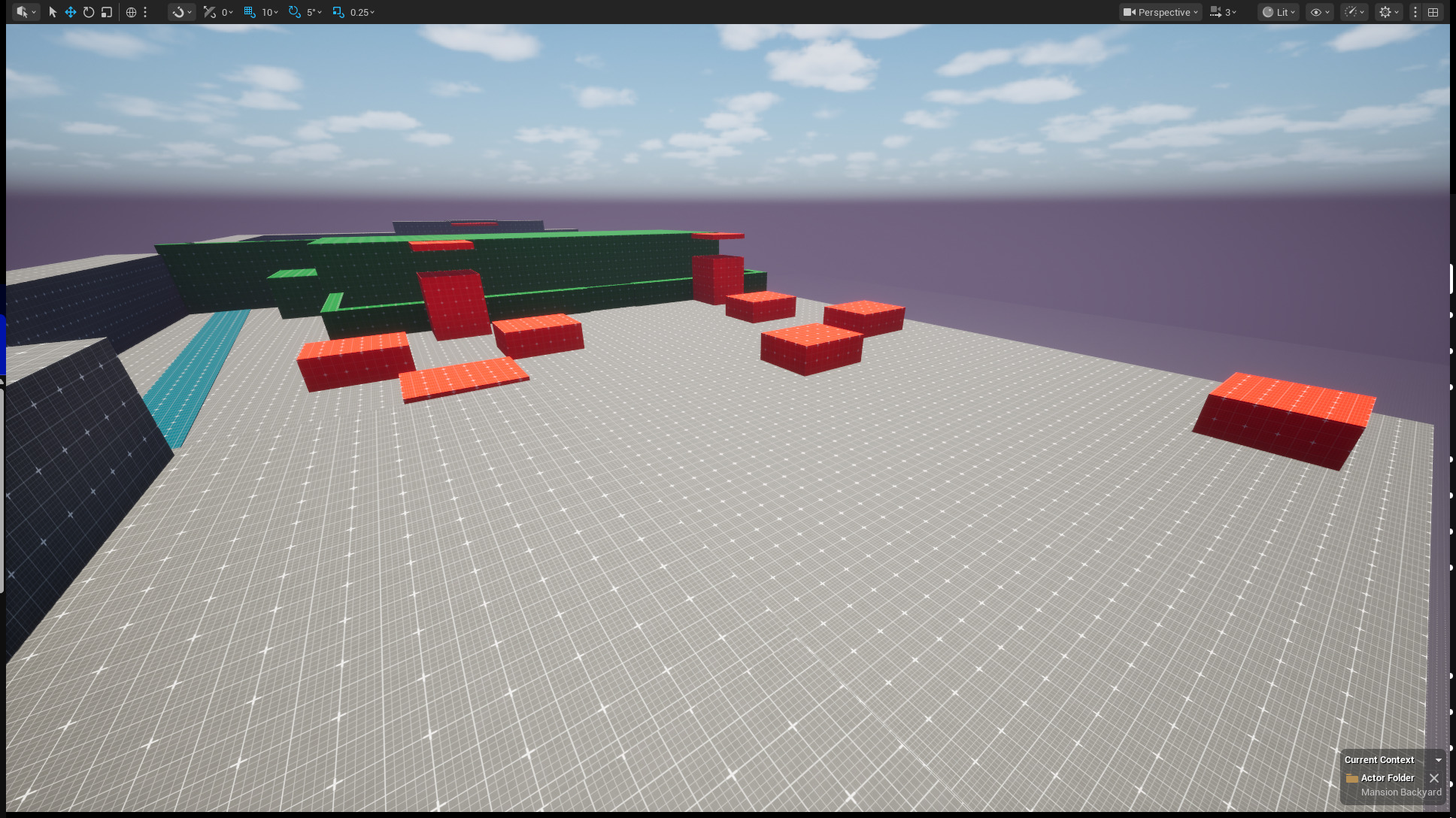
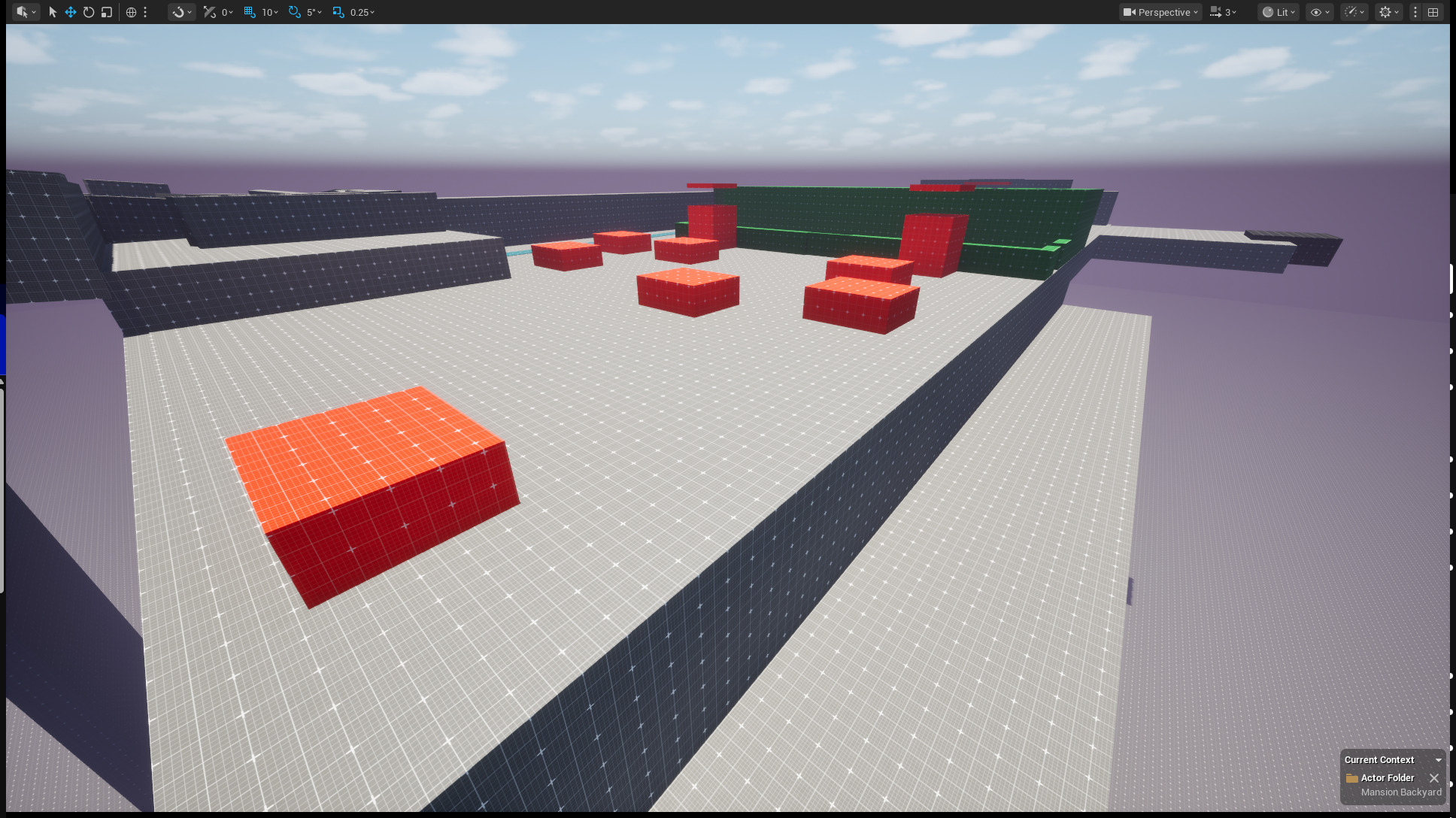
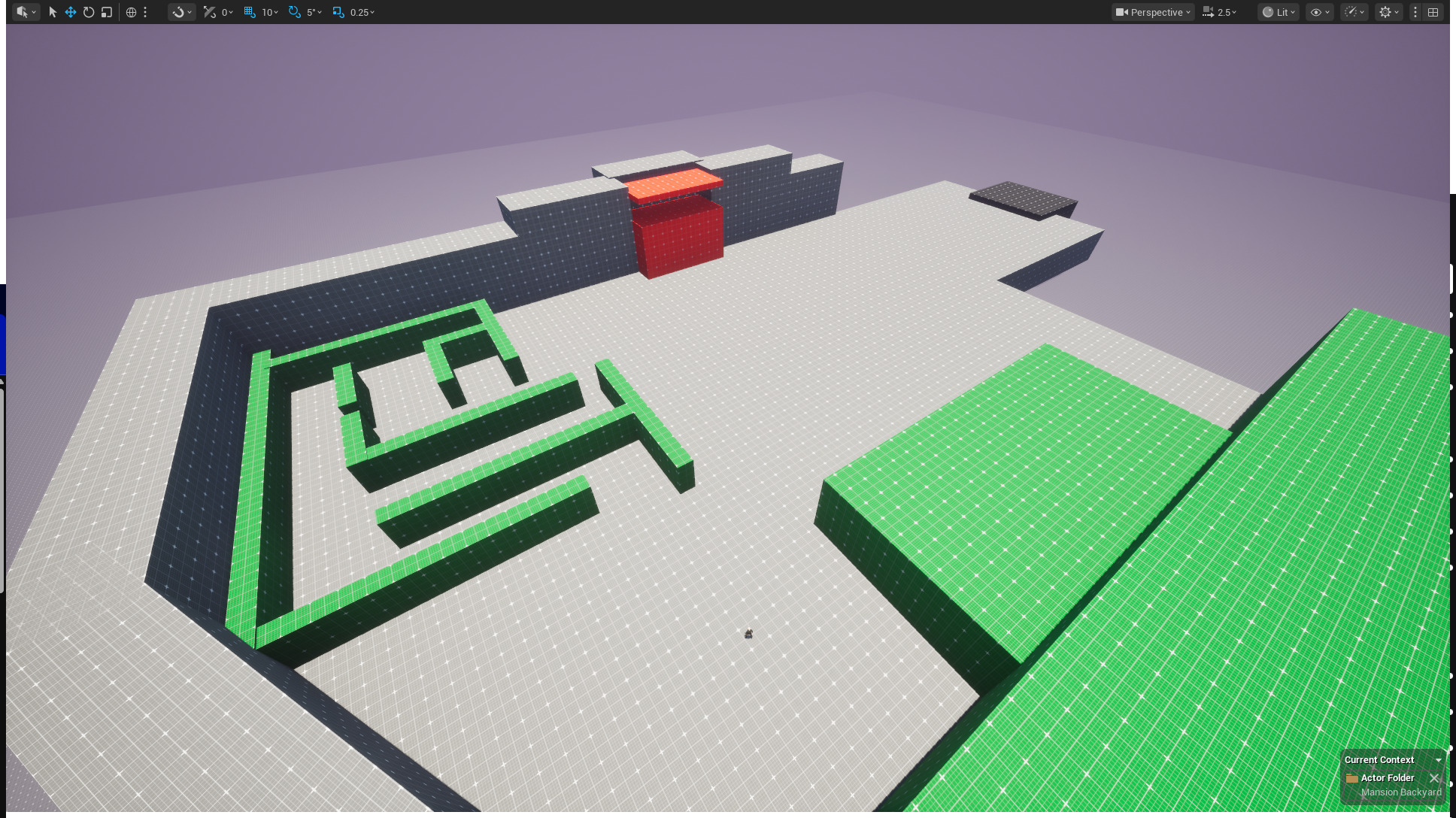
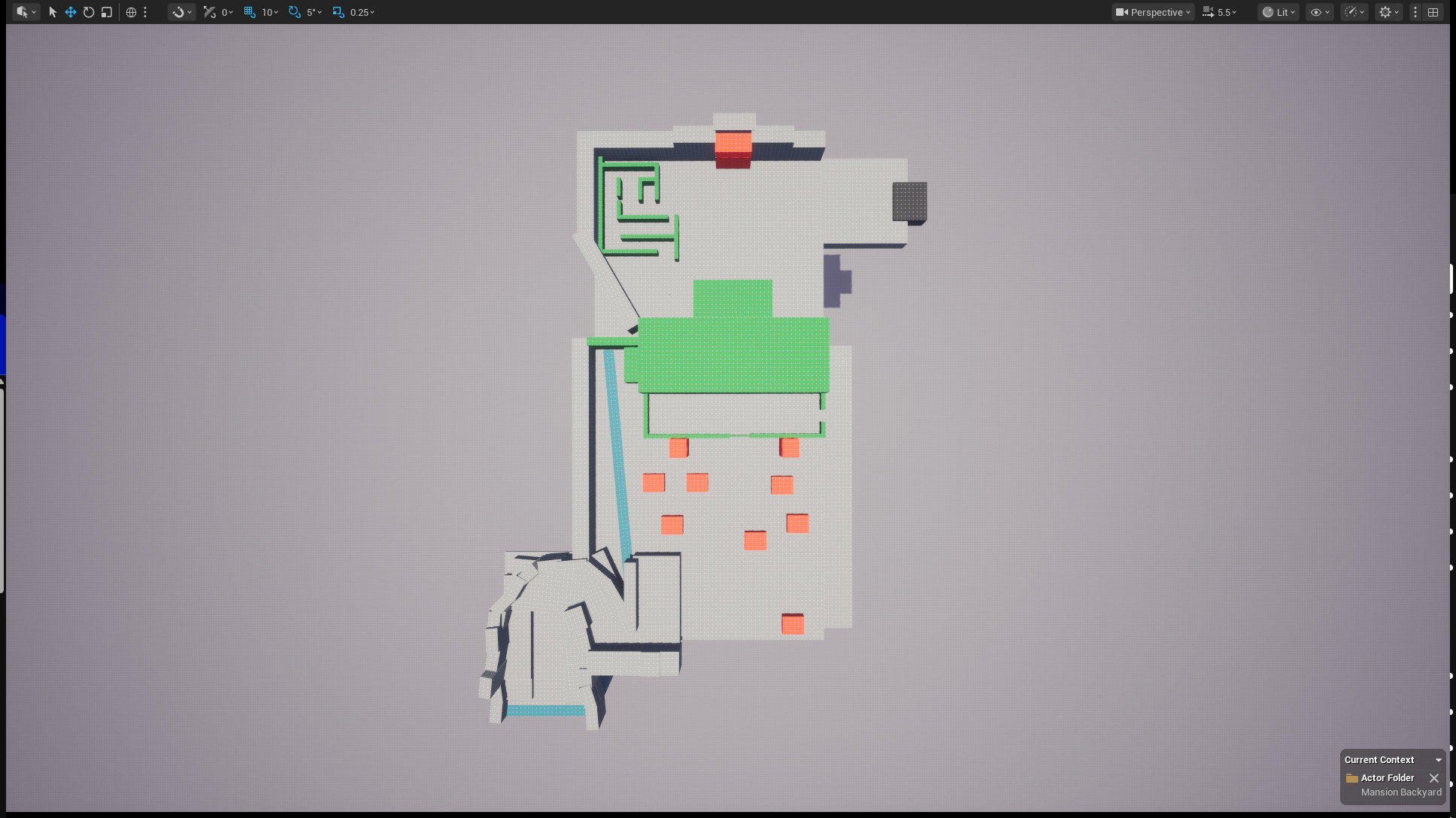
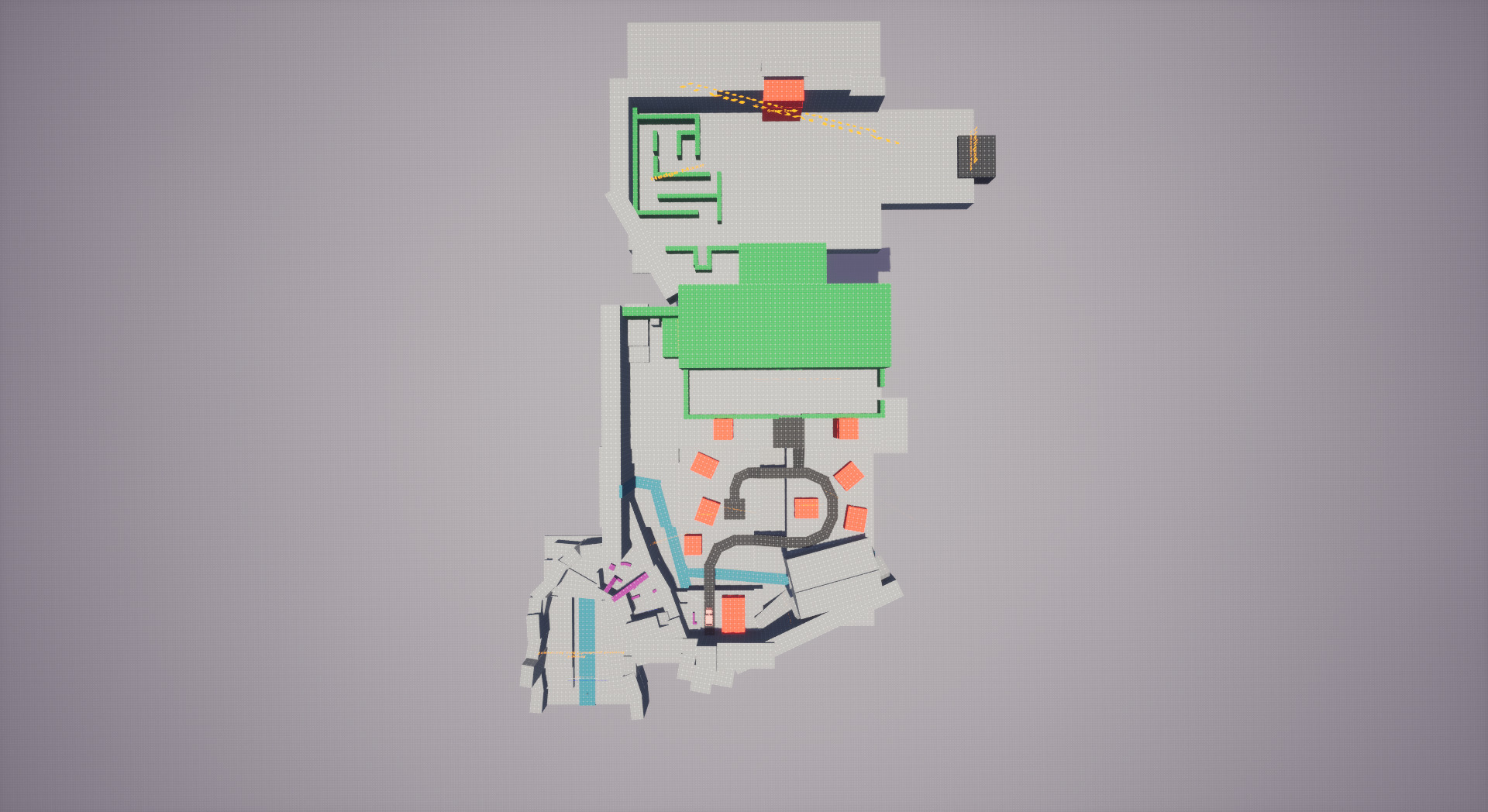
As I started building my 2D Map in 3D, I noticed that I would need to adjust the spacing of certain structures and paths to accommodate my specific player controller’s metrics. Spaces that didn’t seem too open in 2D felt very open in 3D. Elevation changes were also something I needed to address when building in 3D more than in my 2D Map.
Figuring out player metrics of what was a low mantle vs. high mantle vs. vault, for example, helped me in figuring out how I should build player paths to accommodate player navigation. Using simple blocks to represent big structures was a good method for figuring out details like how tall I wanted my mansion to be, how big guard tents were, and how much positive space versus negative space should be present.
Iteration 2: Narrative
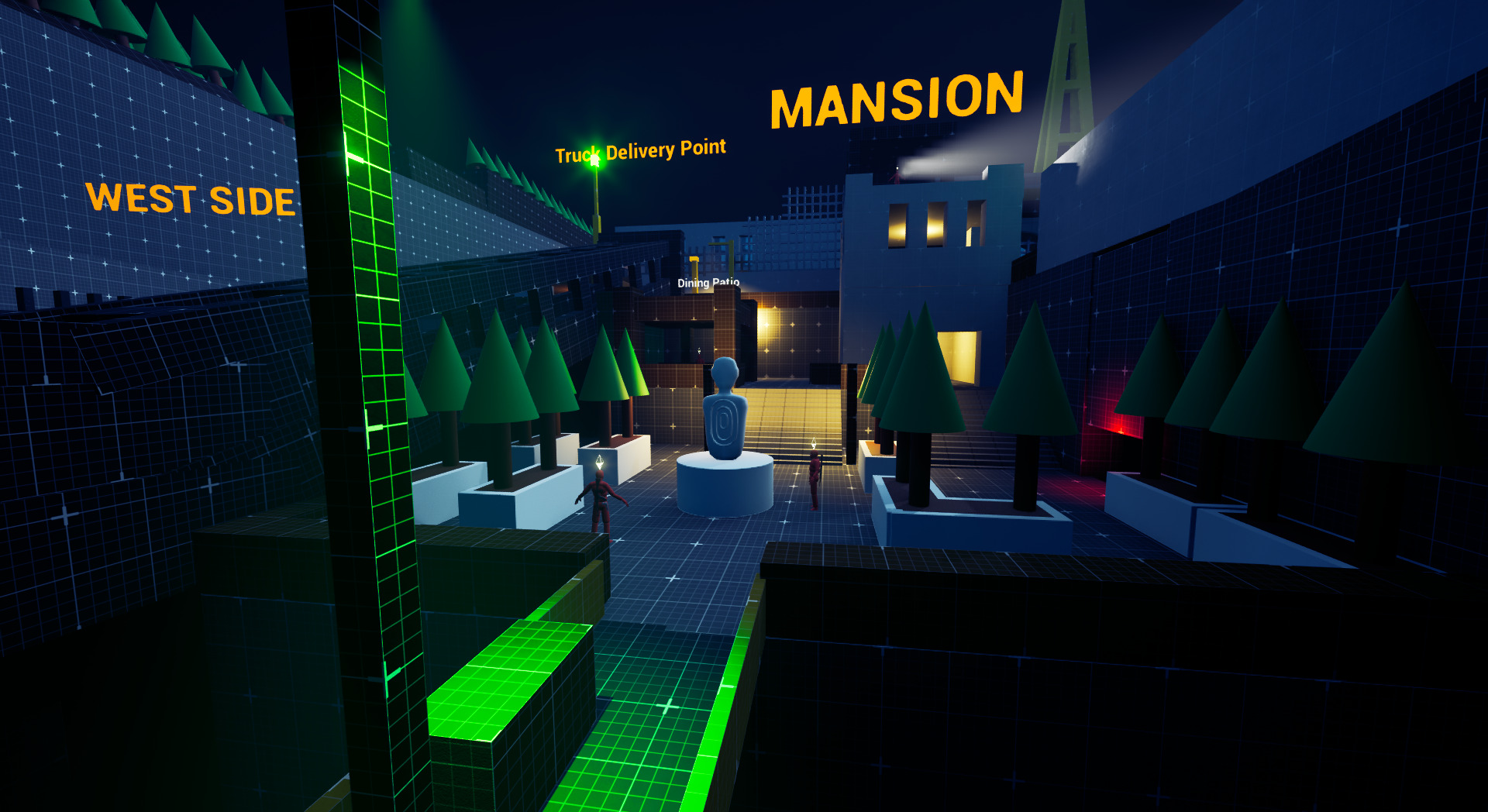
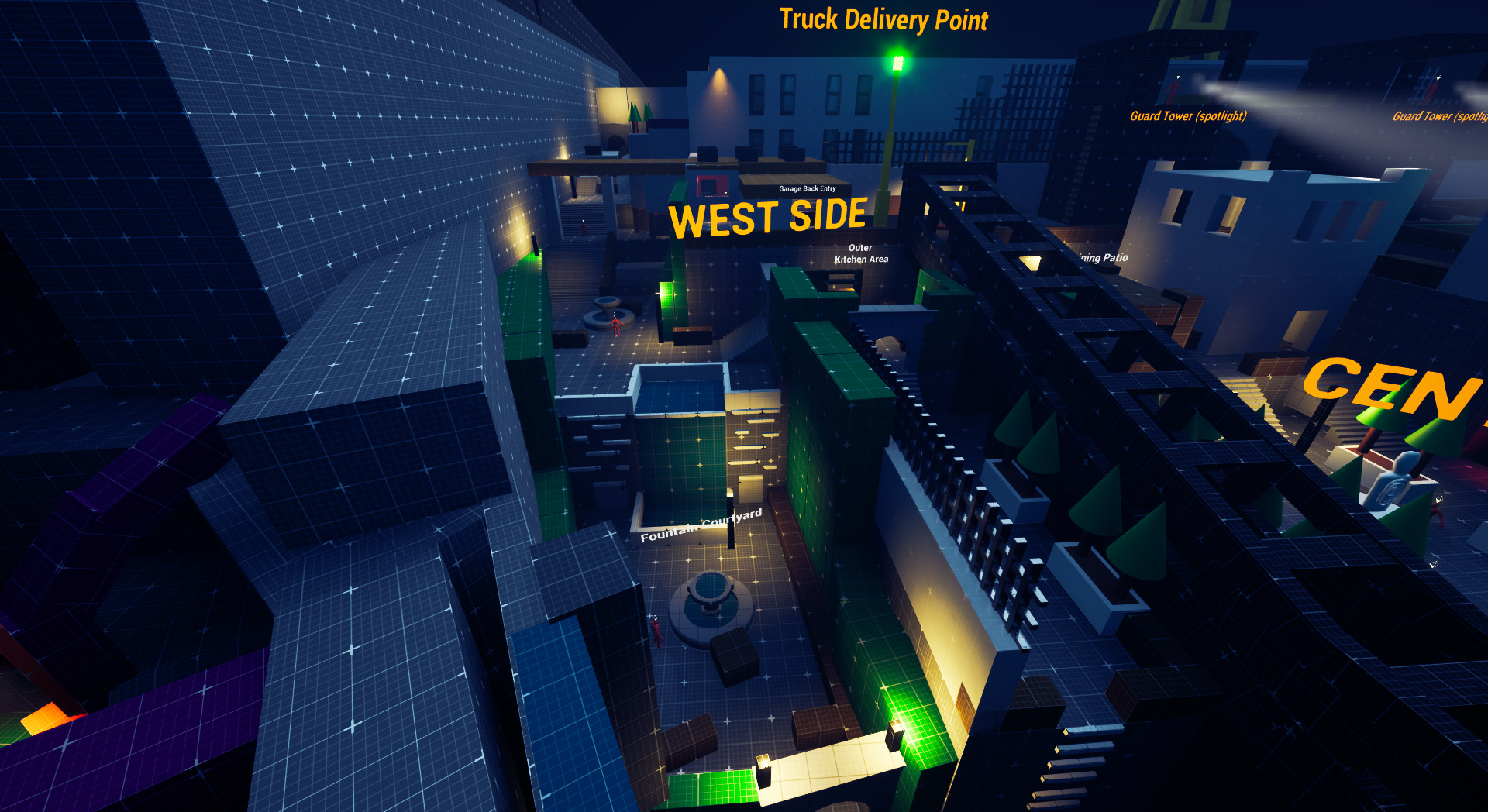
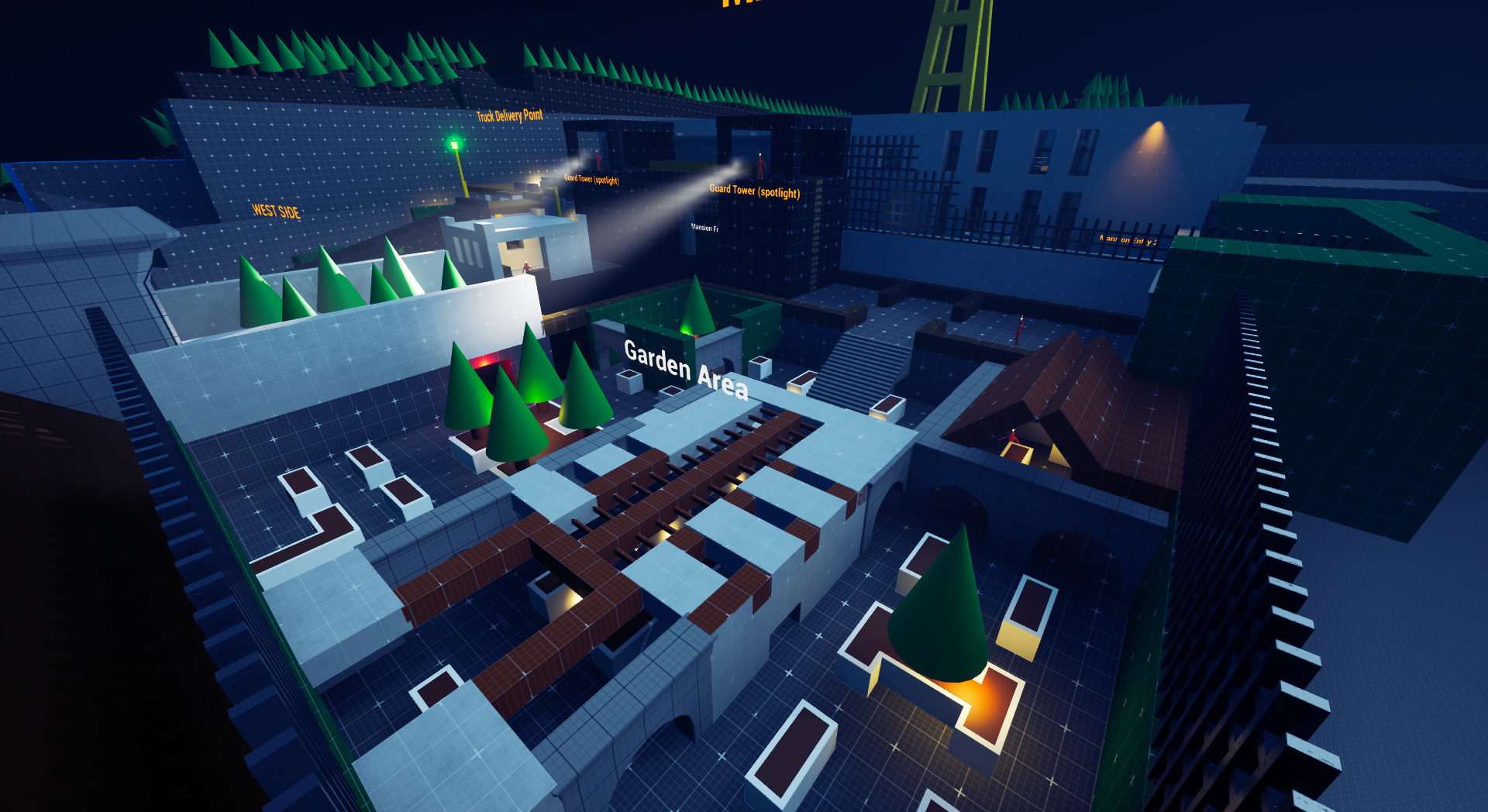
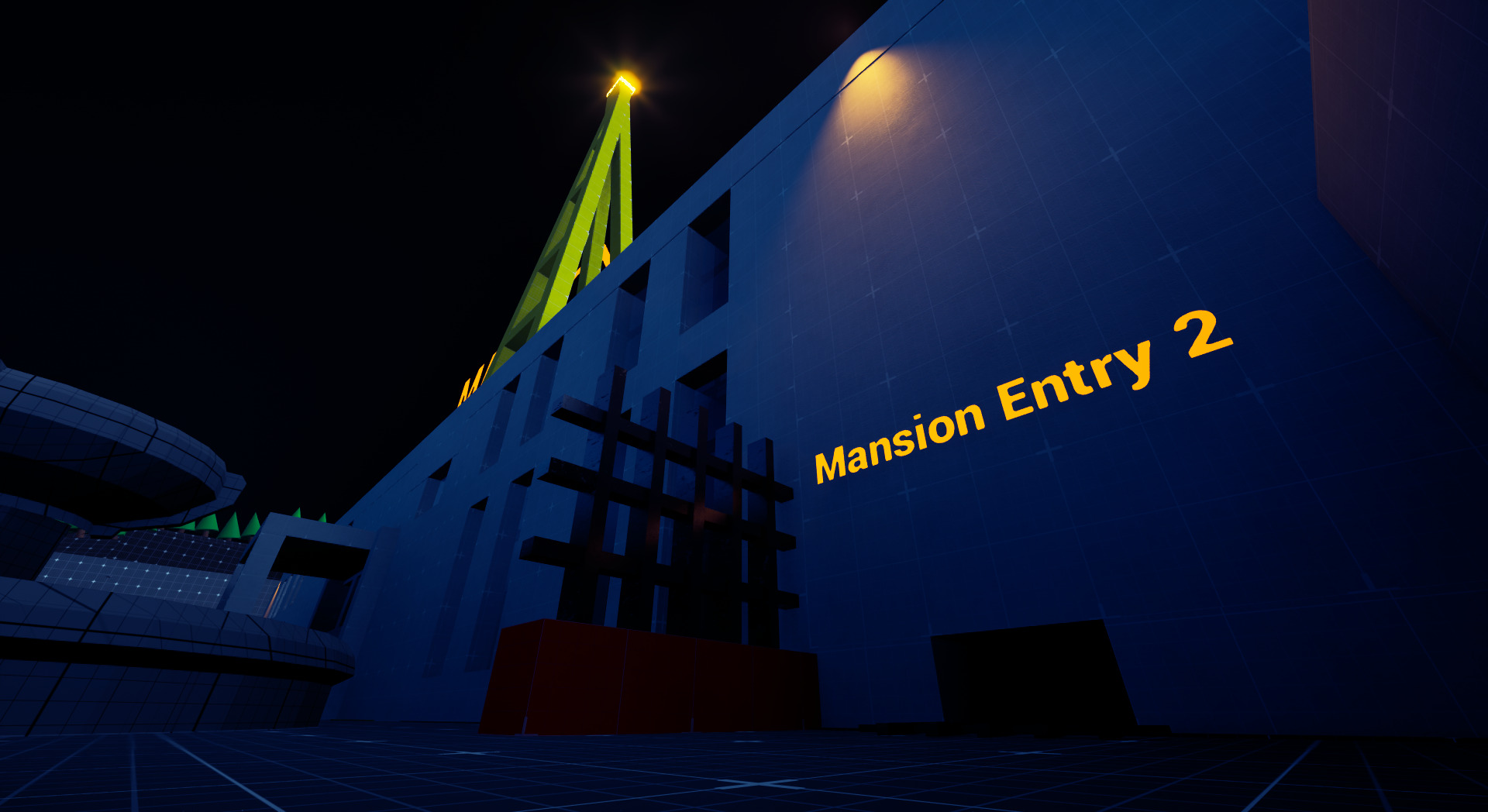
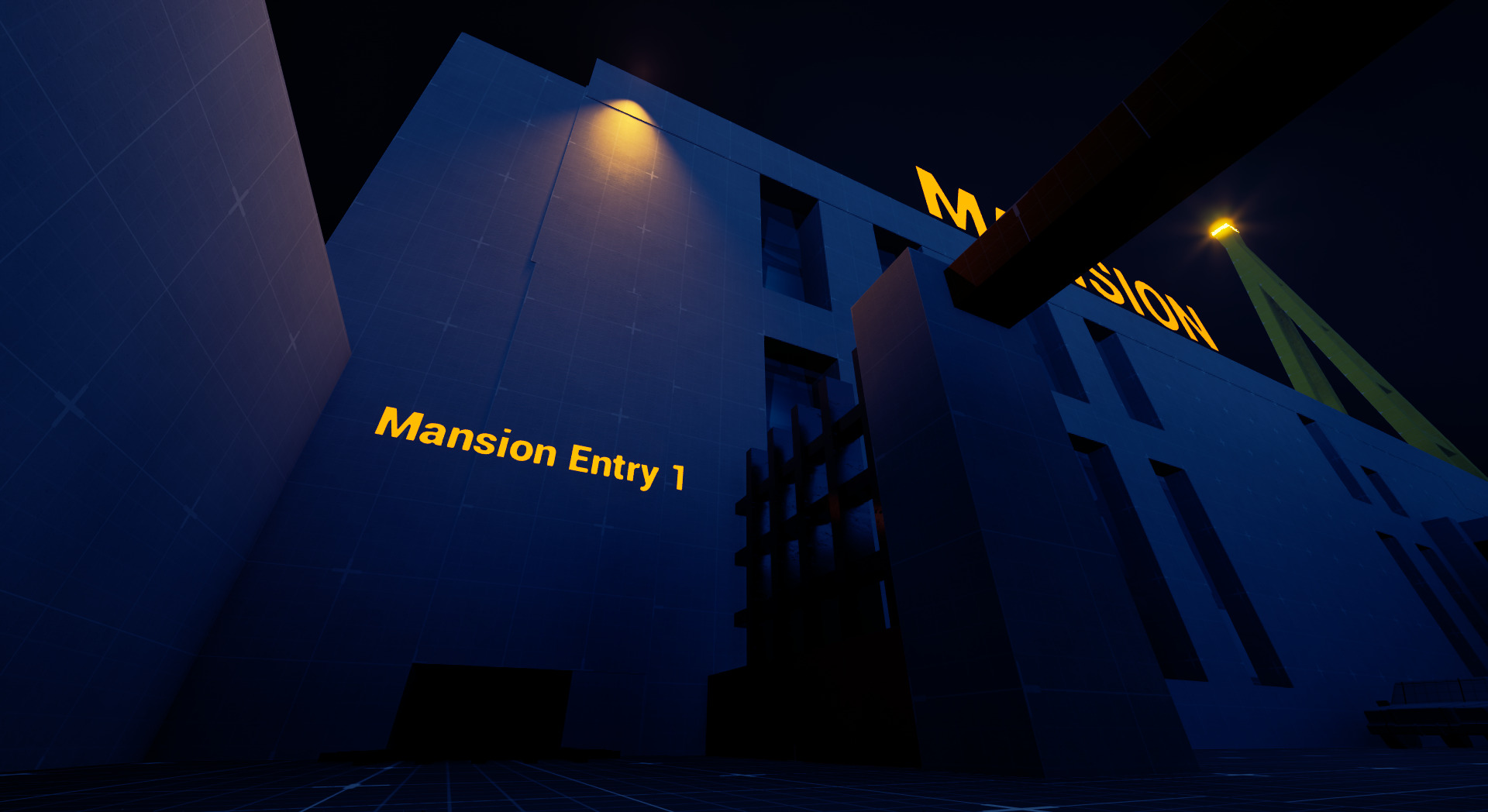
In this iteration, I started to communicate the narrative importance and threat level of the mansion by raising it much higher and adding verticality to the overall layout. I took a multi-layered design approach where the terrain steps up as the player approaches the Mansion, which does a couple things: Increases the tension of approaching the mansion, and creates much more interesting player pathing on the way there.
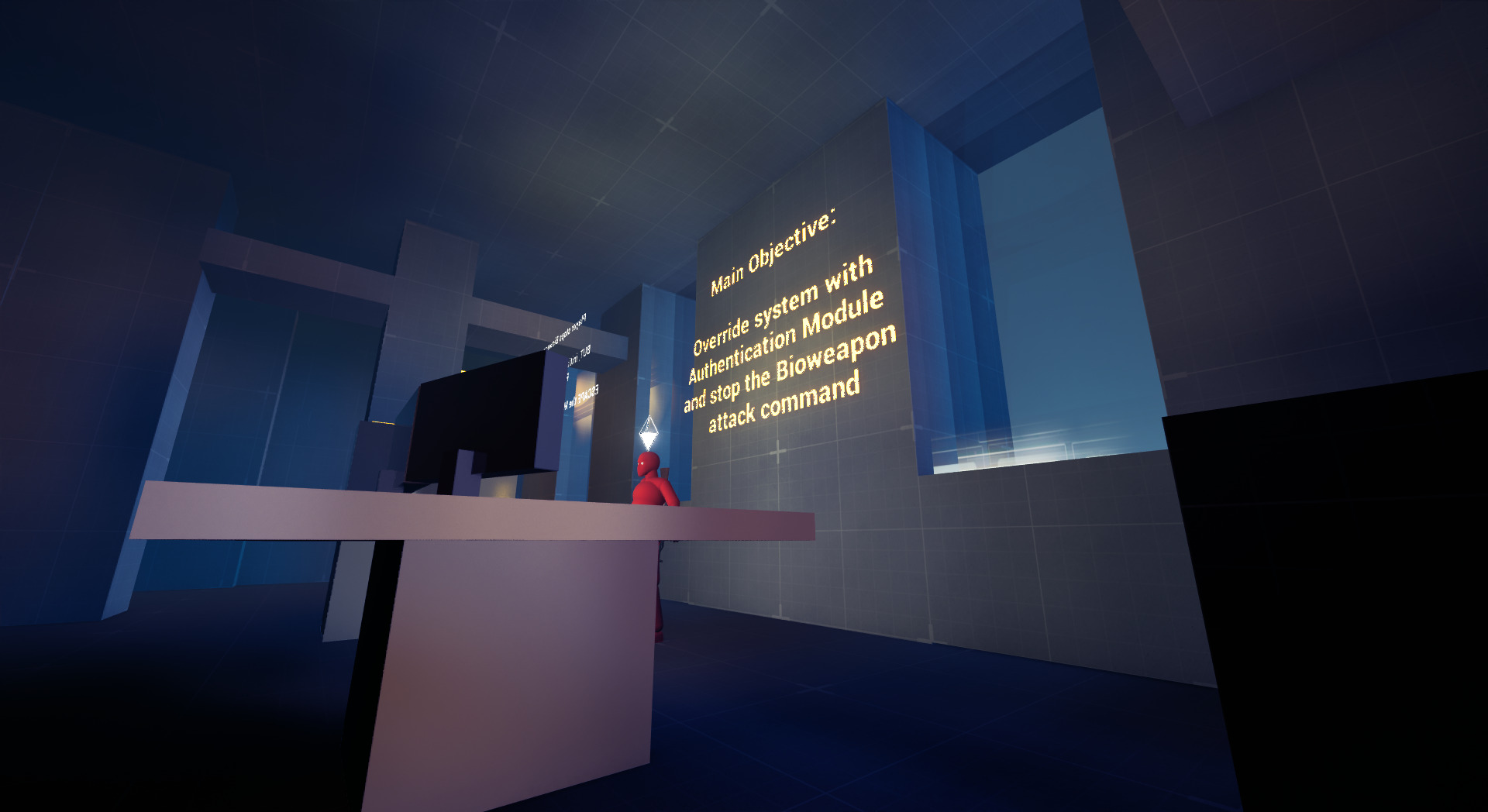
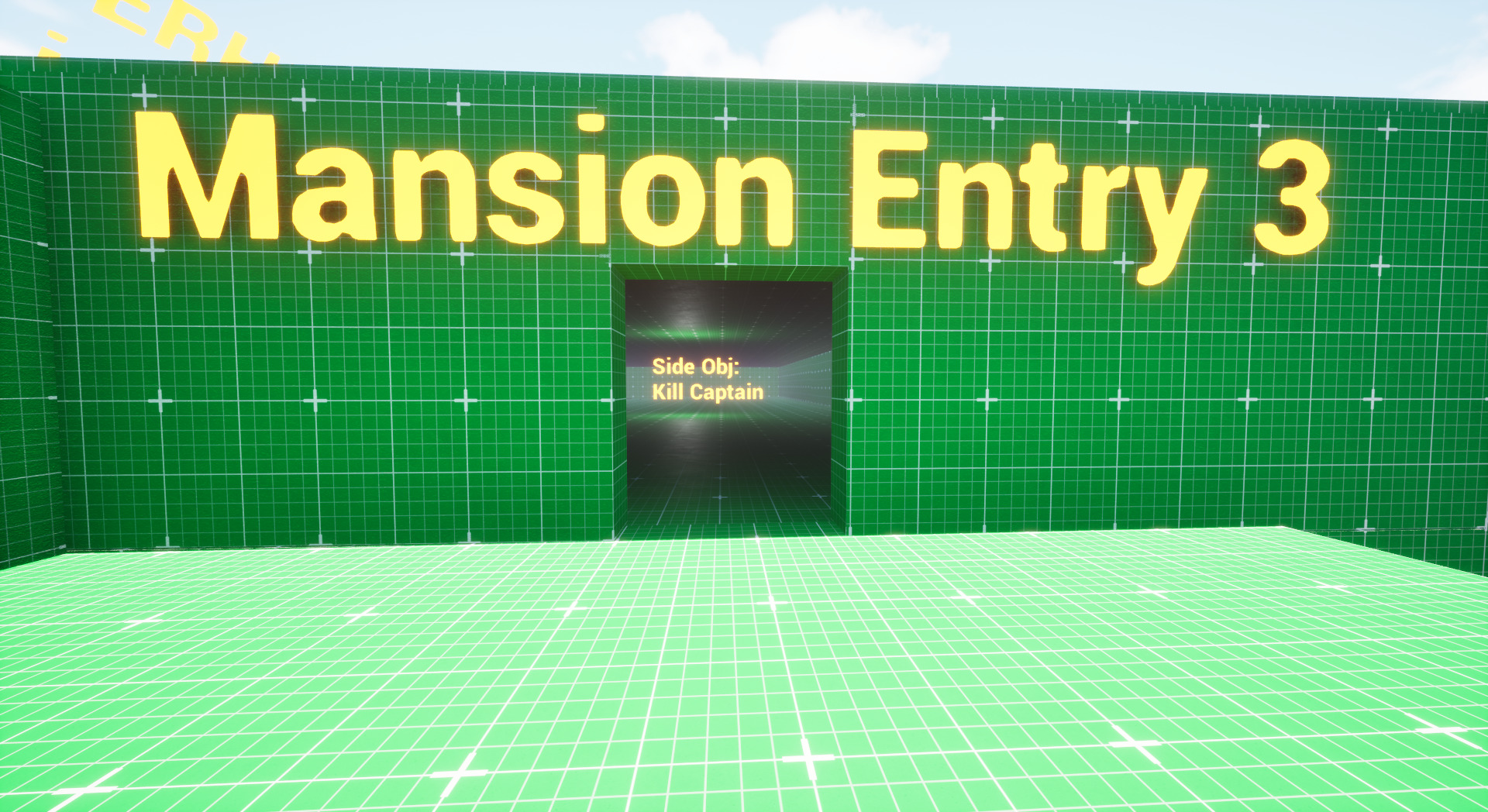
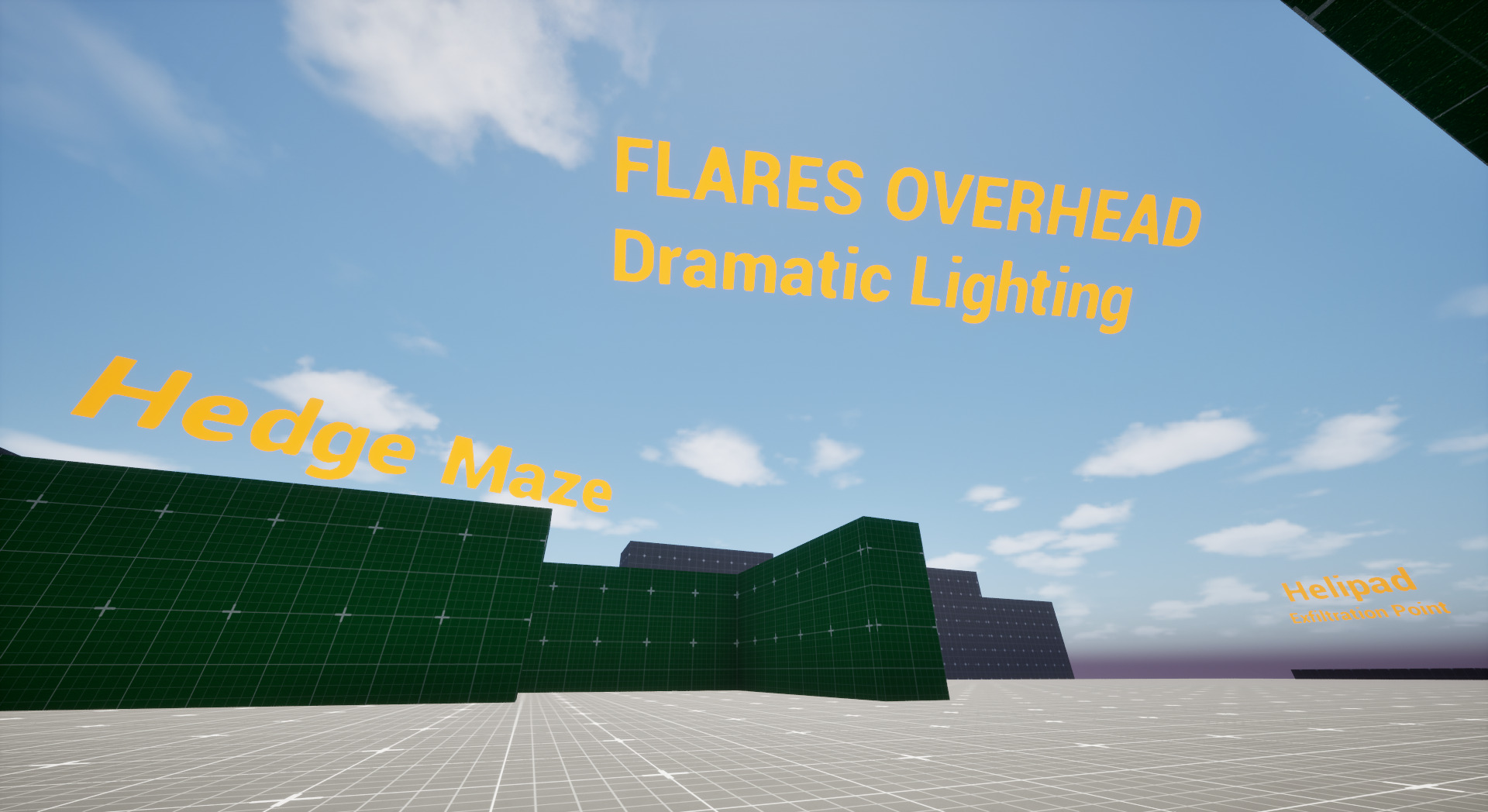
I made sure to include narrative text throughout the level that highlights important beats such as the main objective (the mansion) and side objectives (i.e. Kill the Captain, Find the CIA Asset’s Intel Files, Free the Prisoners).
I built out the guard tents and the enemy checkpoint to ensure the correct metrics and gives spaces for the guards to roam around in/around while they patrol.
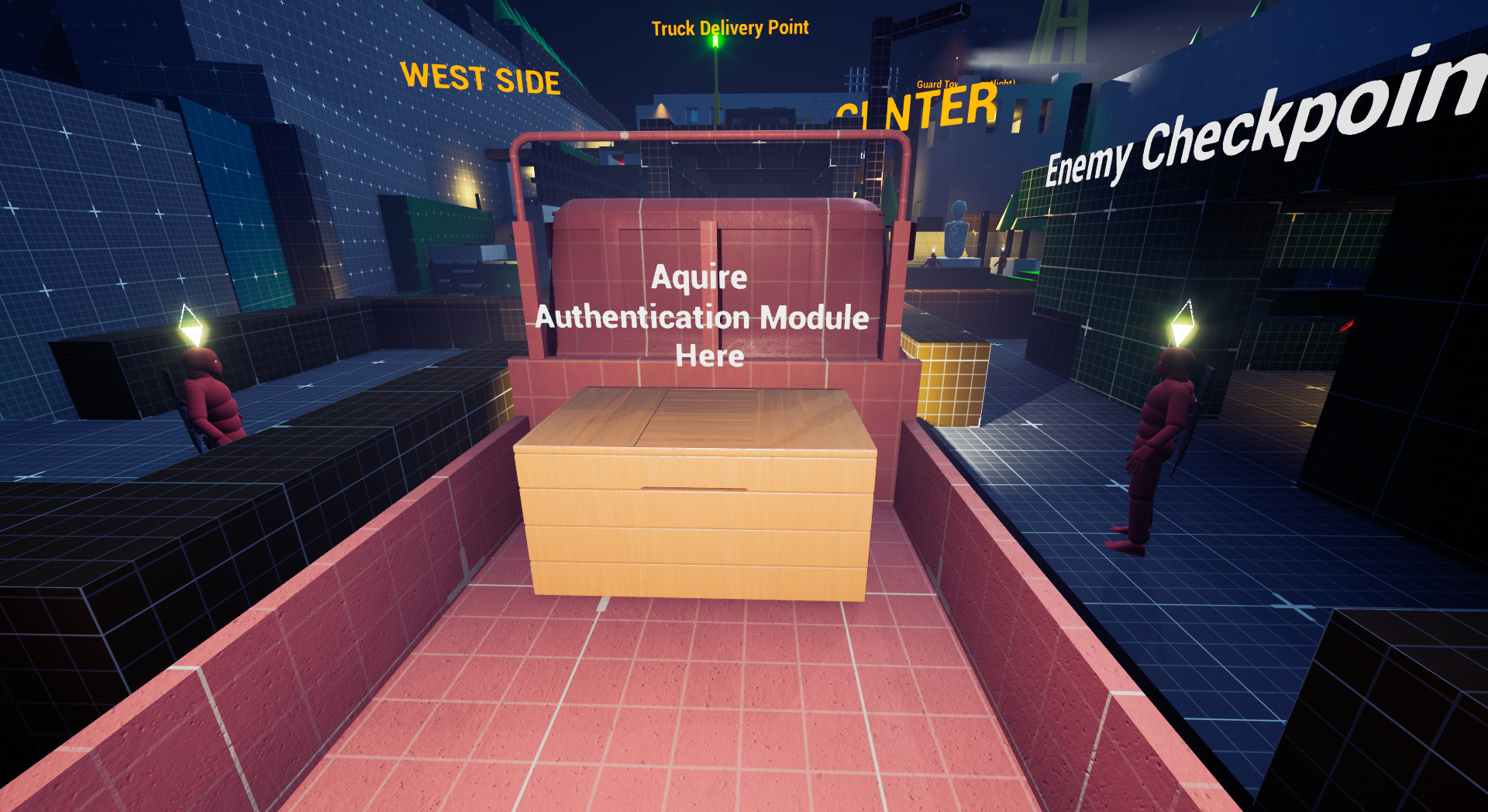
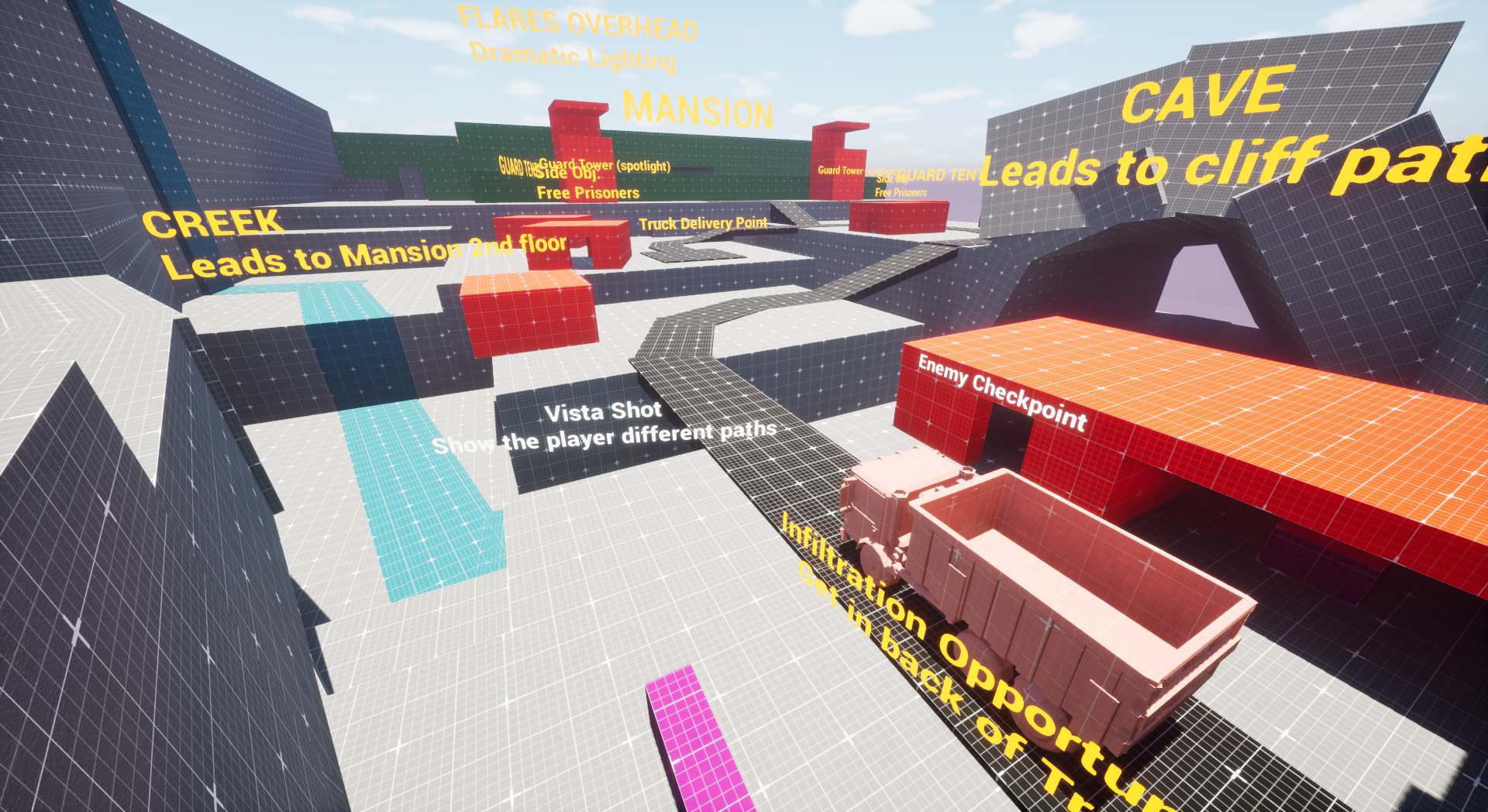
I moved the truck event much closer to the player’s entry point into the mansion approach section to highly increase the chances of the player harnessing that opportunity for infiltration. I did this while also expecting players to potentially forgo the opportunity and explore other opportunities nearby.
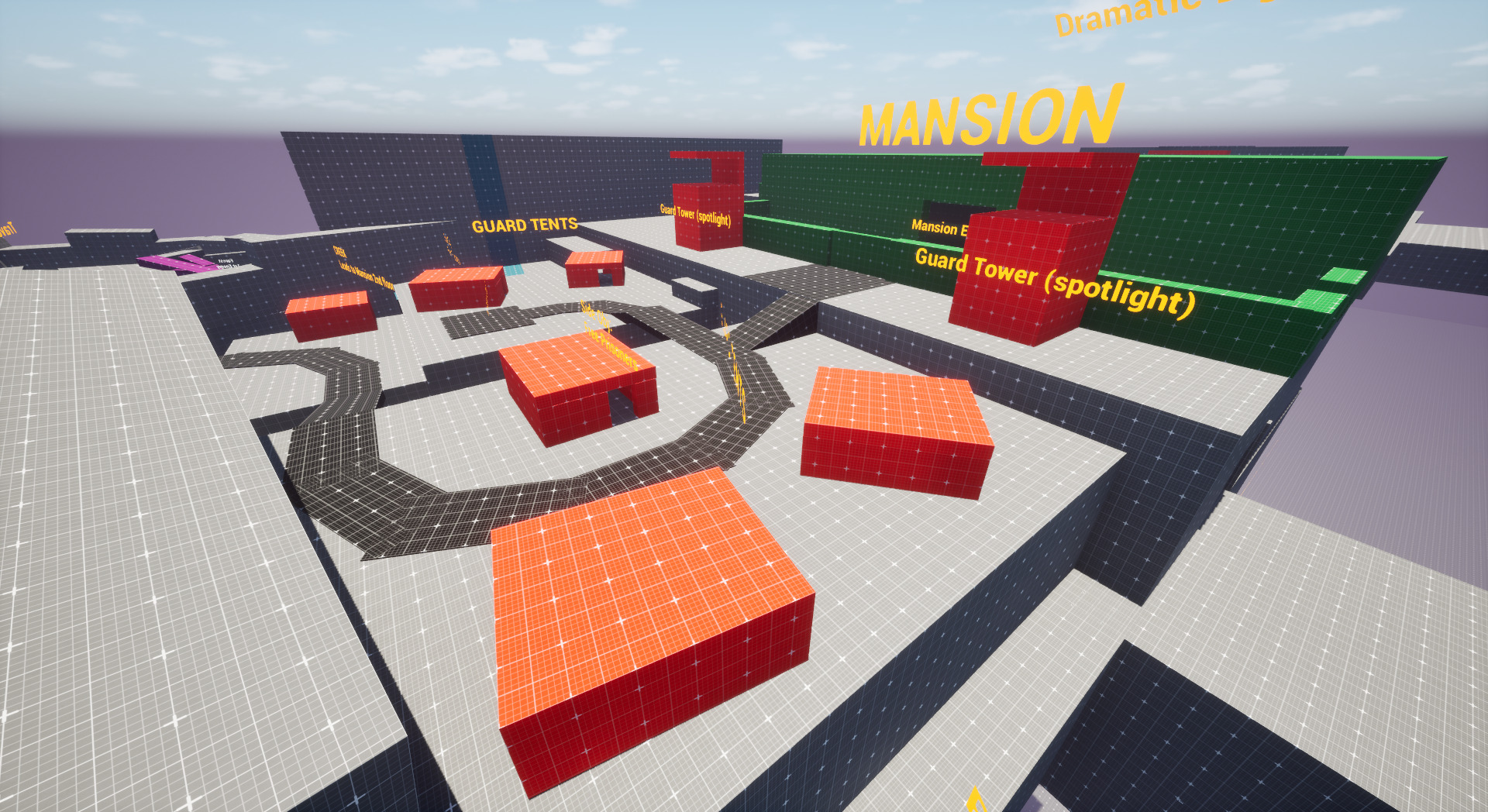
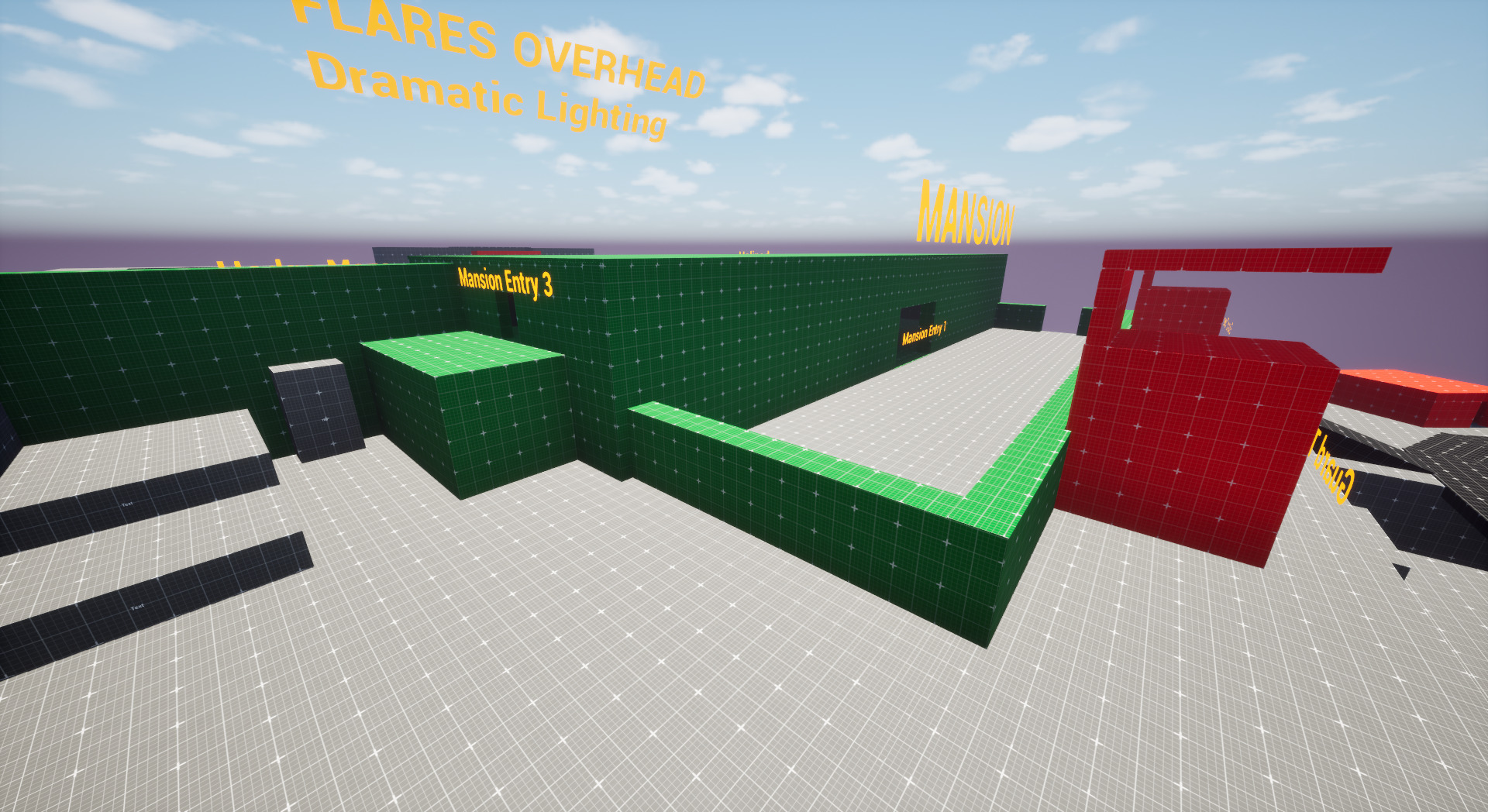
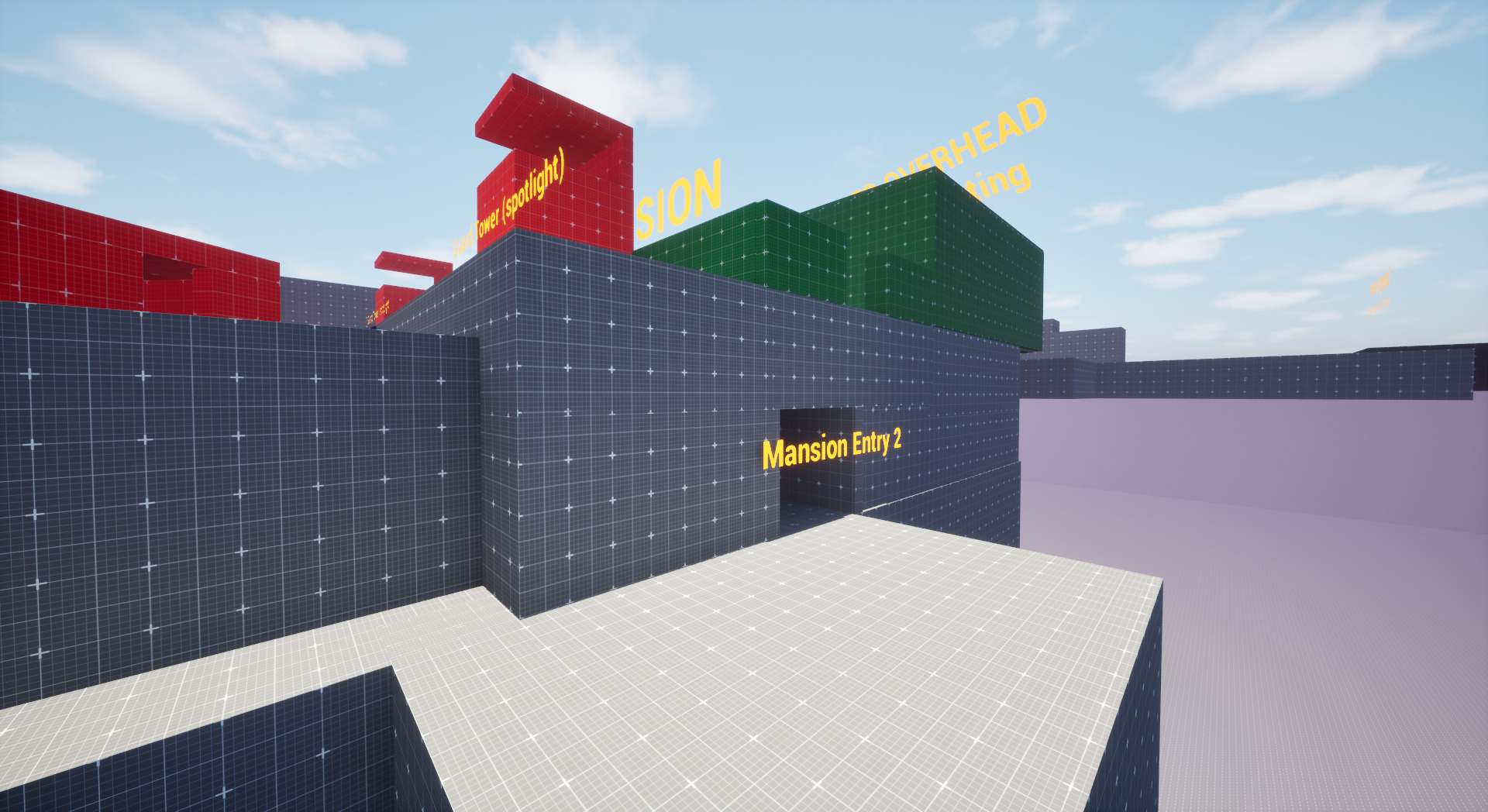
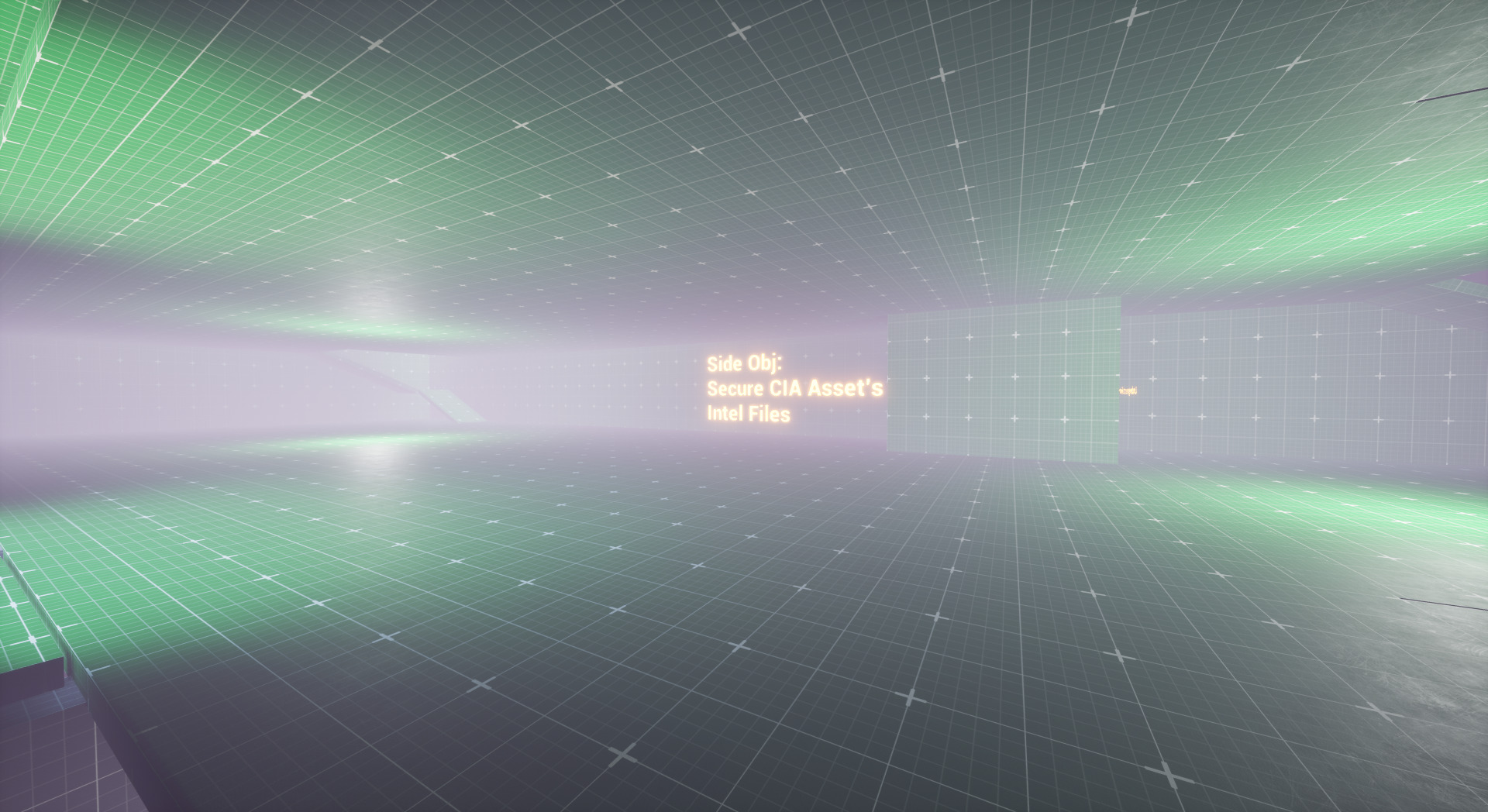


Iteration 3: Enemies
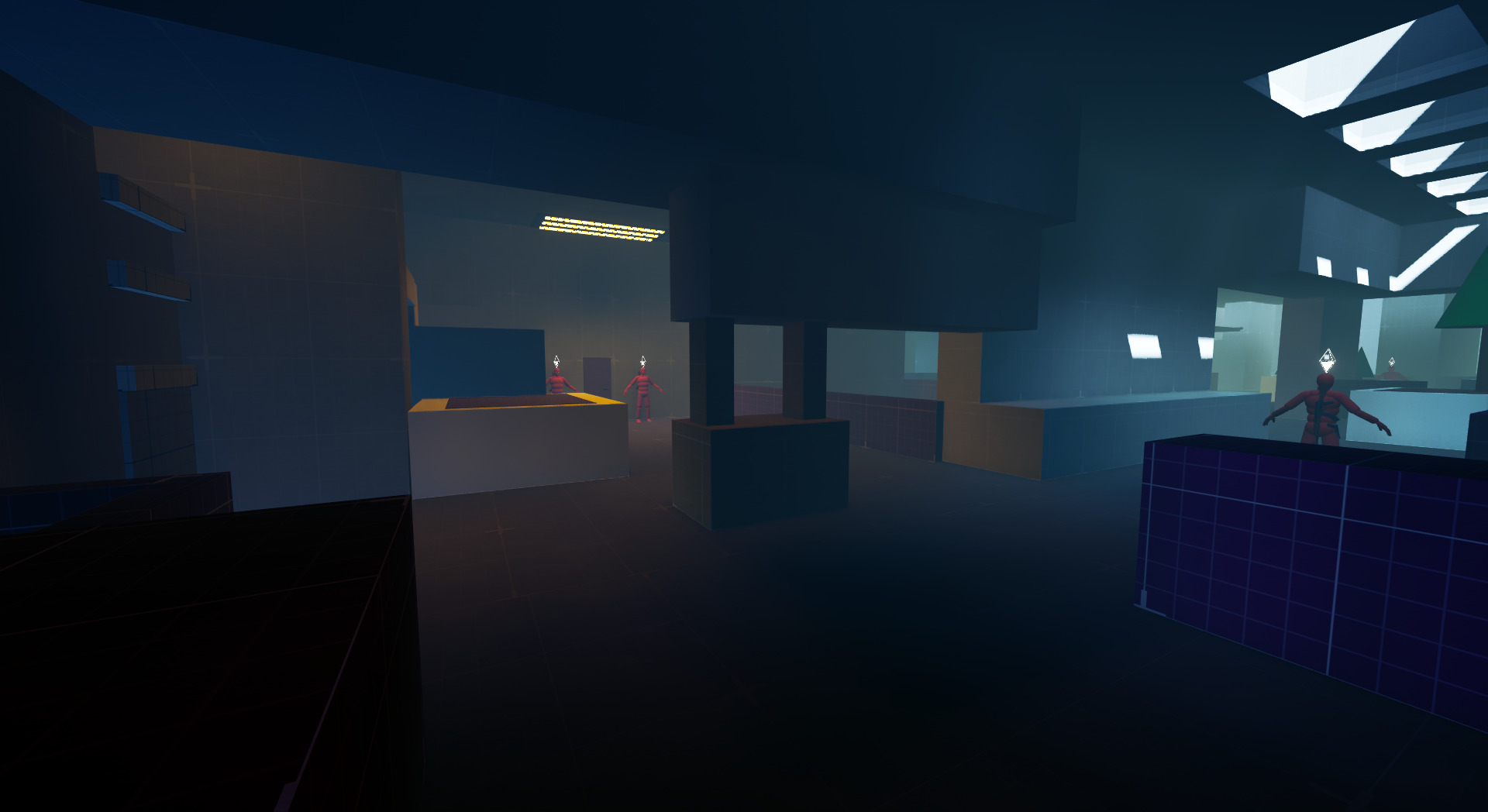
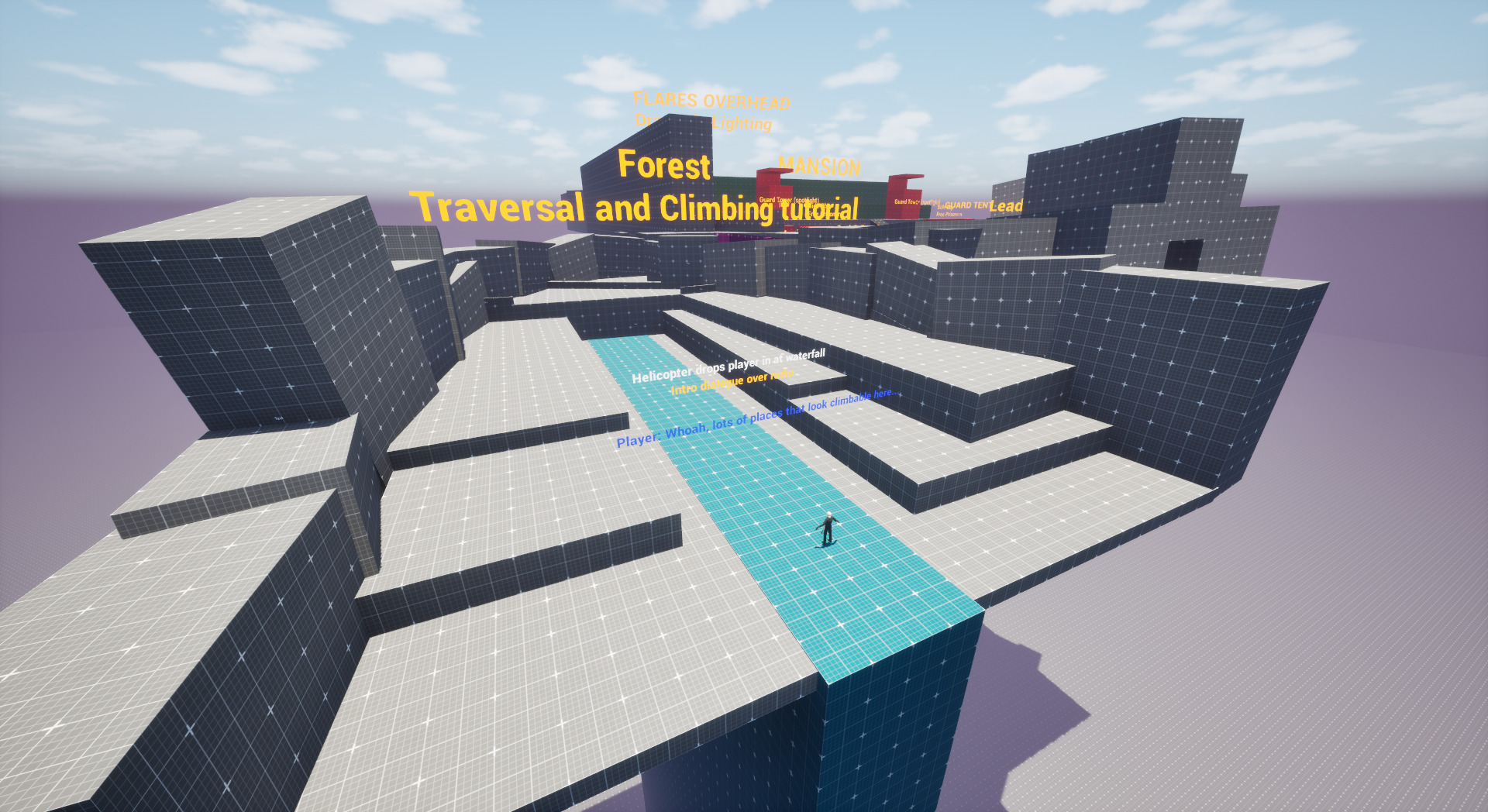
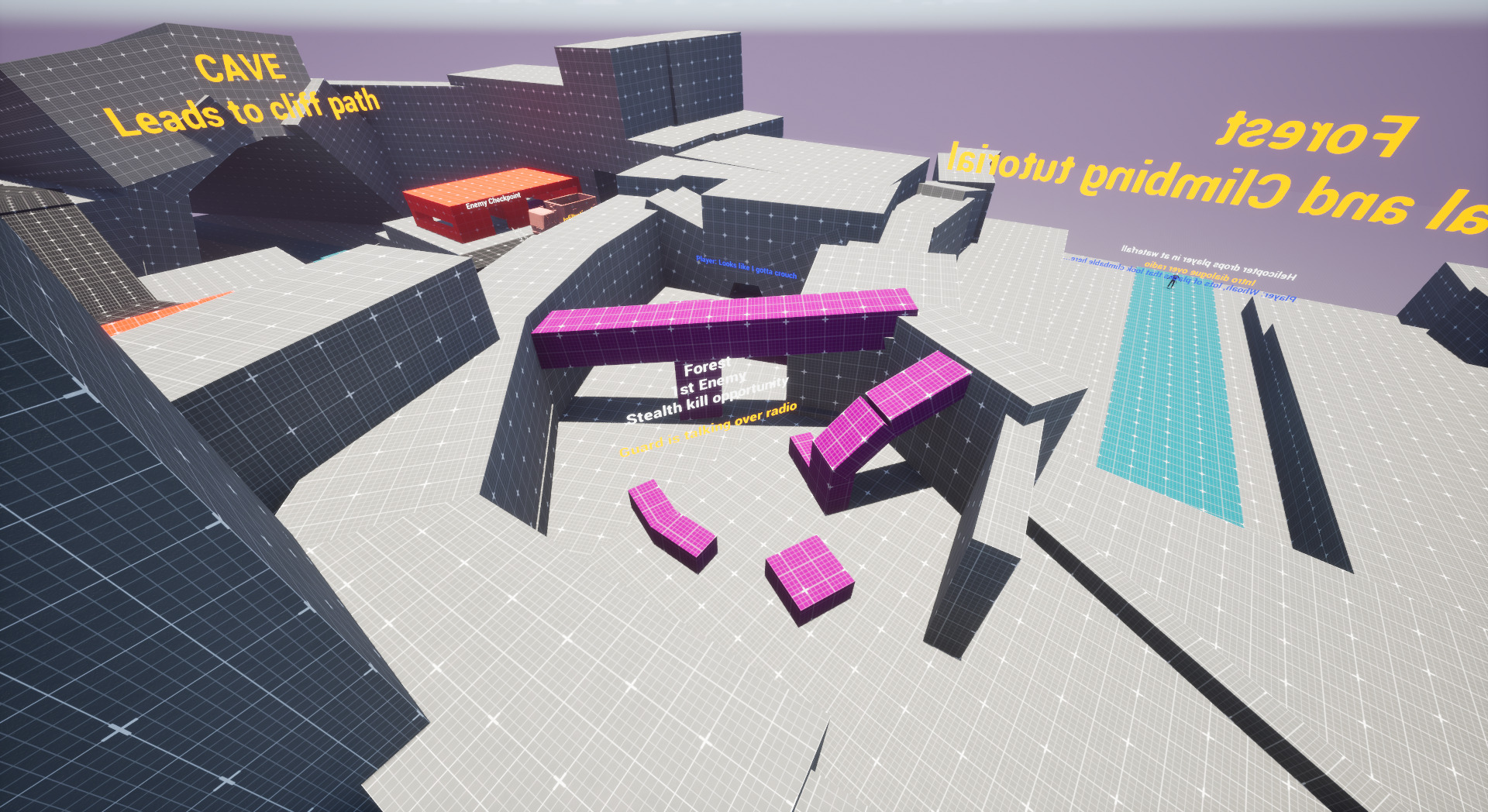
With adding enemies in this iteration, I had to make a ton of changes to the flow and size of my level. I very quickly realized that even with the added verticality and shrunken down scale, things still felt too large for the mission I was creating.
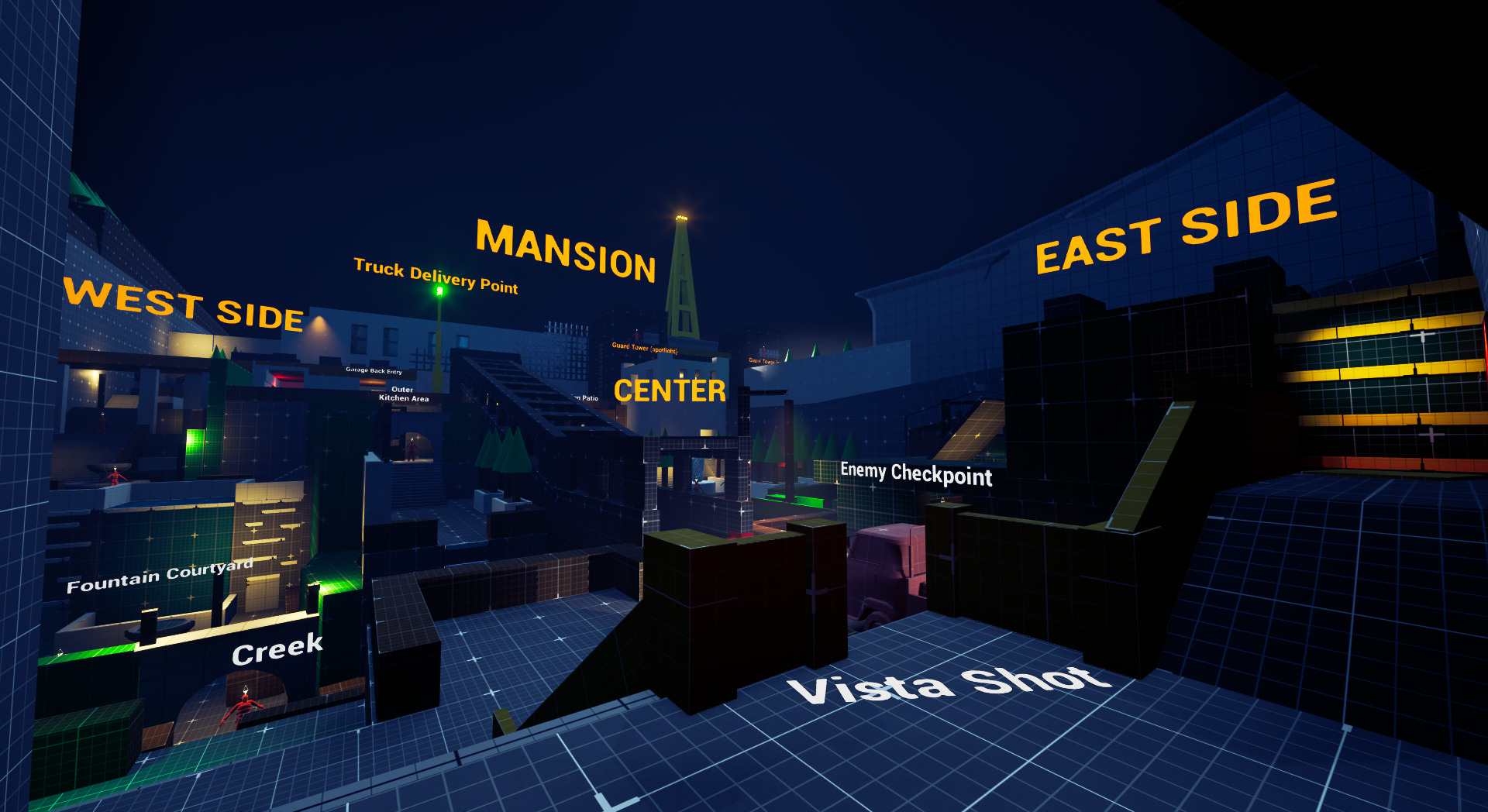
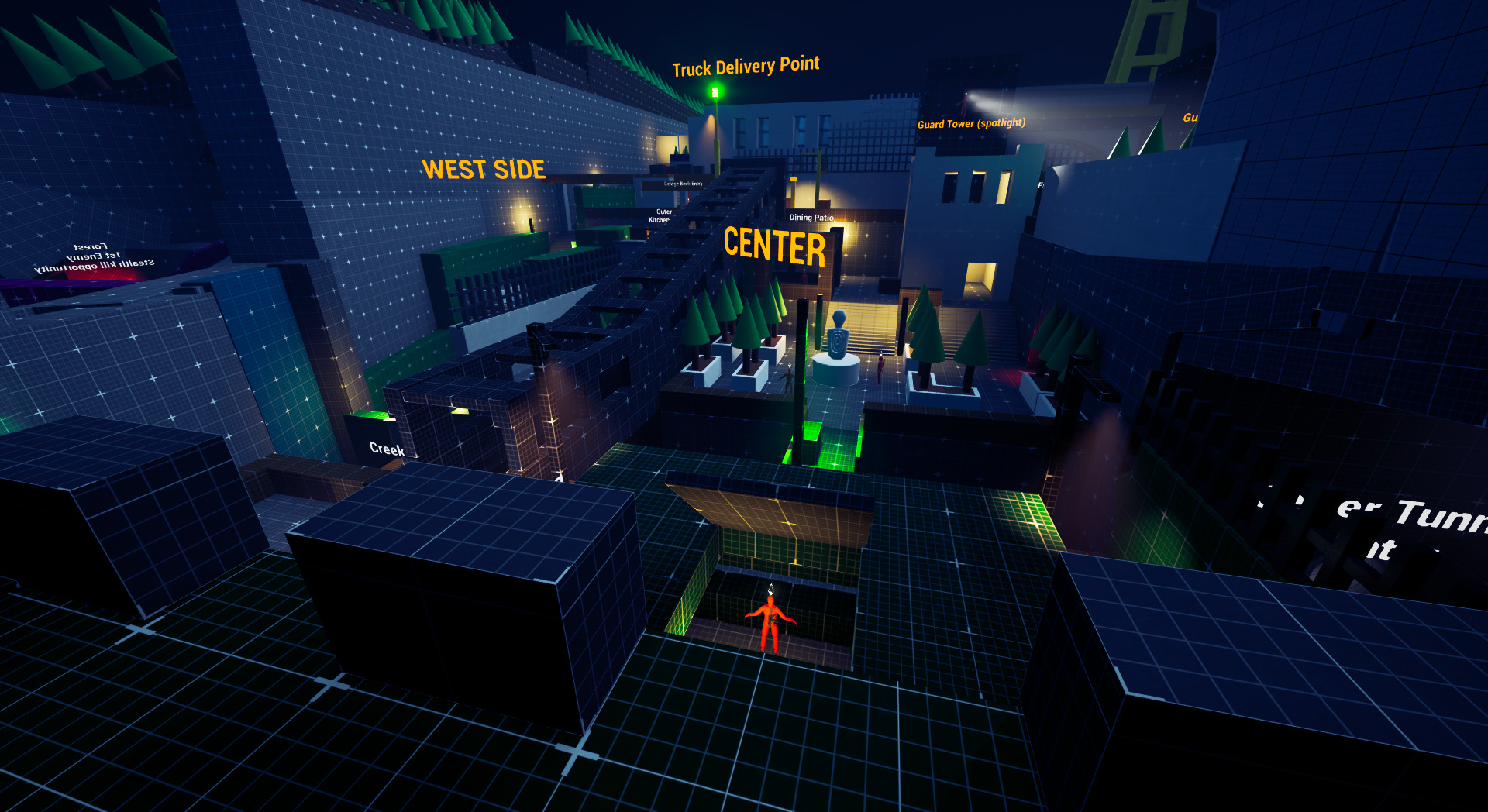
This prompted me to once again adjust the scale of everything, especially in the vista shot that includes the mansion and a view of different paths to take there.
I added significantly more cover in areas where enemies would be present, adjusted sightlines so that there was less open space, and made a larger variety of obstacles for the player to traverse. This was not only for the enemy encounters but also a stronger sense of player agency.
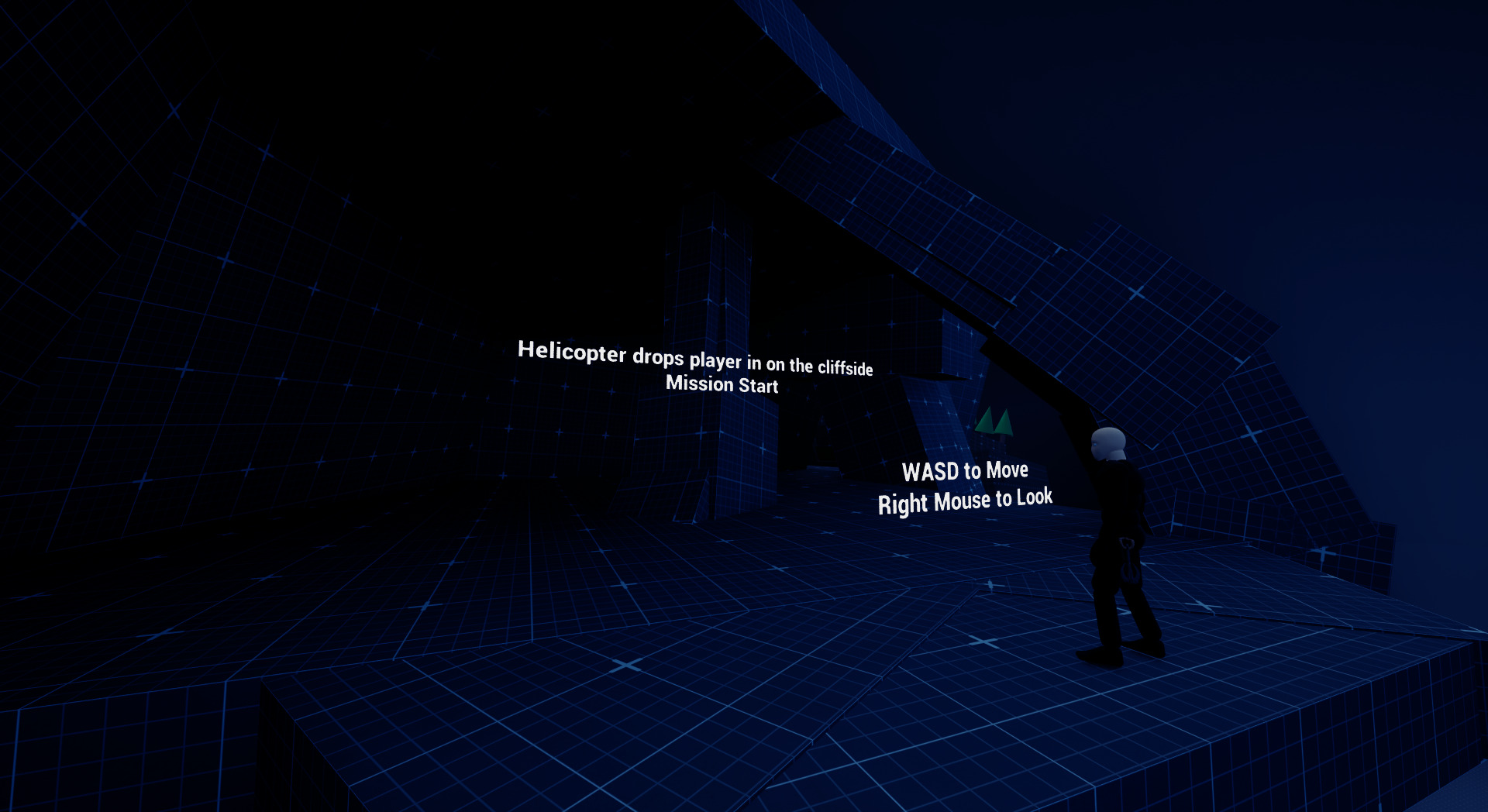
One massive change I made to the layout were adding a whole new intro section that more methodically teaches the player each of the traversal controls before teaching them the stealth mechanics for the first time. It’s more linear and funneled, which allows for more clear direction for the player and a better feeling of accomplishment.
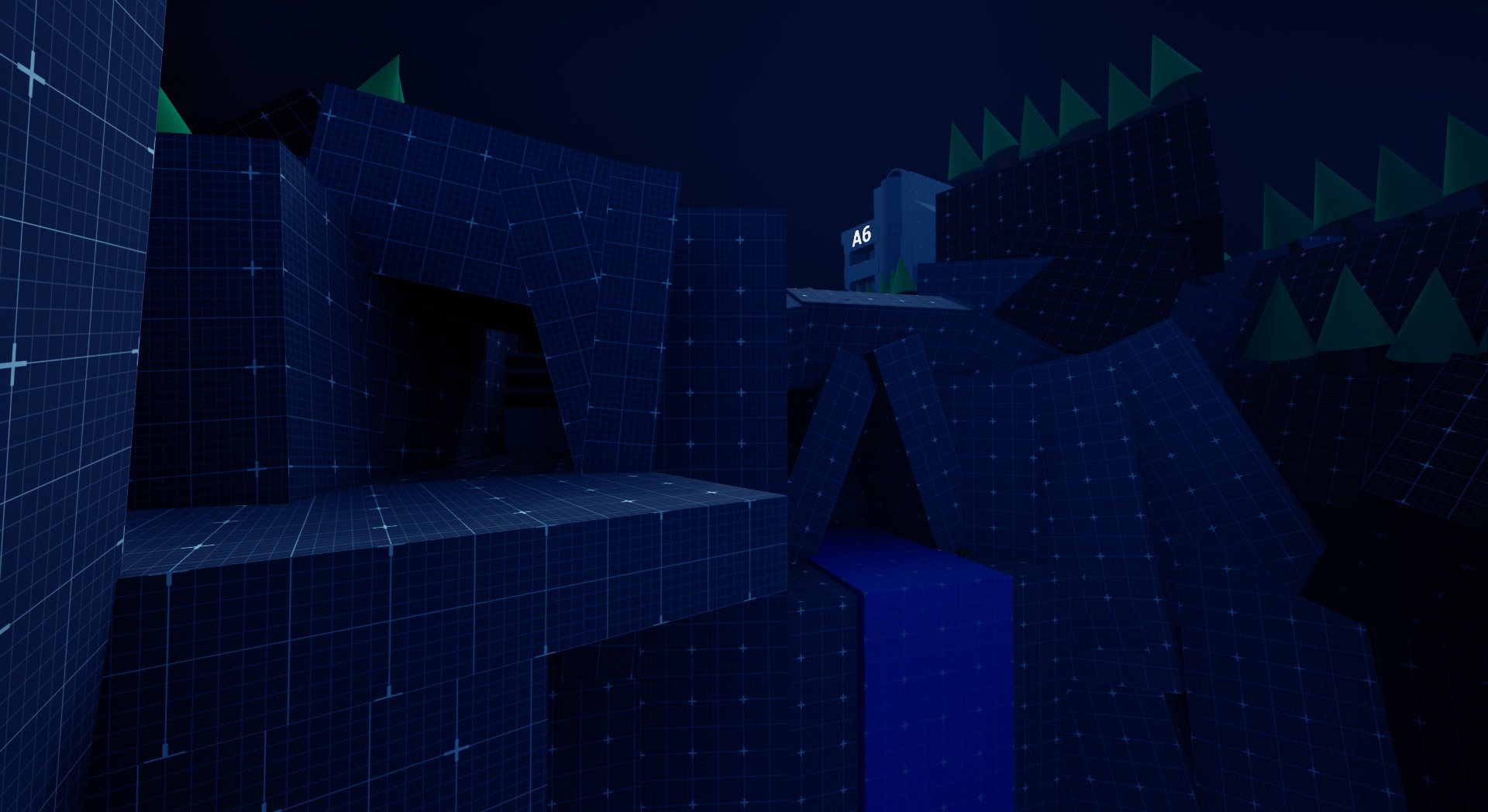
I also reoriented the player’s view and direction when they first see the vista shot by adding a more complex traversal section where the player cuts through sewer tunnels to make it to the mansion approach section. This is much more effective at delivering the vista shot at a well-framed angle, while also adding more variety of environment by having the player cutting through an area they aren’t allowed to be in. It gives a better sense of being a covert operative using knowledge of the environment to best their enemies.


Iteration 4: Scripting
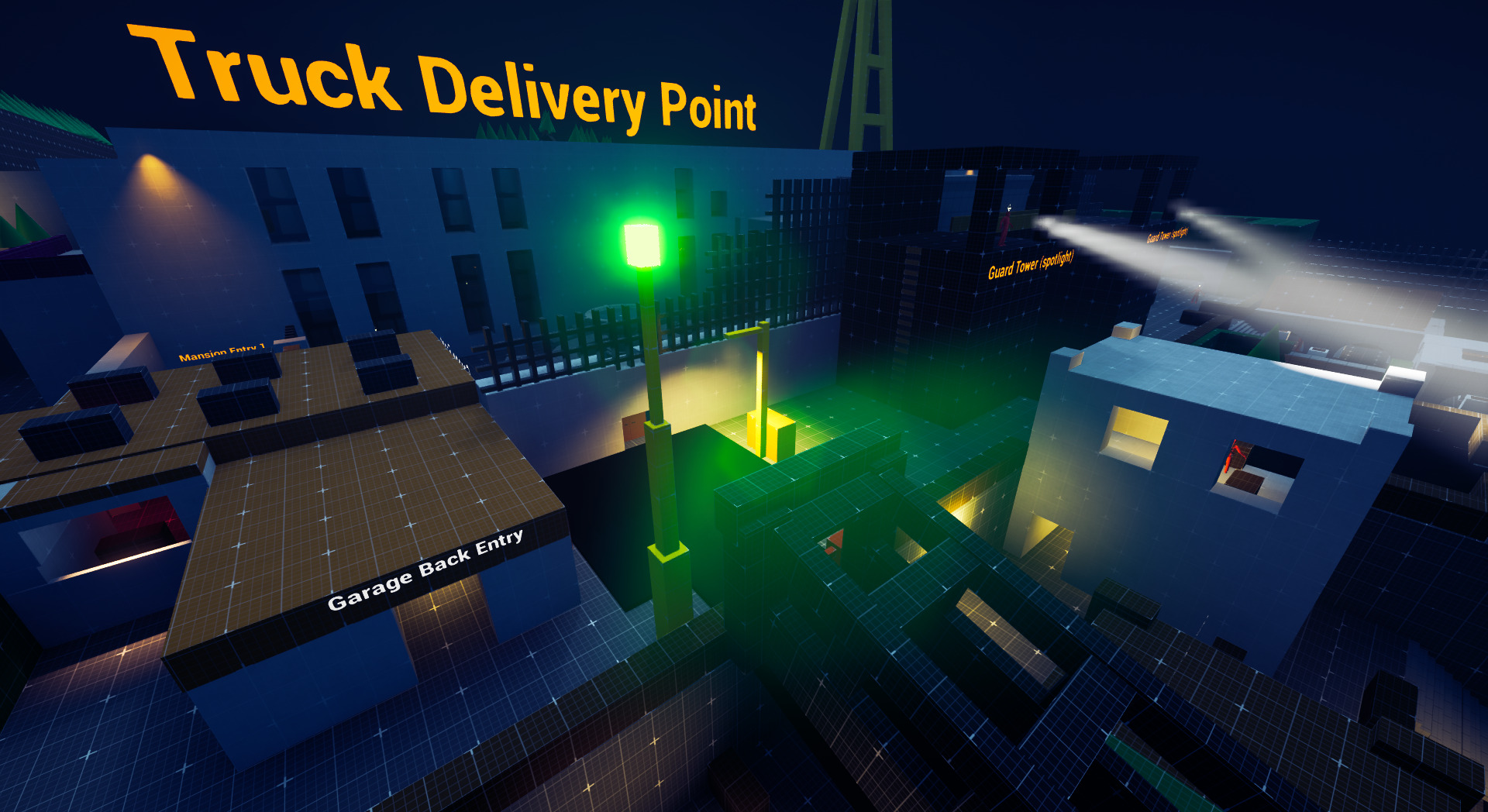
In this iteration I focused on both visually communicating the level’s mood and adding scripted events. I incorporated a level sequence event for the truck at the beginning of the level’s open area, where the player has the chance to hop in the back and infiltrate the mansion this way.
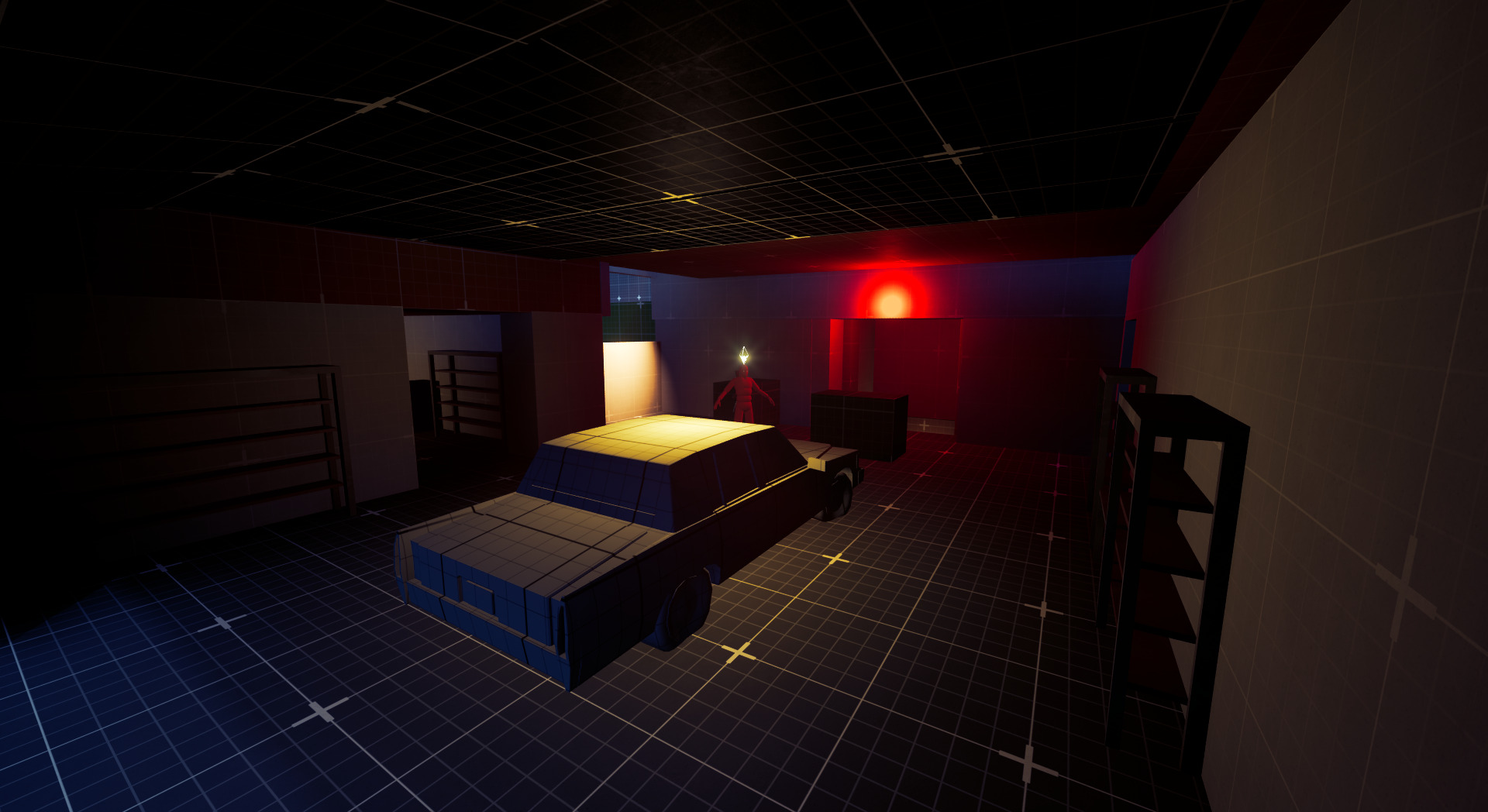
I did a pass on tuning the lighting scenario of the level, primarily because it was crucial to know how the spaces I had created would read in a nighttime scenario. The mood also needed to resonate through the environment, so getting some contrasted and moody lighting at this phase helped me set the stage nicely for the player in specific areas, even in combat zones.
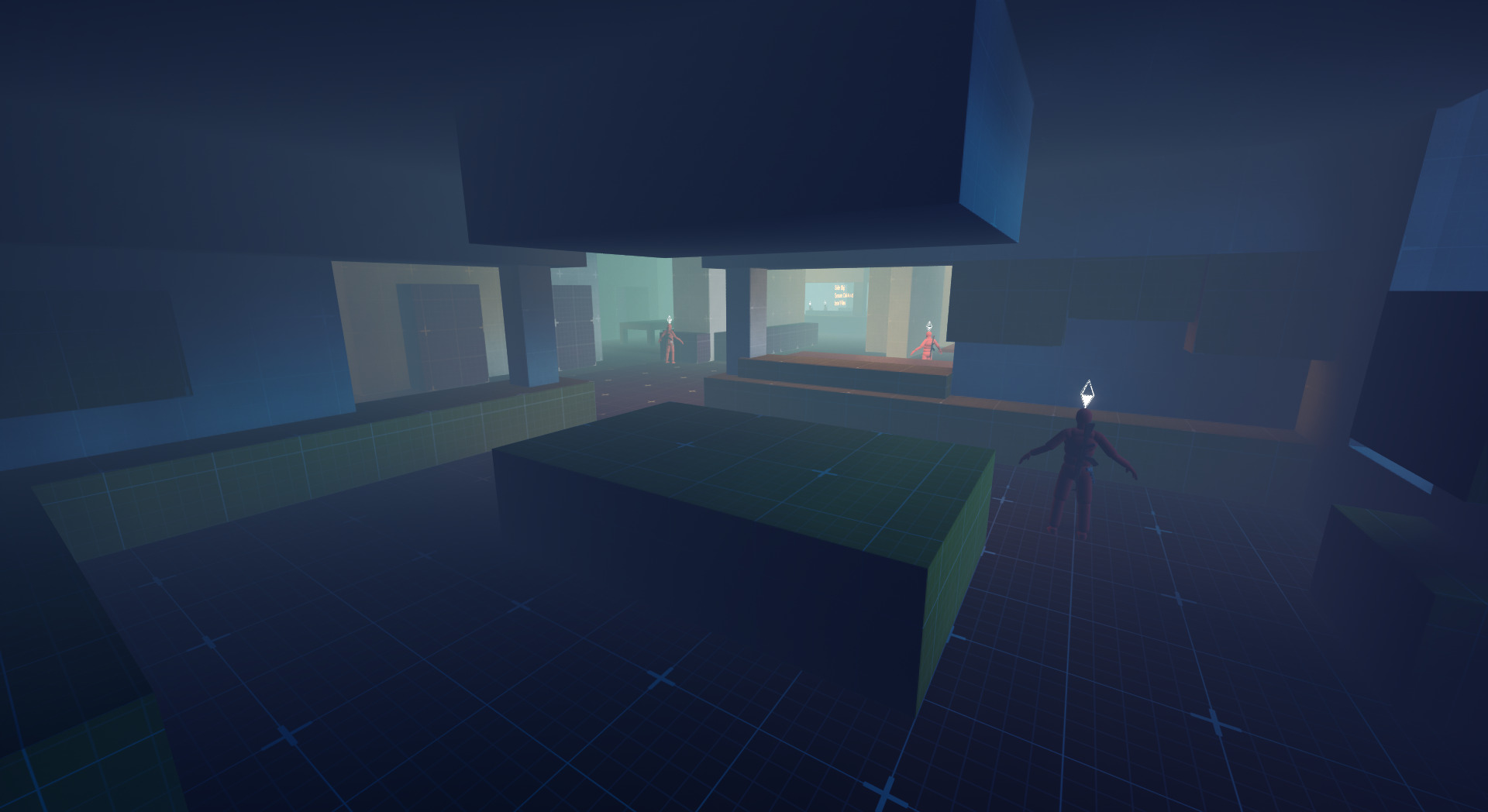
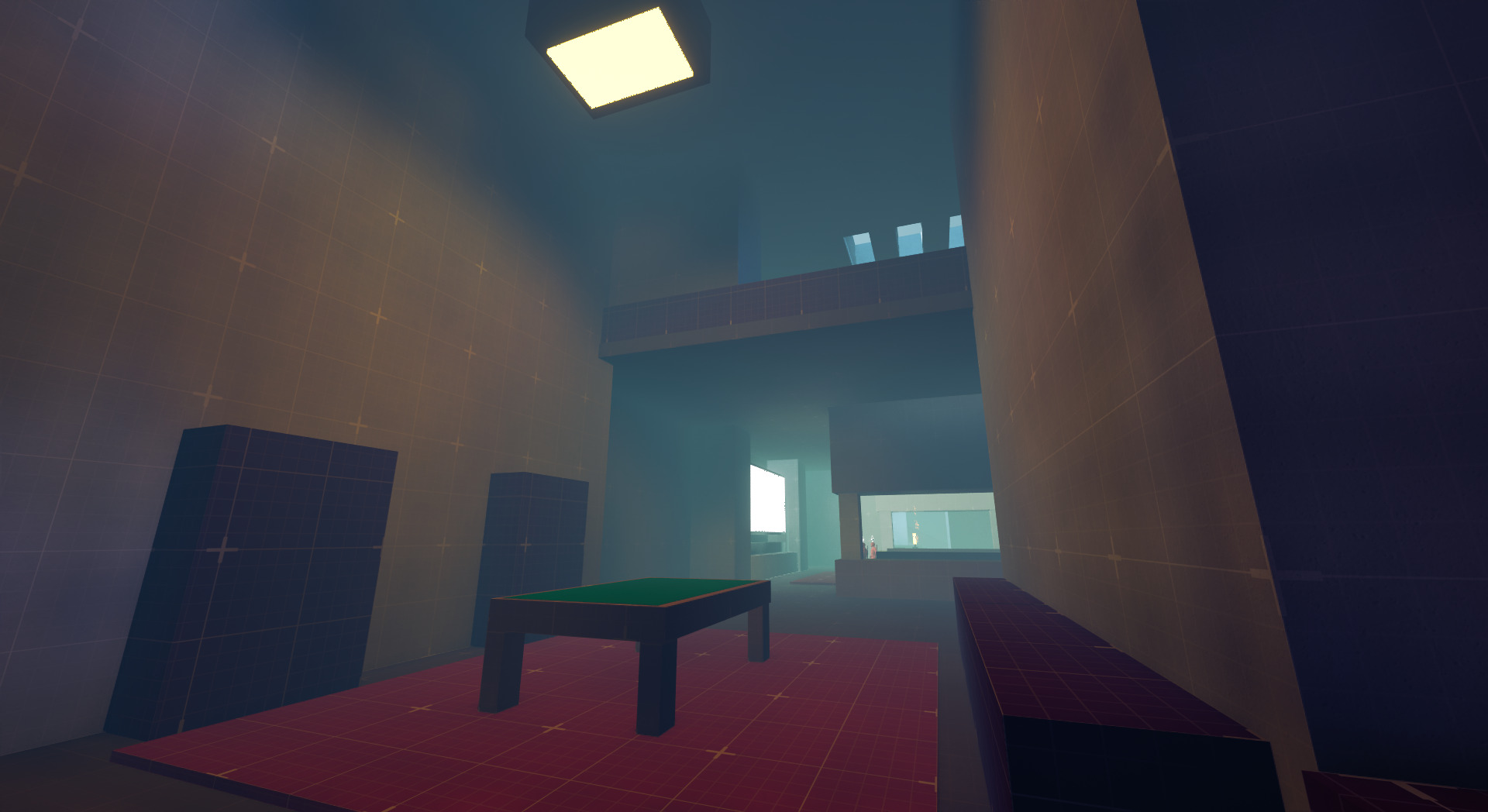
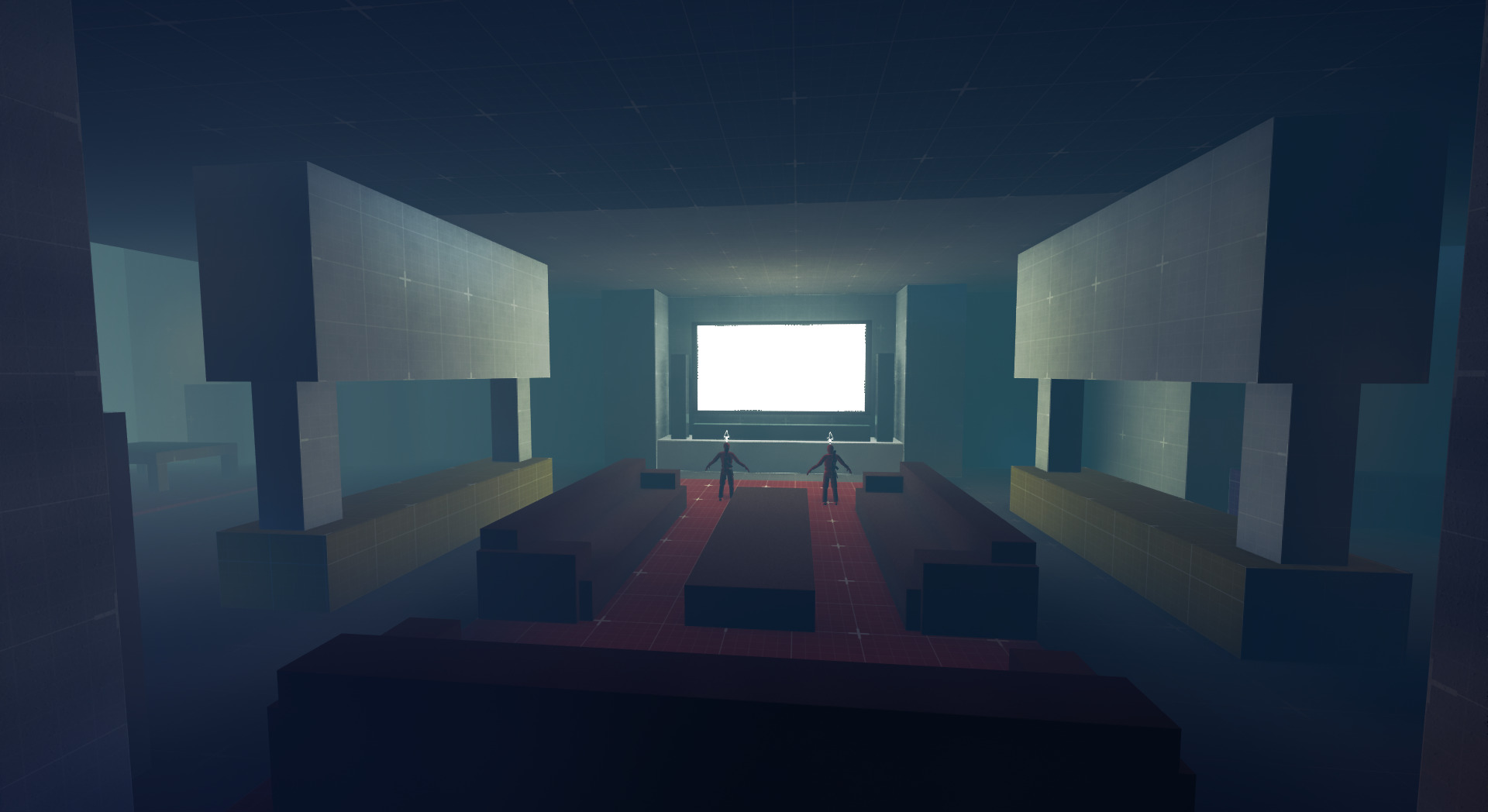
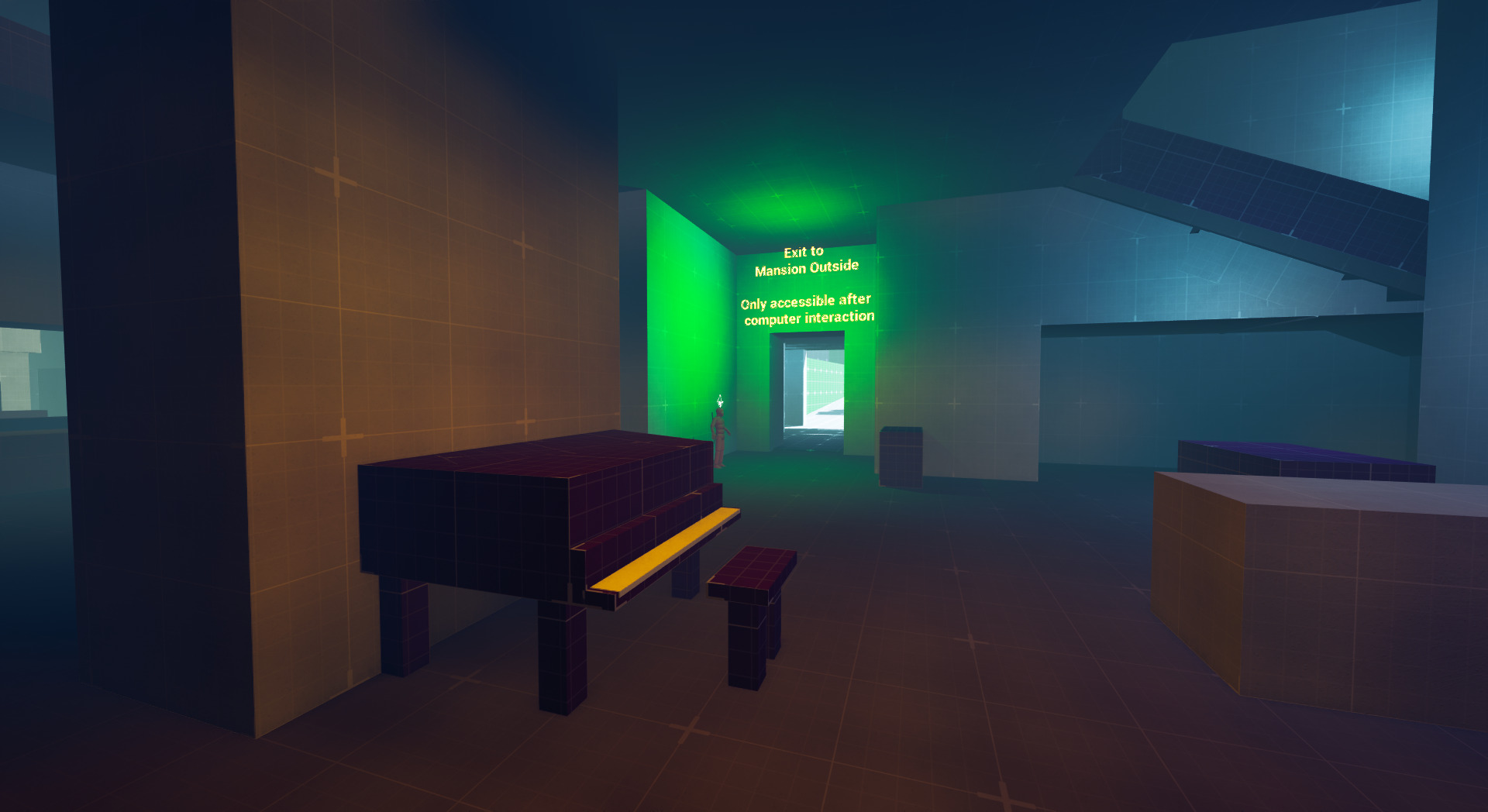
I also created the interior layout of the mansion, besides it’s basement level. I cut the climbing path entrance in the interest of putting more focus on creating a fun and engaging stealth layout in the Mansion itself. I wanted to create something that felt multilayered and worth a few different tries to see what different routes exist.
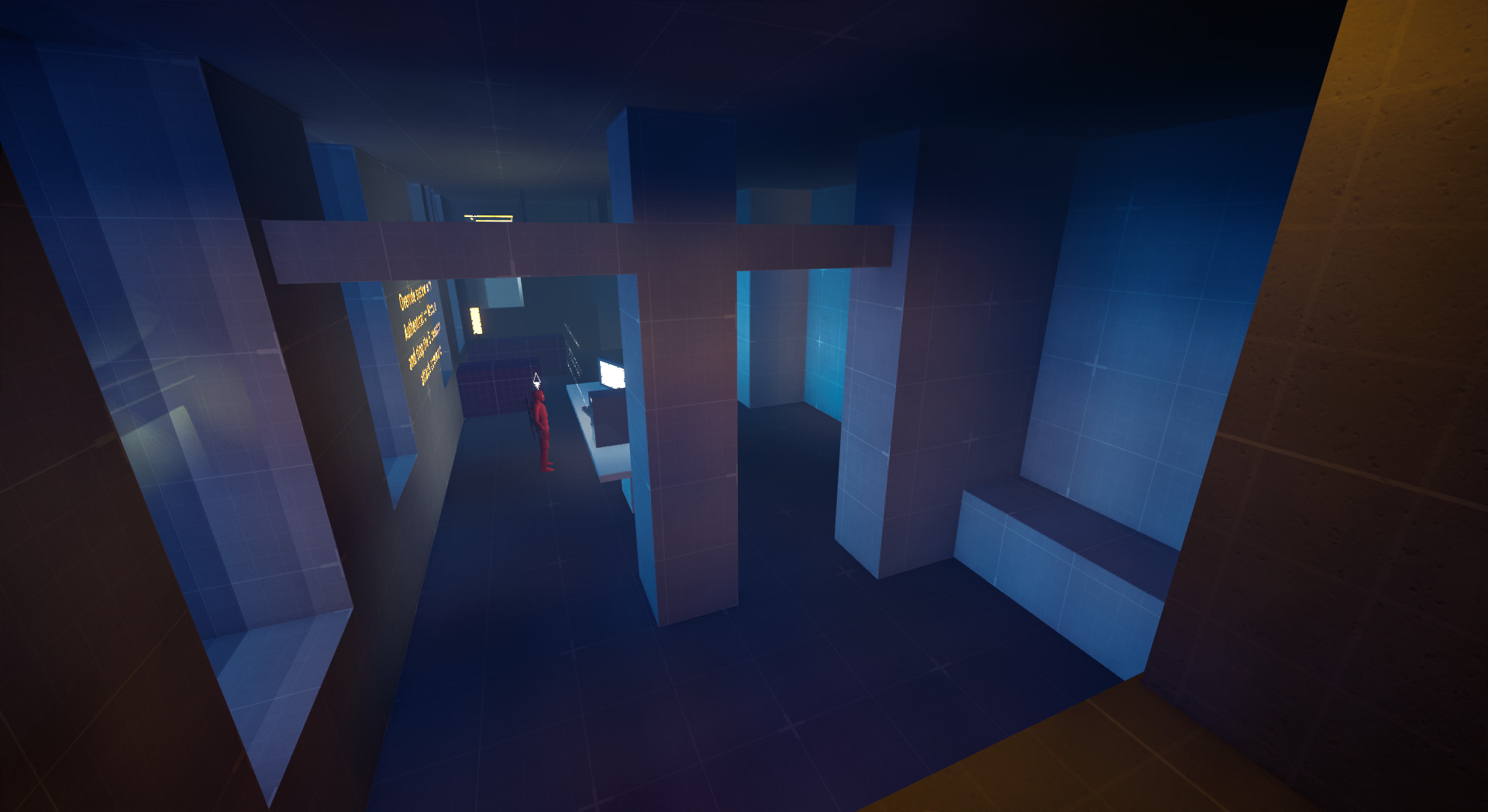
I placed the side objectives inside of the mansion, but needed to pinpoint exactly where and how the player would interact with these objectives. For example, I designed a “captain’s quarters” which was an office space on the 2nd floor of the mansion where the player ultimately needs to go to disable the bioweapon launch command.


Iteration 5: World-building
With this iteration I focused on world-building, making the world feel more believable and alive both from an environmental perspective and a narrative perspective.
One major addition in this iteration was temporary voice over work for GRIM (the voice the player hears in their ear-piece), allowing for exposition and key-info to be given to the player while they progress through the level. This gives a good sense of progression and momentum for the player as more information is unveiled to them, with GRIM sometimes validating the player’s actions and pointing out things like landmarks to help guide them.
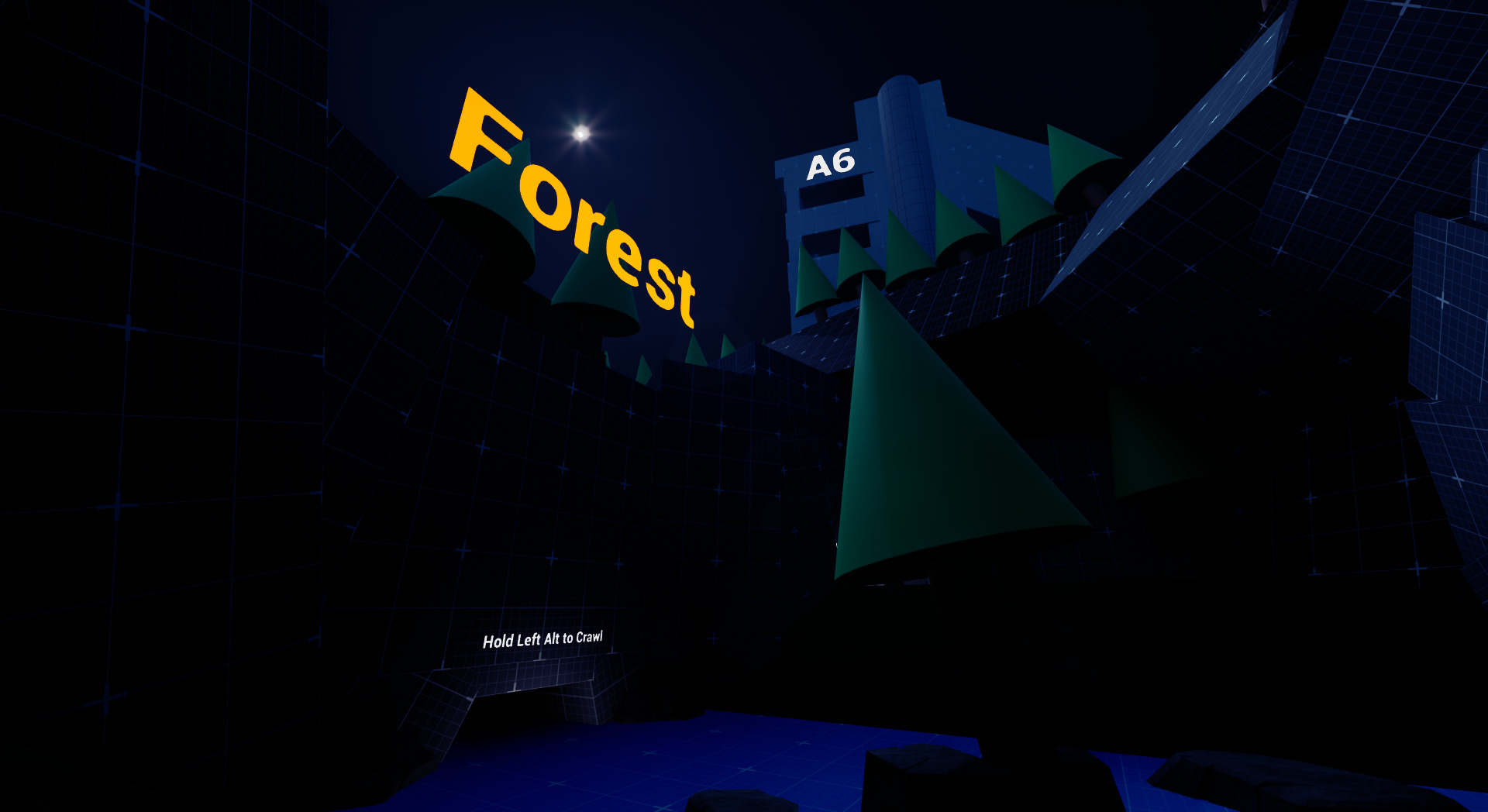
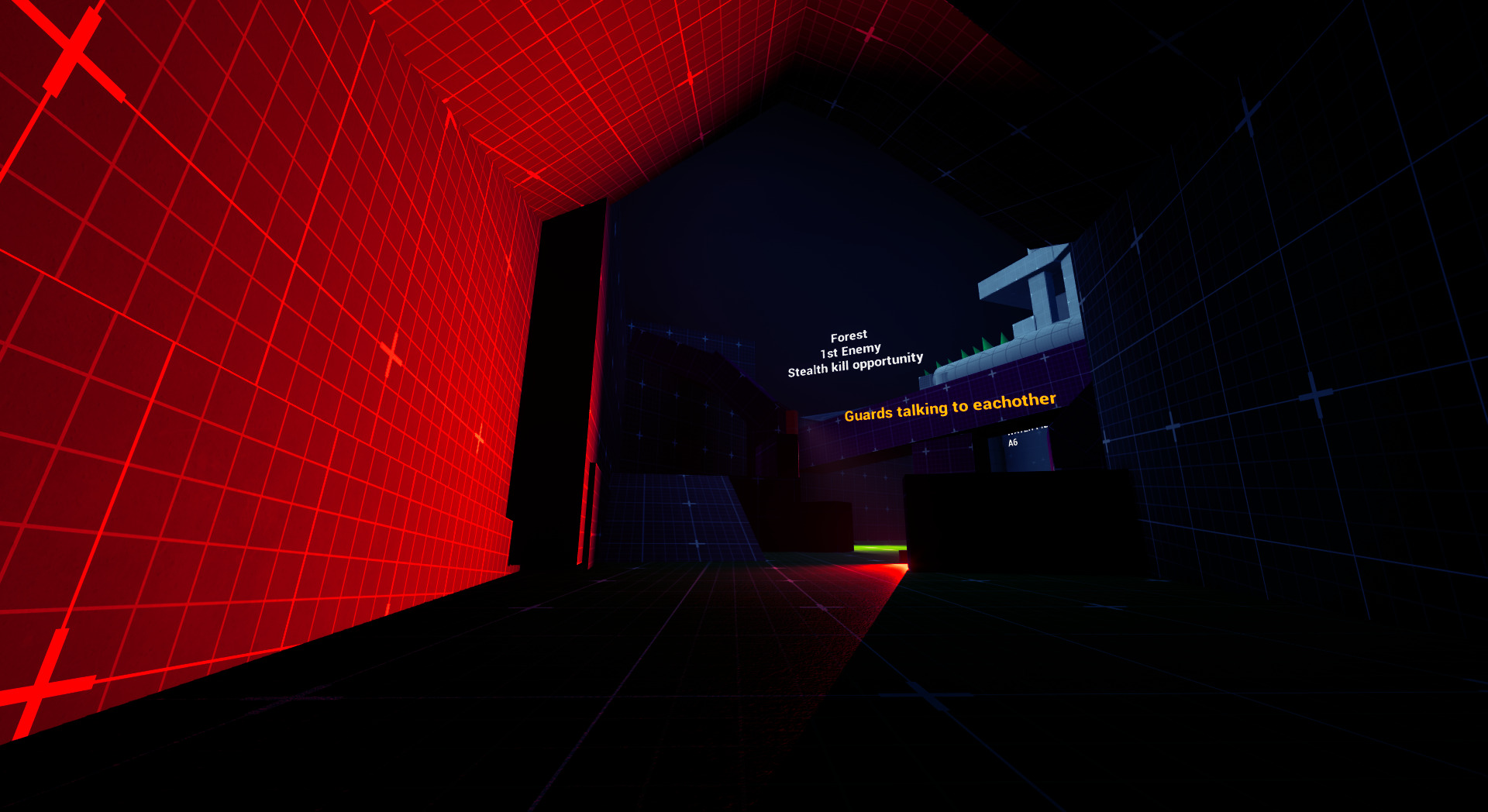
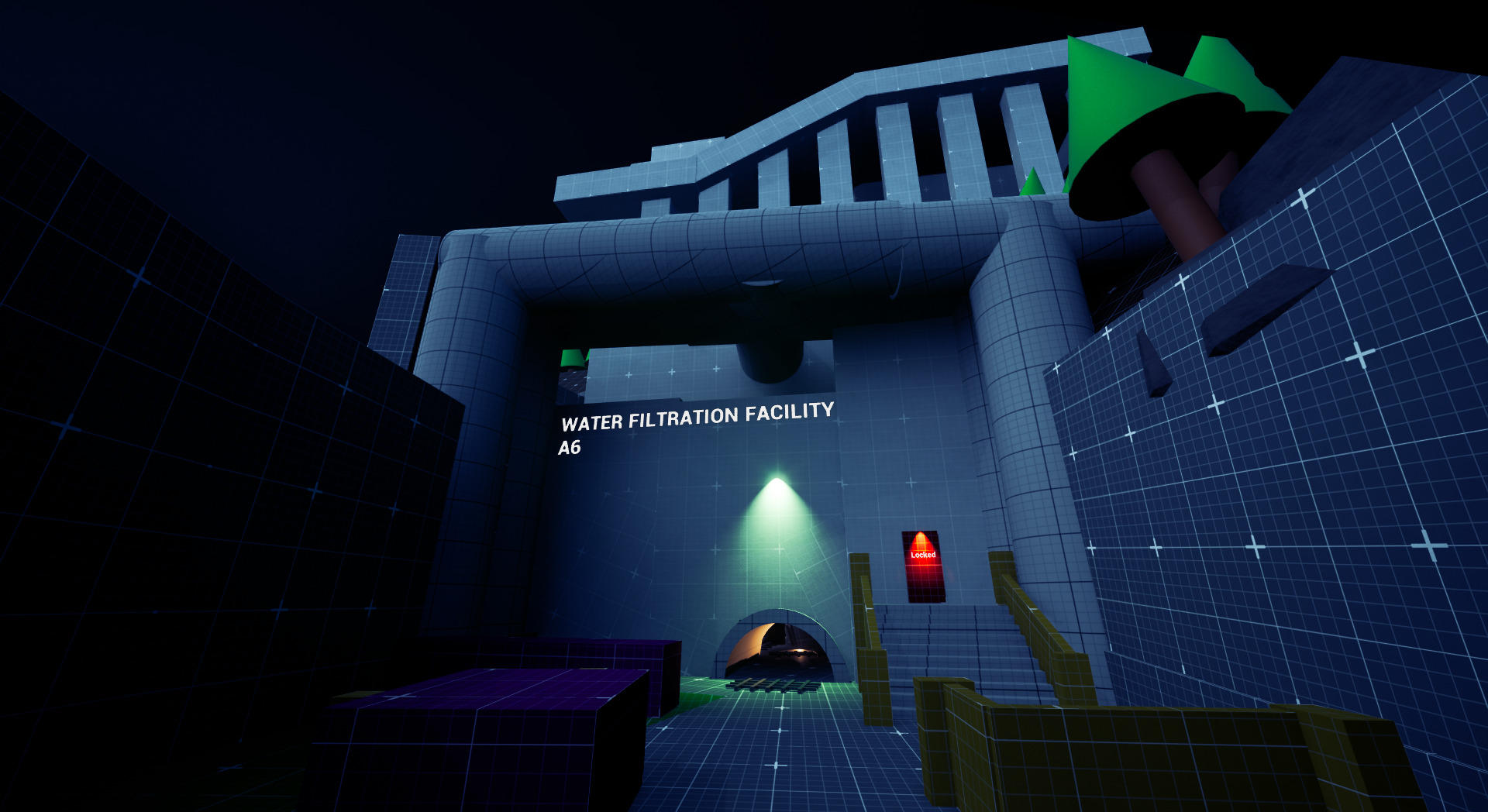
As I was adding the VO, I noticed that some information being given like the mention of a Water Filtration Facility, needed to have more presence in the world itself. In this case, I added a tall landmark showing where this Water Filtration Facility is, visible as early as the Forest section and accompanied by a voice-line from GRIM.
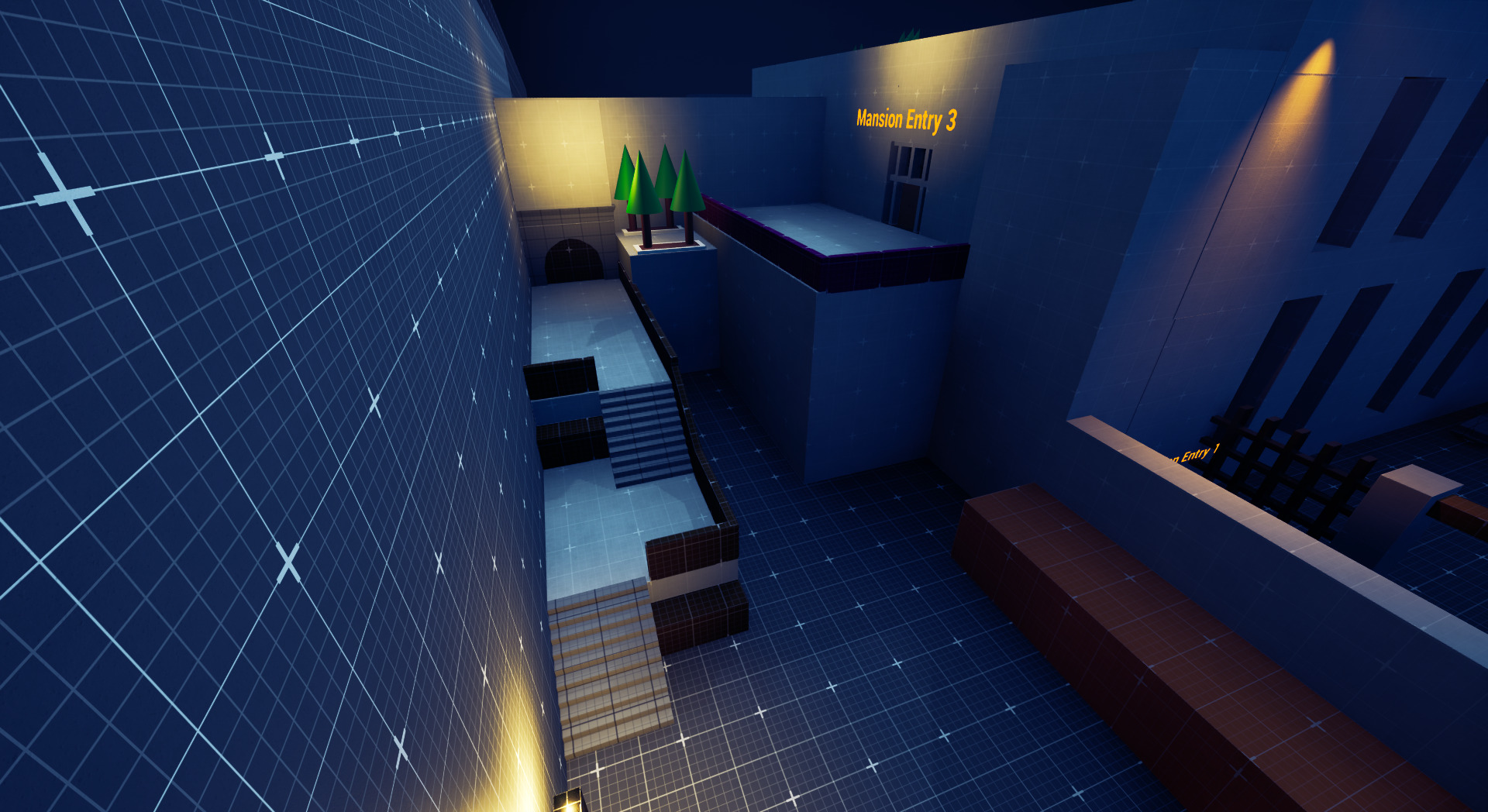
I also added a lot of extra details and refinements to the mansion approach section, especially in regards to color and lighting. I made sure to communicate clearly through these elements the main infiltration paths. I also made the guard tower spotlights move to add an extra sense of dynamism and added in Sonar Goggles to give the player a stronger stealth action fantasy.
Narratively, I changed a good amount of the way the main objective was presented. I made it so that the player MUST intercept the moving truck to retrieve an Authentication Module that is en route to the Captain inside of the mansion. If the Captain acquires the Module, then he initiates a Bioweapon attack on the globe. The player’s objective is to intercept the truck, steal the Authentication Module, link the Module with the Captain’s computer, and cancel the Bioweapon’s authentication chain before it’s too late.
I made this narrative change because playtesters were confused by the overall objective once they reached the mansion approach, in-part due to the lack of clarity around the Truck and the lack of a sit-rep for the player once they reached the Vista Shot. With the added GRIM dialogue and the focus on clear player pathing towards the Mansion, the mission’s flow felt much more clear.


