
Ice Cave Adventure
Blockout

Description:
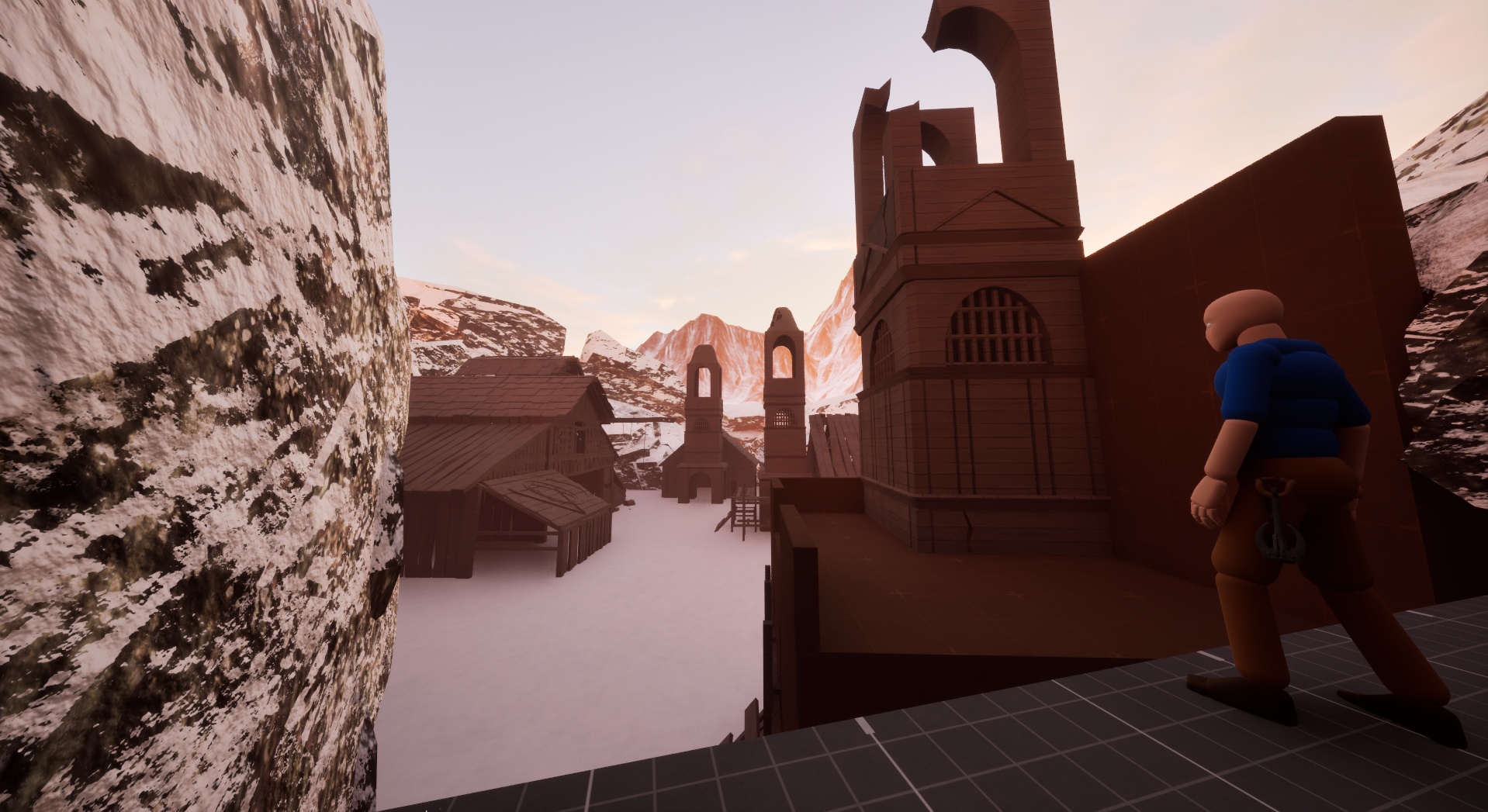
The player finds themselves in the depths of a cave with no recollection of what brought them here. They progress out of the cave to discover that they are in a snowy tundra in the middle of nowhere. An old town is visible in the distance, prompting the player to find a way to it, while confronting any threats along the way.
Tone: Mystery, Adventure, Suspense
Gameplay: Platforming, Exploration, Combat, Treasure-hunting
The Process
This is an in-development project of mine where I’m focusing on bolstering my level design skills and applying them to an Unreal Engine Third Person template (AGLS by JakubW) with existing systems conducive to action-adventure gameplay.
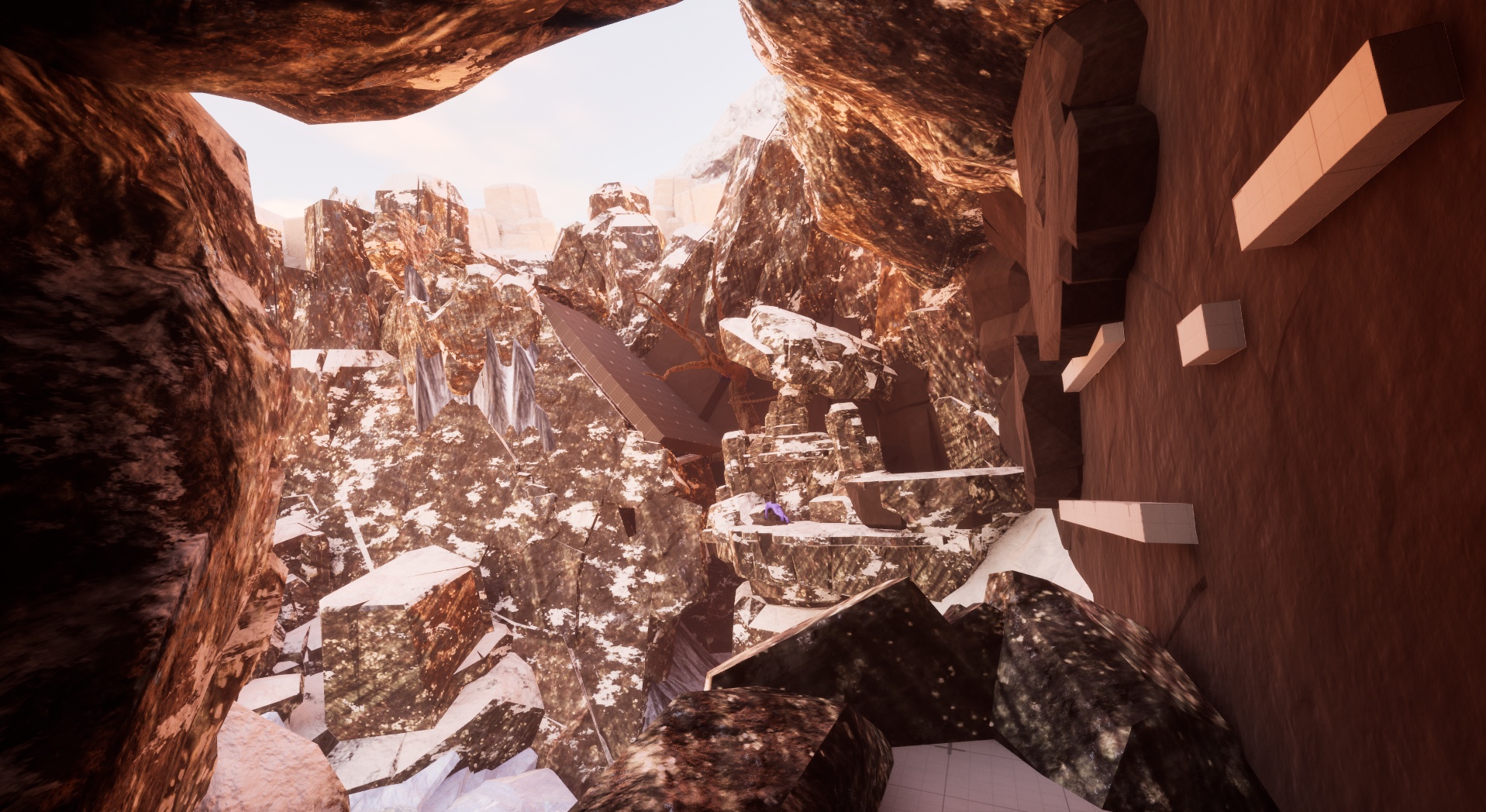
This project spawned from my passions for wide-linear level design and one of my favorite games of all time, Uncharted 2. Specifically, I was inspired by the chapters “Mountaineering” and “Heart of Ice” in which Nathan Drake plunges progressively further into an ice cave that climaxes in an encounter with supposed yetis.
I made it my goal to deeply study the design of these chapters in Uncharted 2, and to create a mood board of what I wanted my level to look and feel like (See picture to the right).
I used many different images, including multiple screen captures of UC2’s ice cave, to get a sense for lighting, scale, color, and progression of the environment as the player explores.


As part of my process, I made sure to play through Uncharted 2’s ice cave chapters and take in-depth notes of the player’s moment-to-moment actions. This was to map out the pacing of the level as well as to take notes of level design tricks used. For example, I had taken note of where the player was forced to stop and think, versus where the player was given a more apparent path.
I had realized the pacing present in Uncharted games would often alternate between different types of gameplay scenarios that involved different modes of thought to engage the players senses while providing variety. I made sure to map out a gameplay rhythm for my level and capture it in a design document. Some of these different kinds of scenarios included exploration, combat/stealth, puzzles, boss encounters, and narrative beats.
I then took my design document and applied it to a map showcasing a vista along with encounter information. I made sure to color-code in correspondence with my design doc, defining different gameplay scenarios with different colors. I also made sure to include as much info as I could about weapon pickup placement, enemy placement, landmark locations, exploration beats, and of course the main objective.
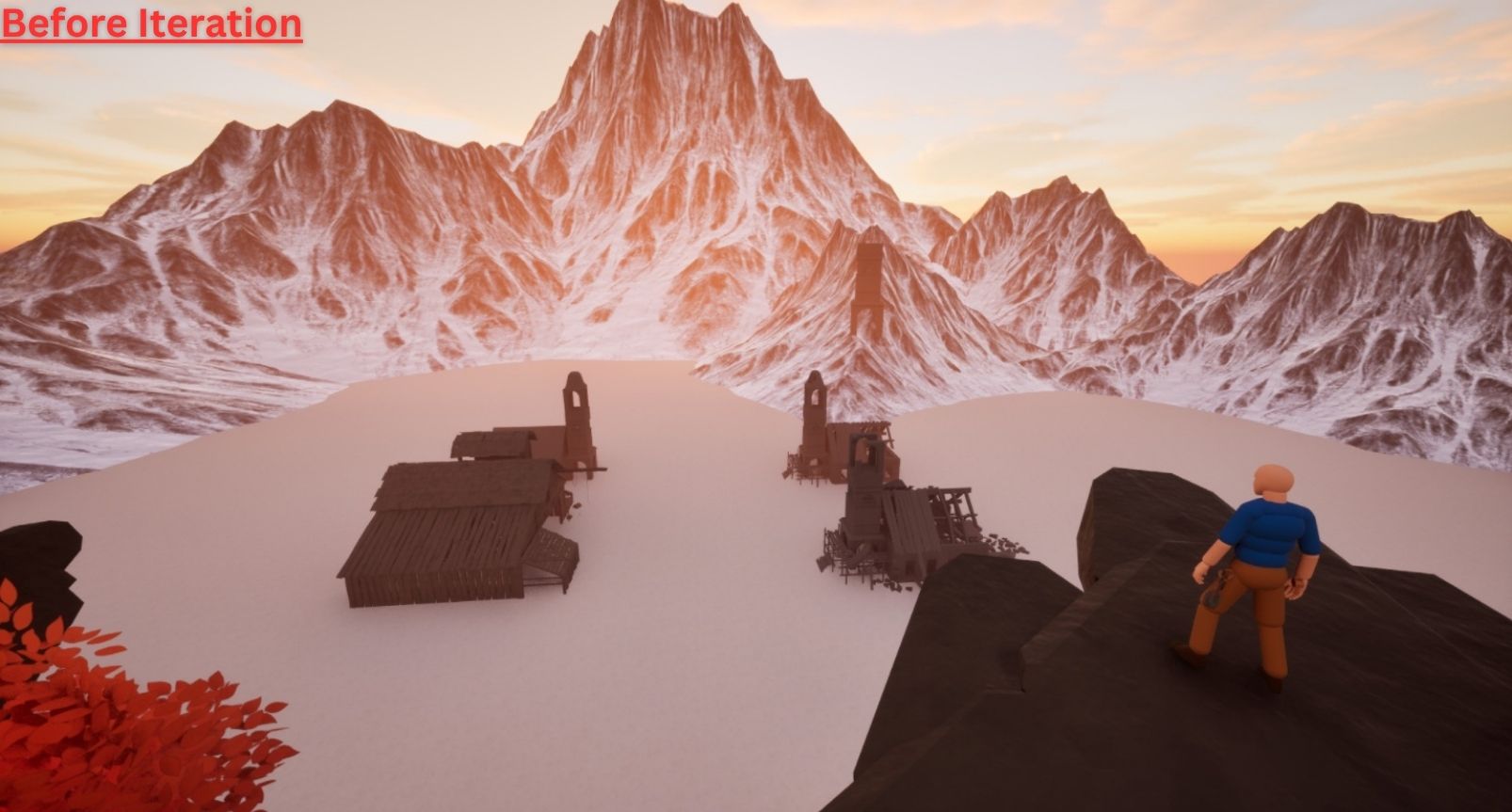
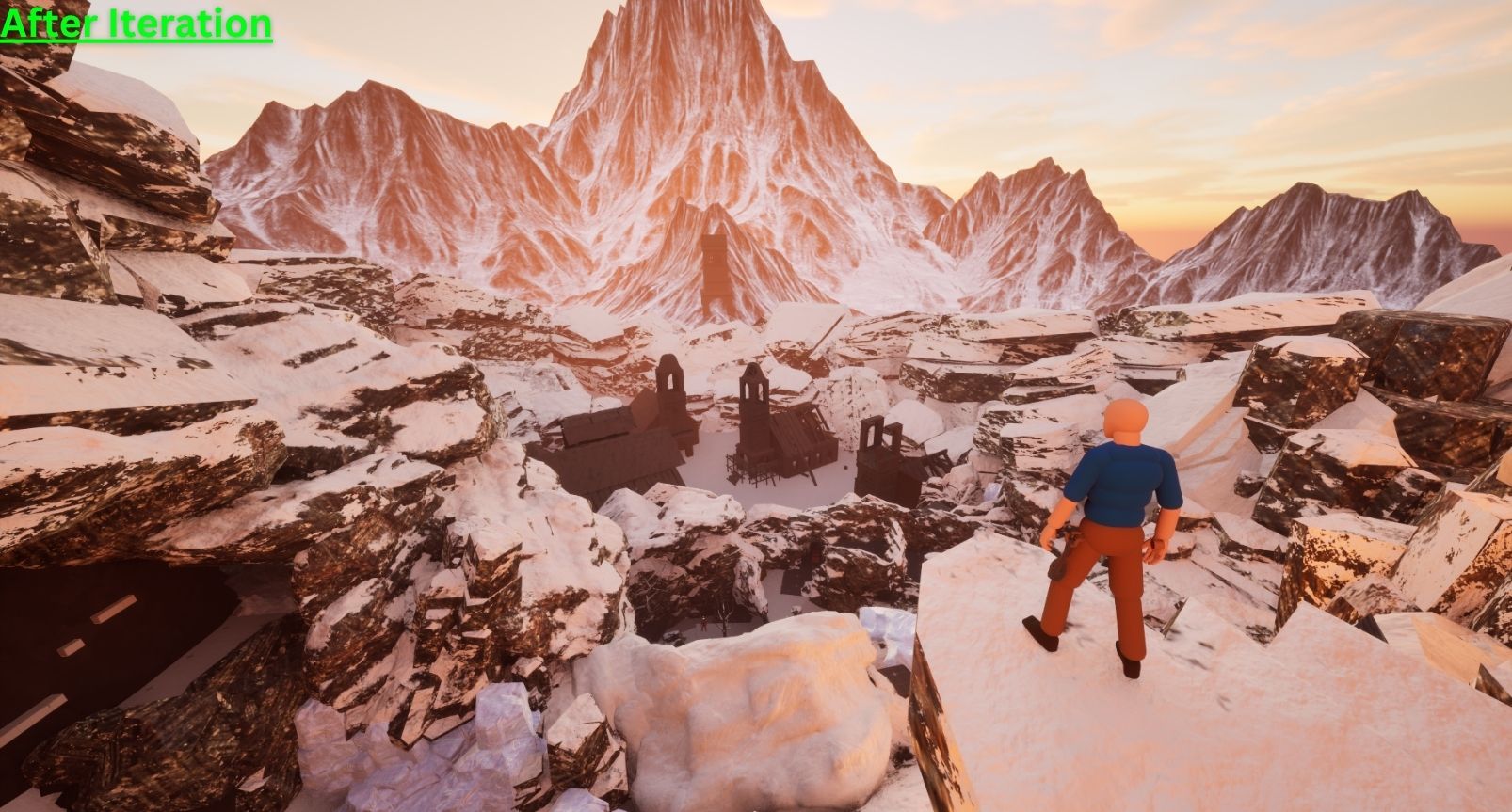
I knew that I wanted to have the main objective be extremely clear to the player simply by the way the camera frames the vista when the player starts. Additional elements like the way the objective mountain is lit would make it even more clear to the player that the top of the mountain is where they are headed.


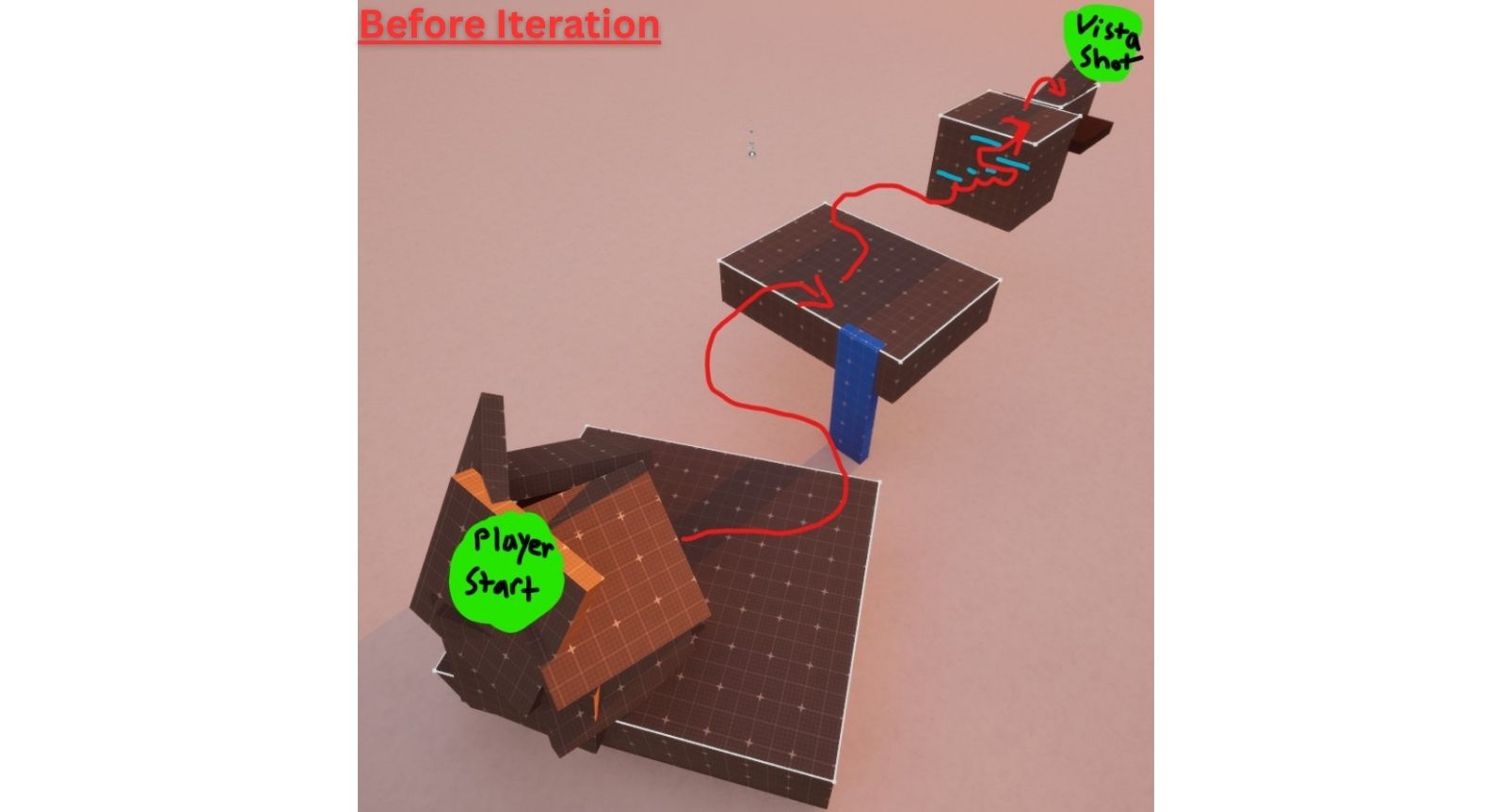
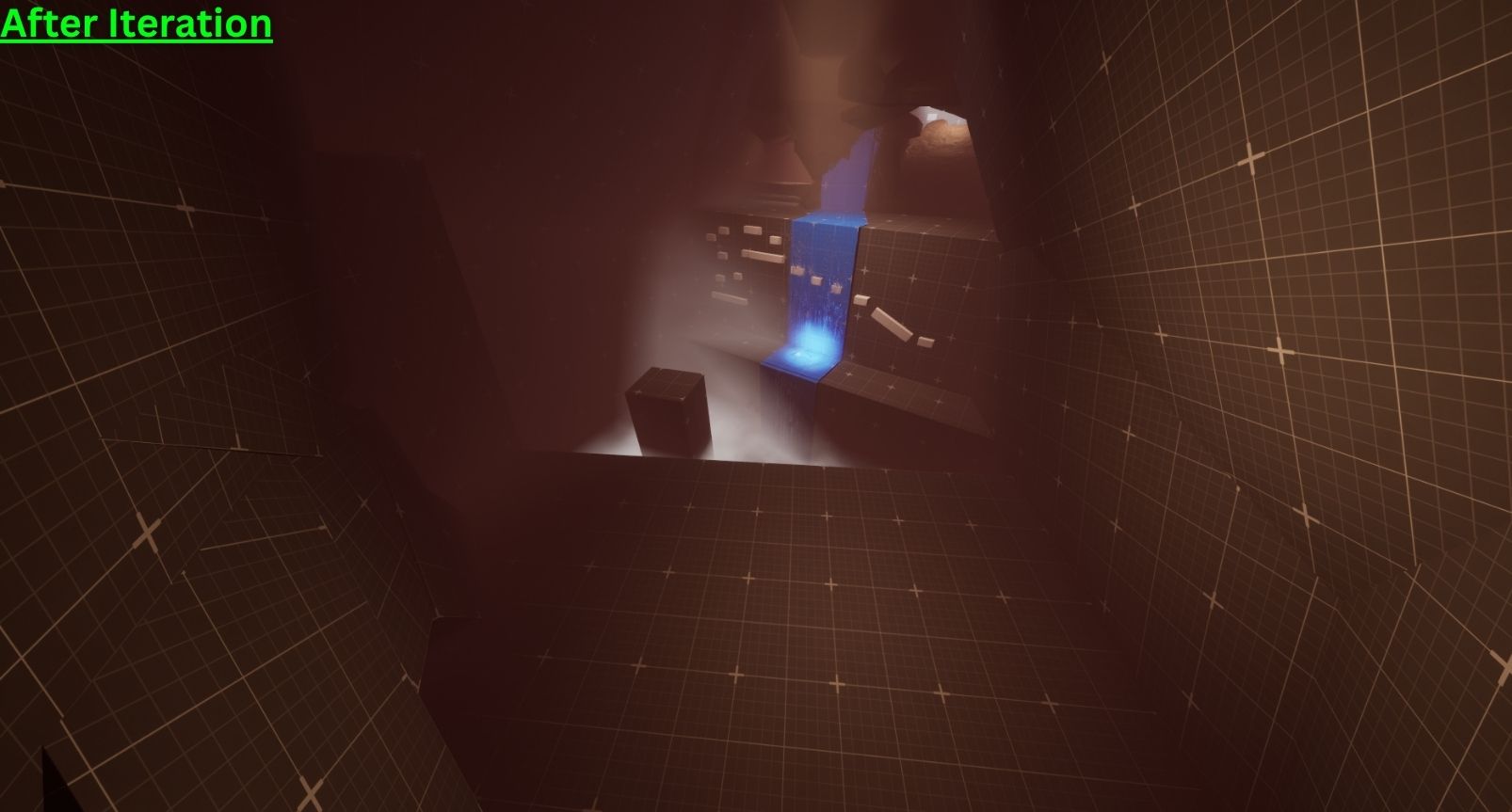
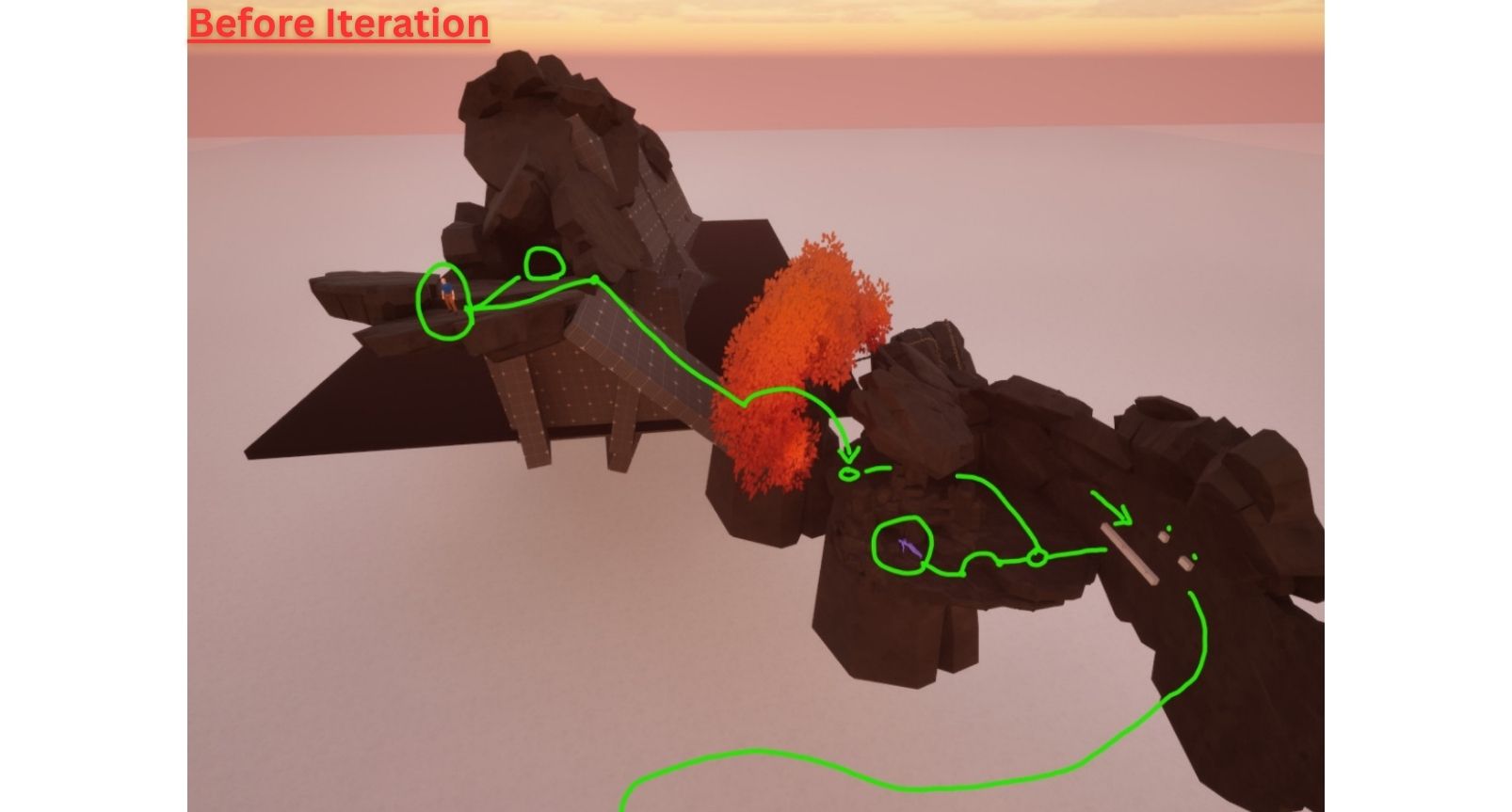
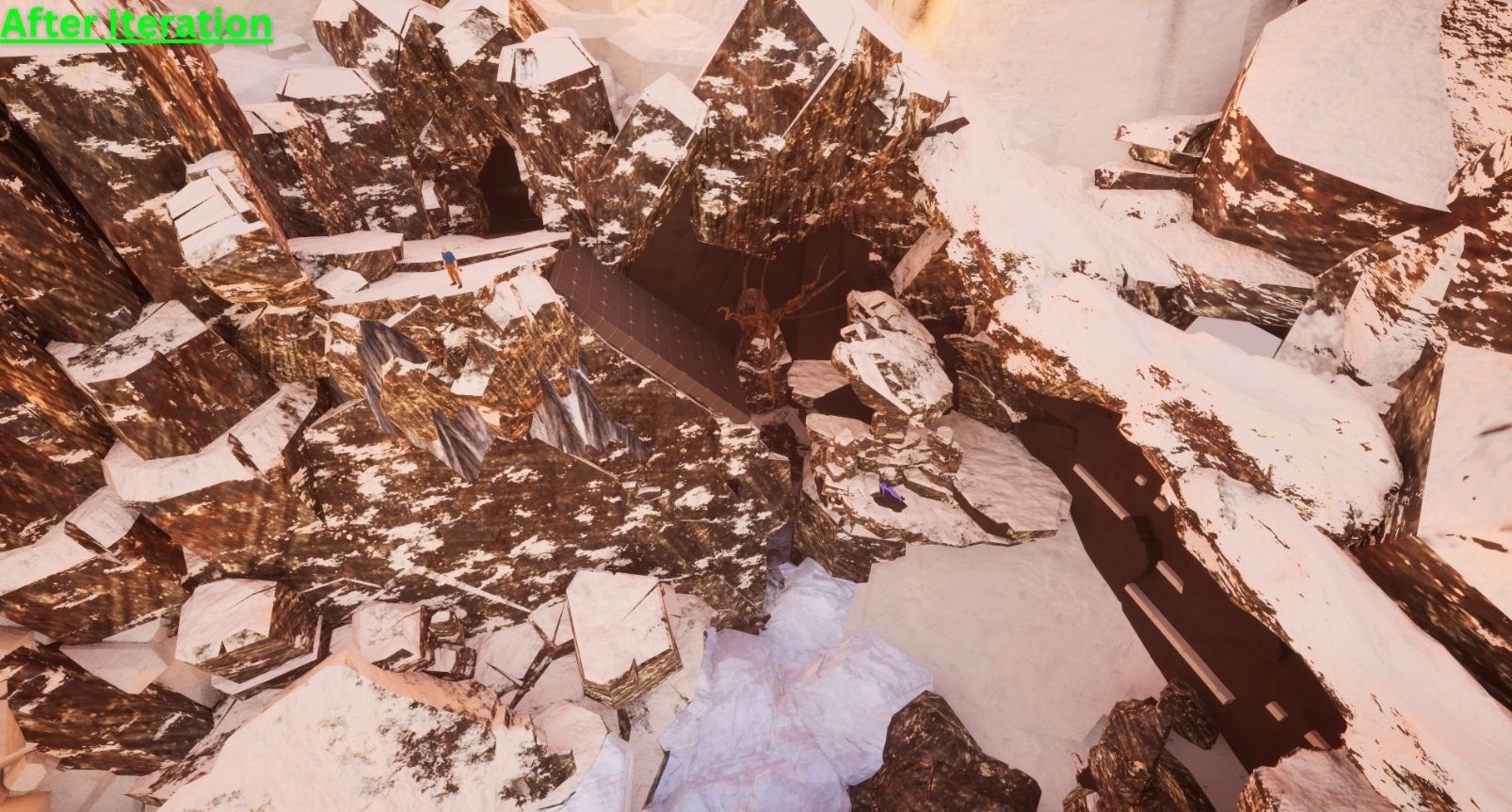
Then, it was time to start blocking out the level in-editor. I began to create a beat chart showing the visual progression of the level, displaying both concept inspirations and which area of the blockout they applied to.
I found it extremely important to do design markups and dev-logs as I developed to track my progress and come up with better design ideas. After completing a section, I would take on a different view of the space and see how it fit into the gameplay pacing of the overall experience.
I also wanted to make sure that gameplay metrics were carefully mapped out early on in my process, to ensure a smooth player experience.
It was probably the most fun to think about how I could weave in platforming elements into the combat spaces, similar to how it’s done in Uncharted games. Implementing things like grapple-hook points and flank routes was a blast!
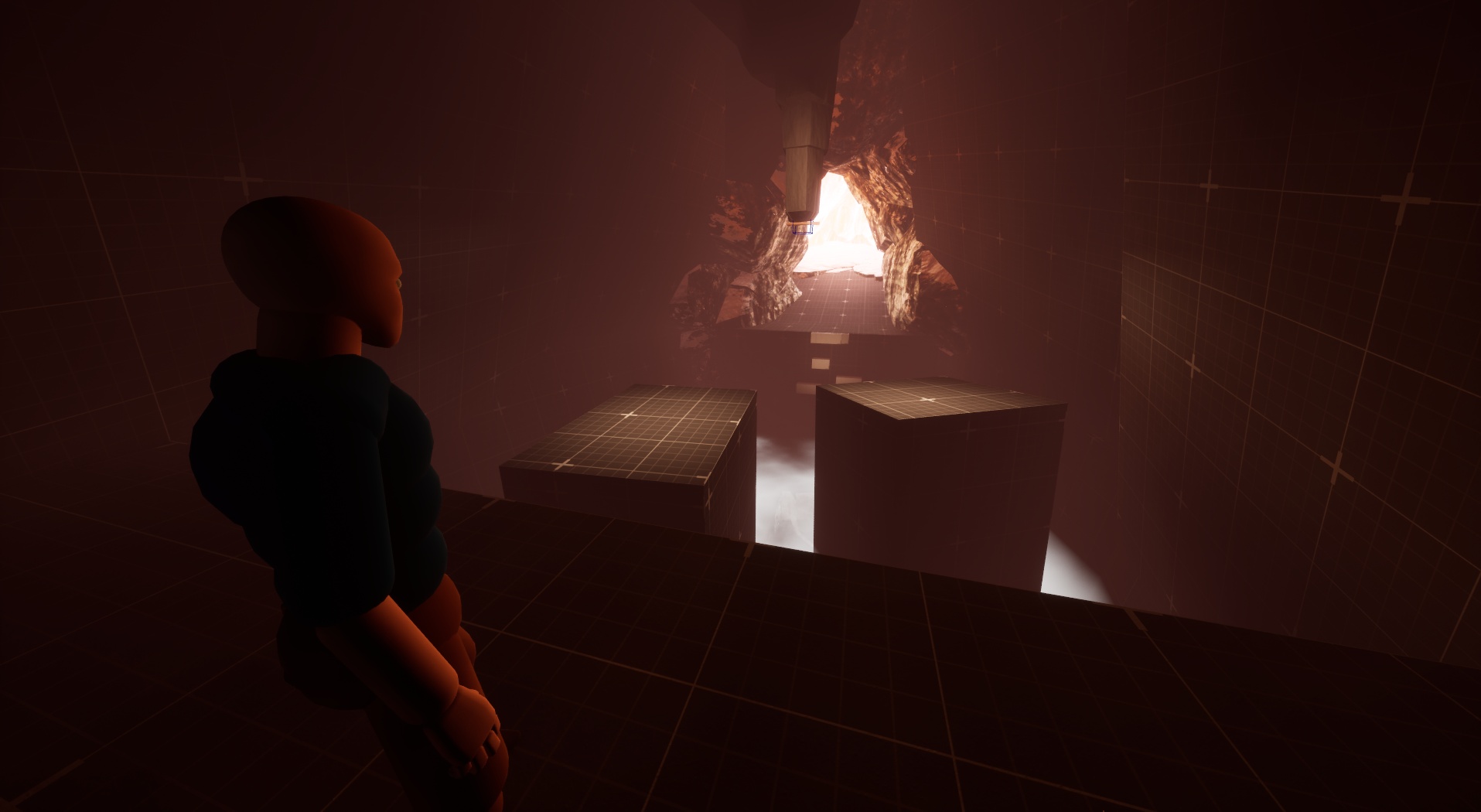
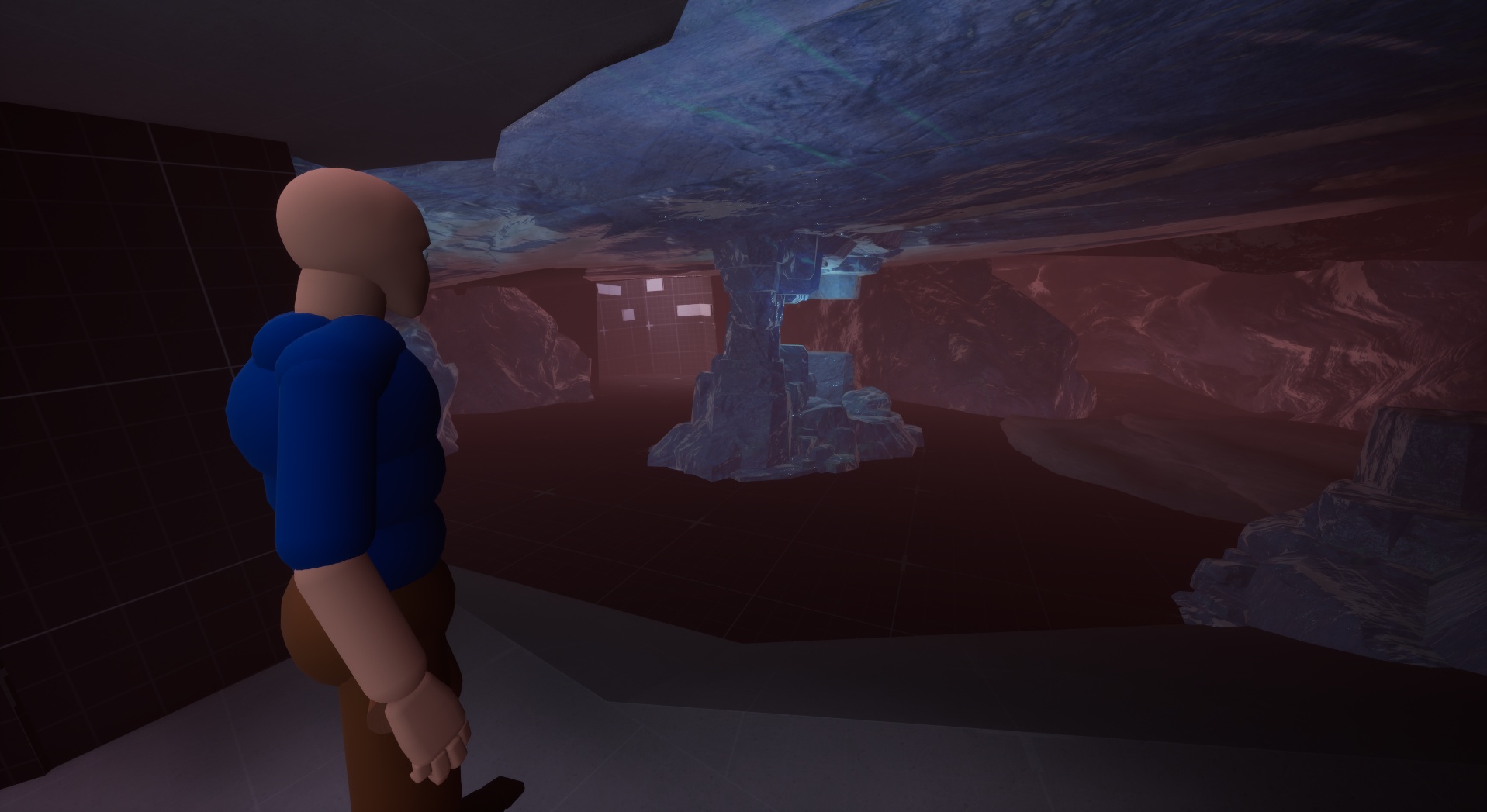
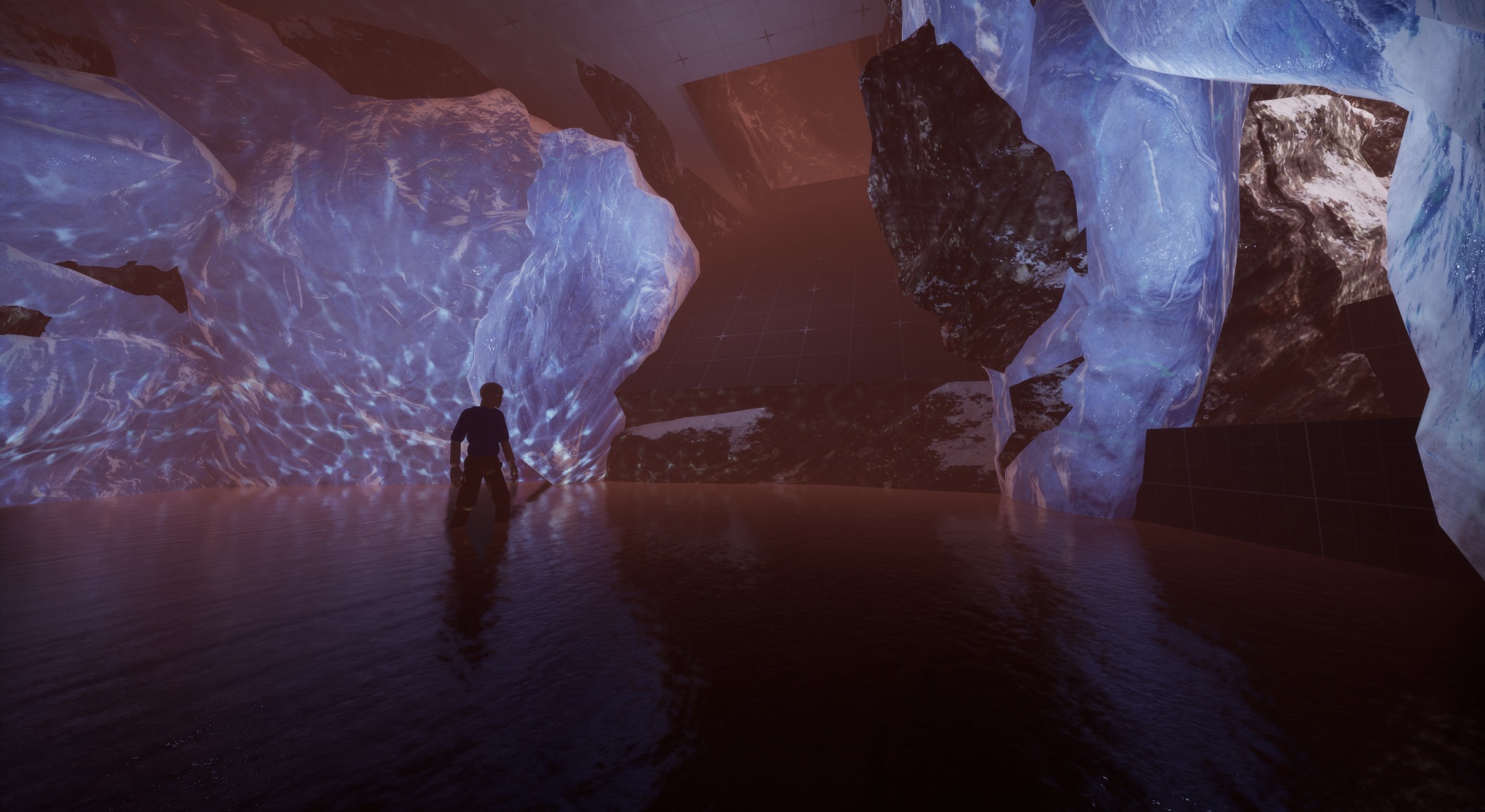
I worked hard to figure out ways in which I could make the level feel fresh at every corner. The key to this was placing different gameplay elements in unique ways and finding cool ways to set them up. For example, I implemented a custom Blueprint in Unreal to create a “Floor Break” event where once the player collides with a certain type of floor, the floor breaks beneath them and causes them to fall.
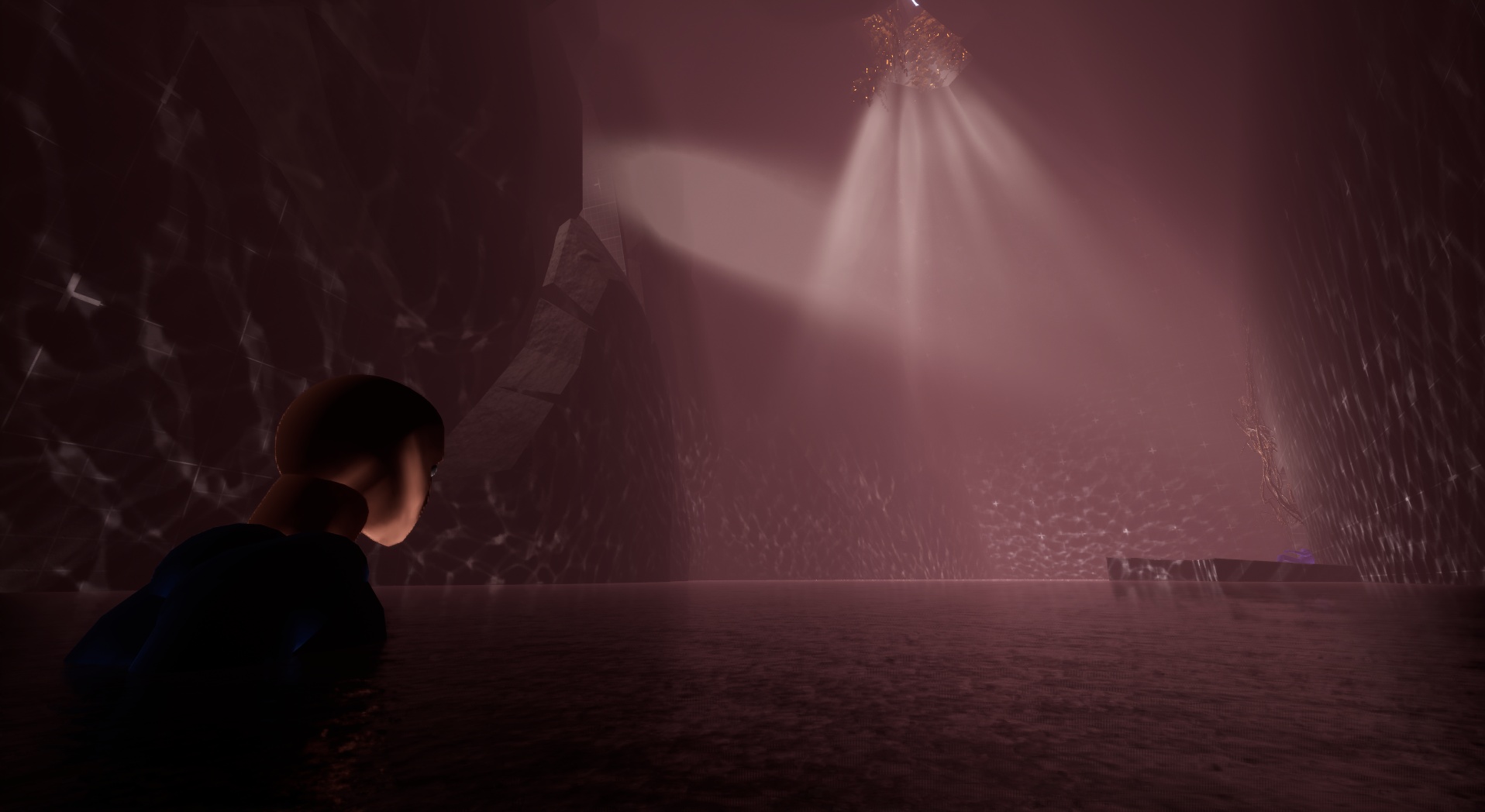
I helped sell this moment by it happen after a tense section of climbing where imminent death is below. I subject the player’s expectations by making them feel safe in dropping to a surface that seems like the right path, while in reality it’s the moment where they fall down into another cave system filled with water.

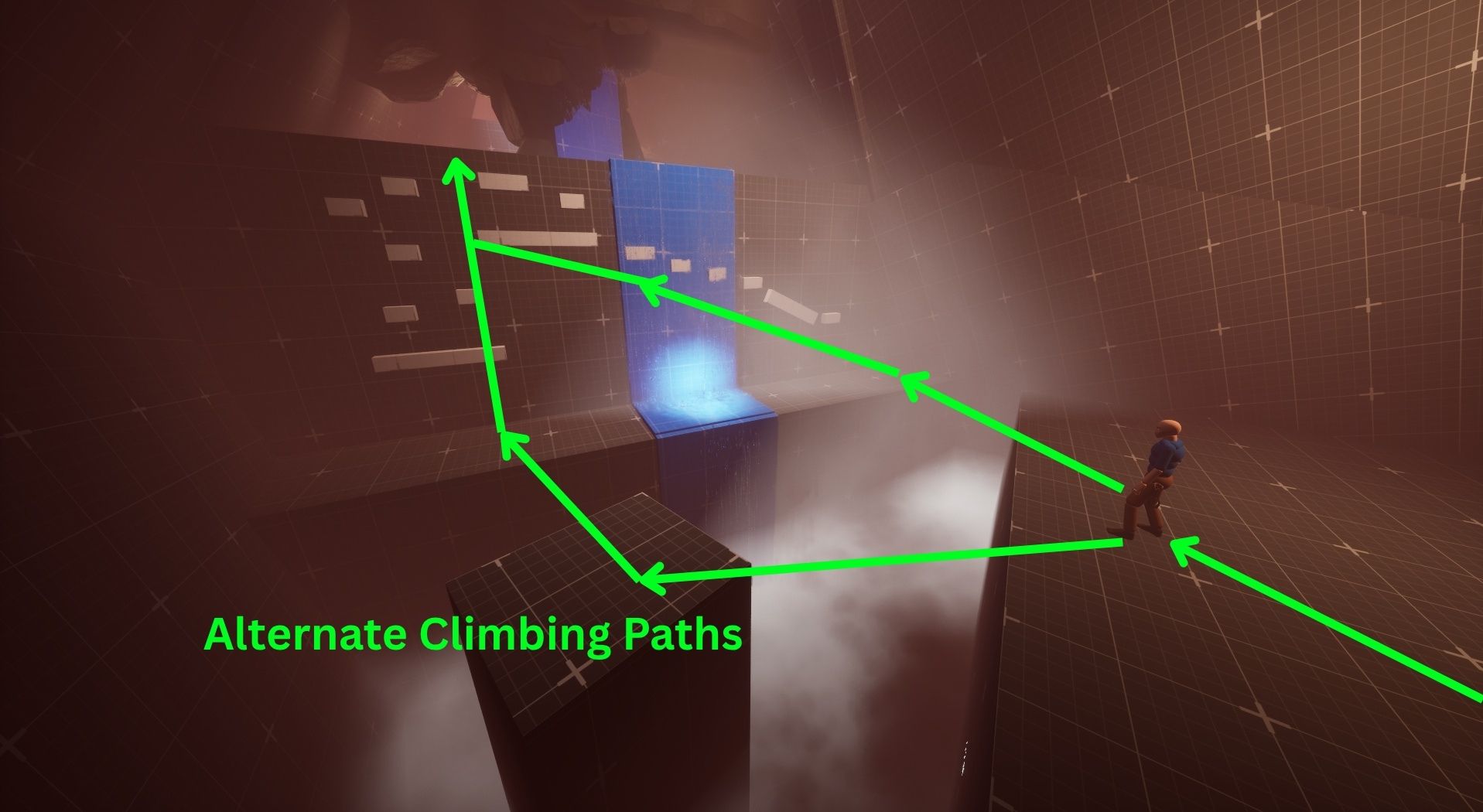
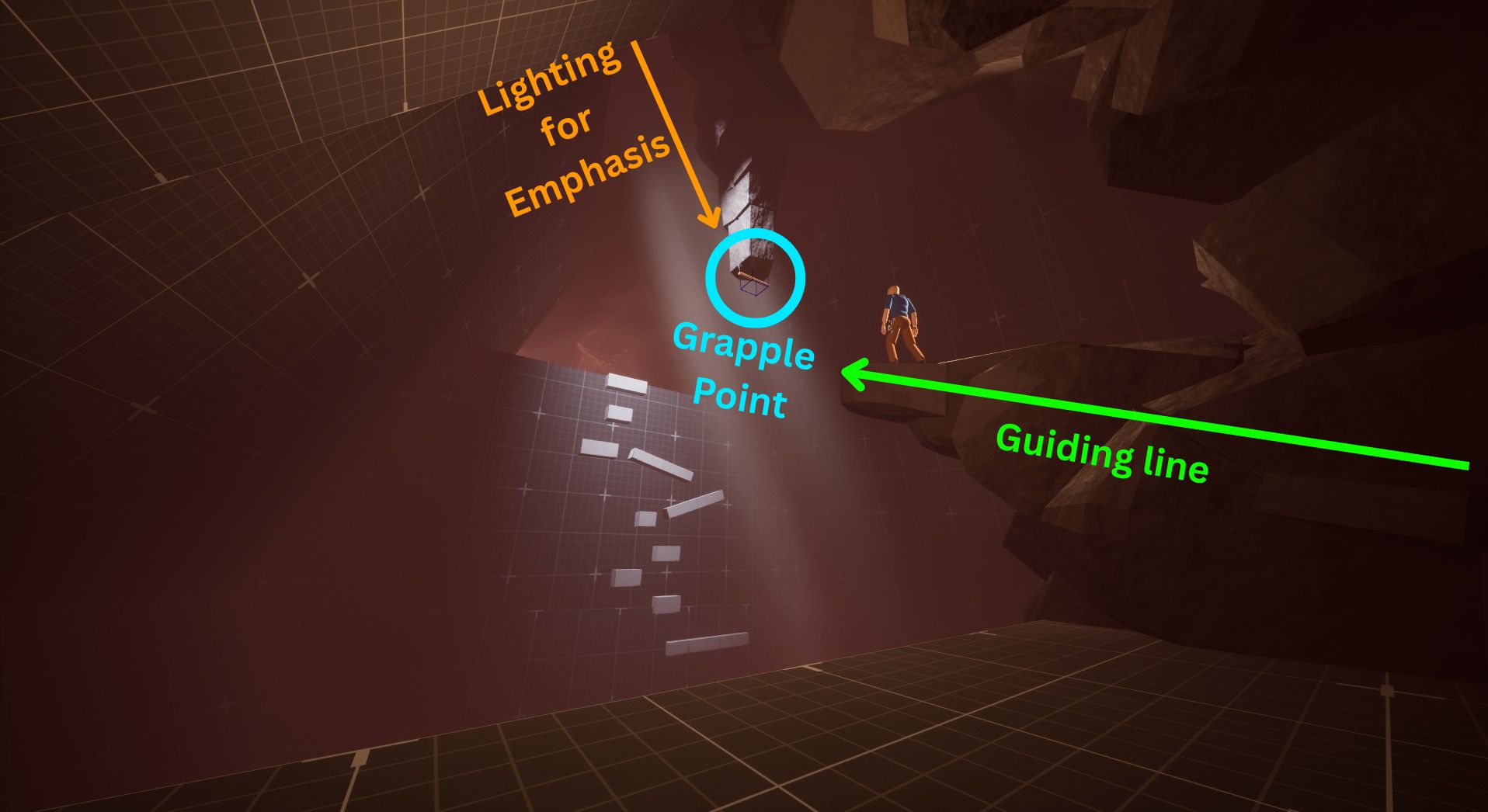
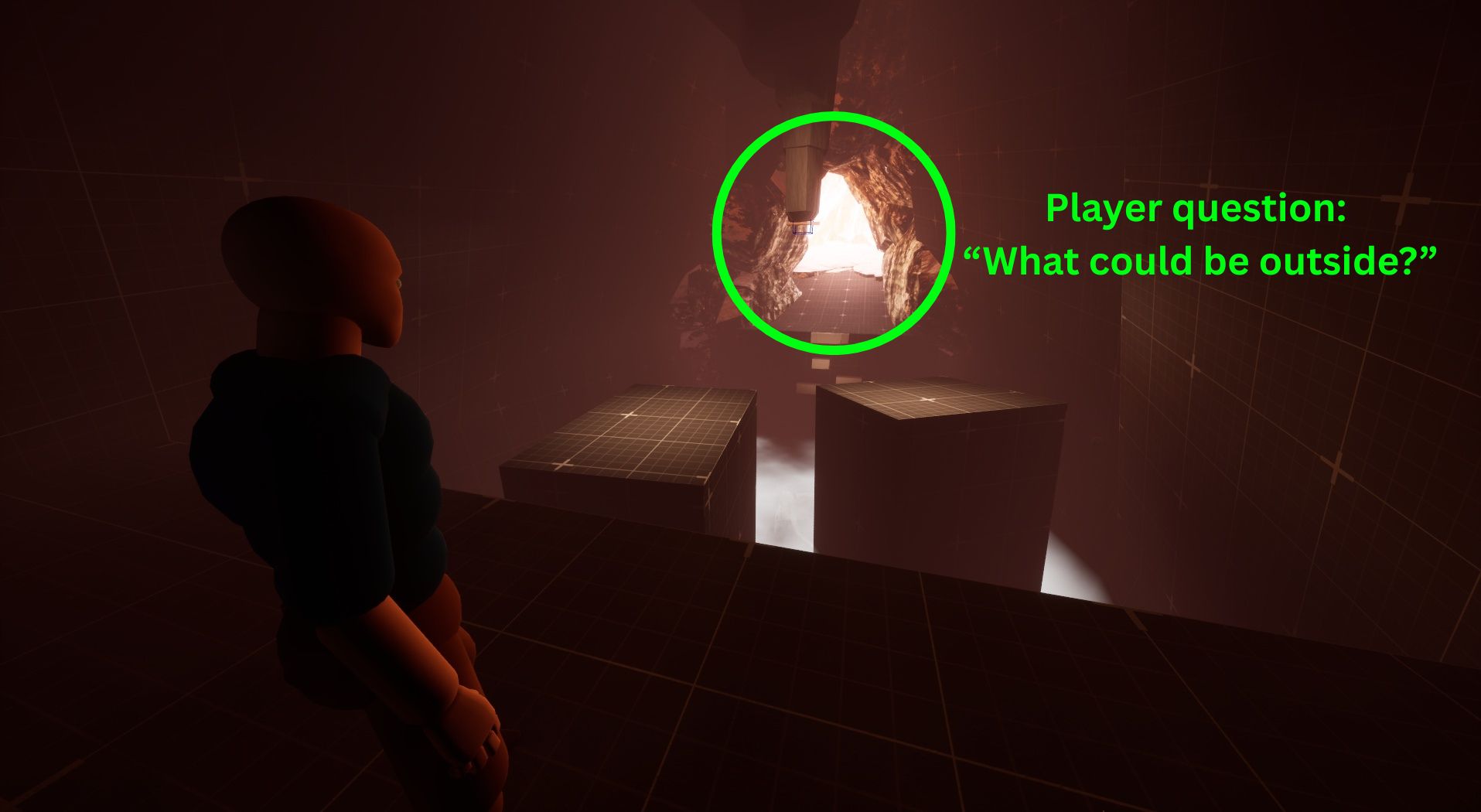
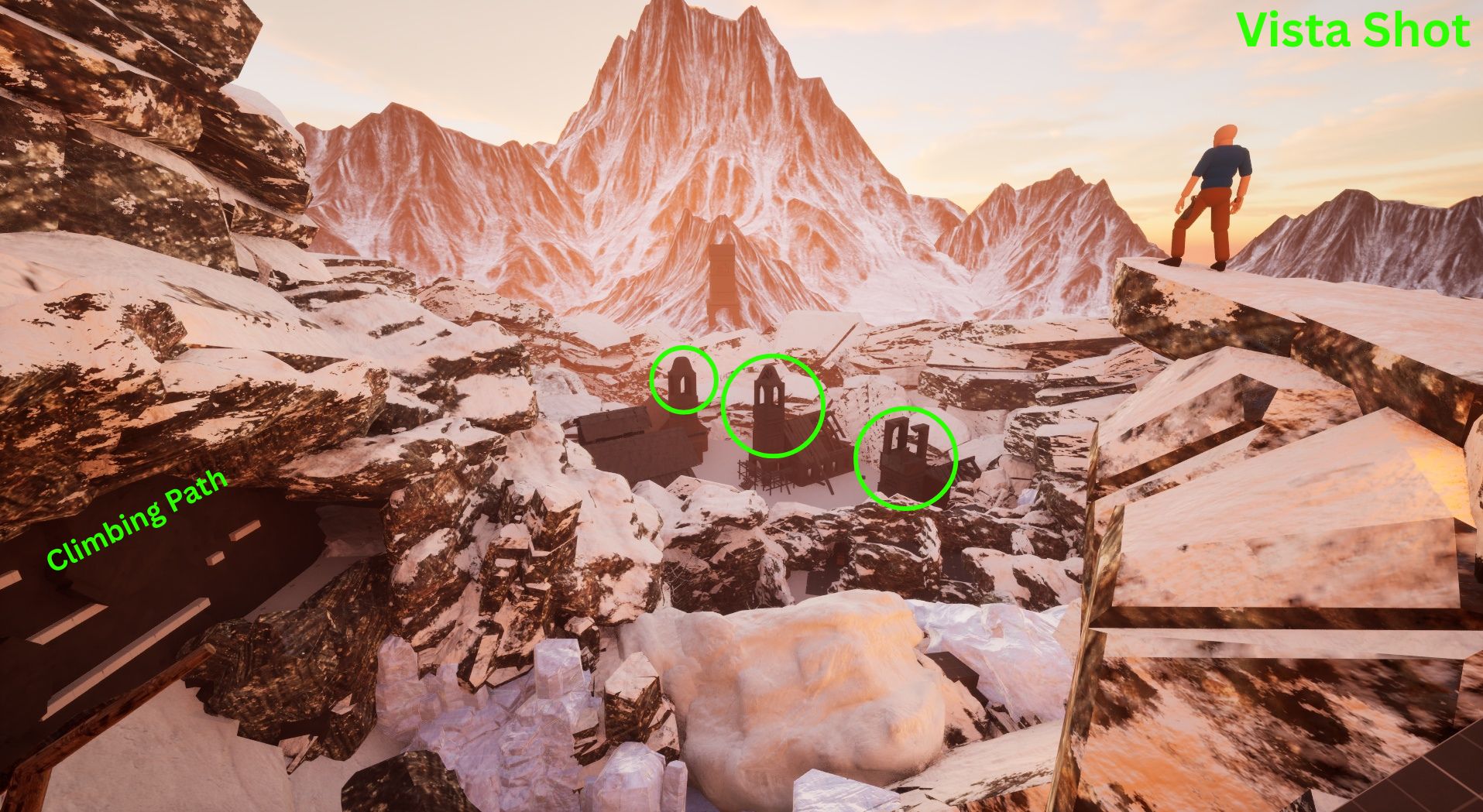
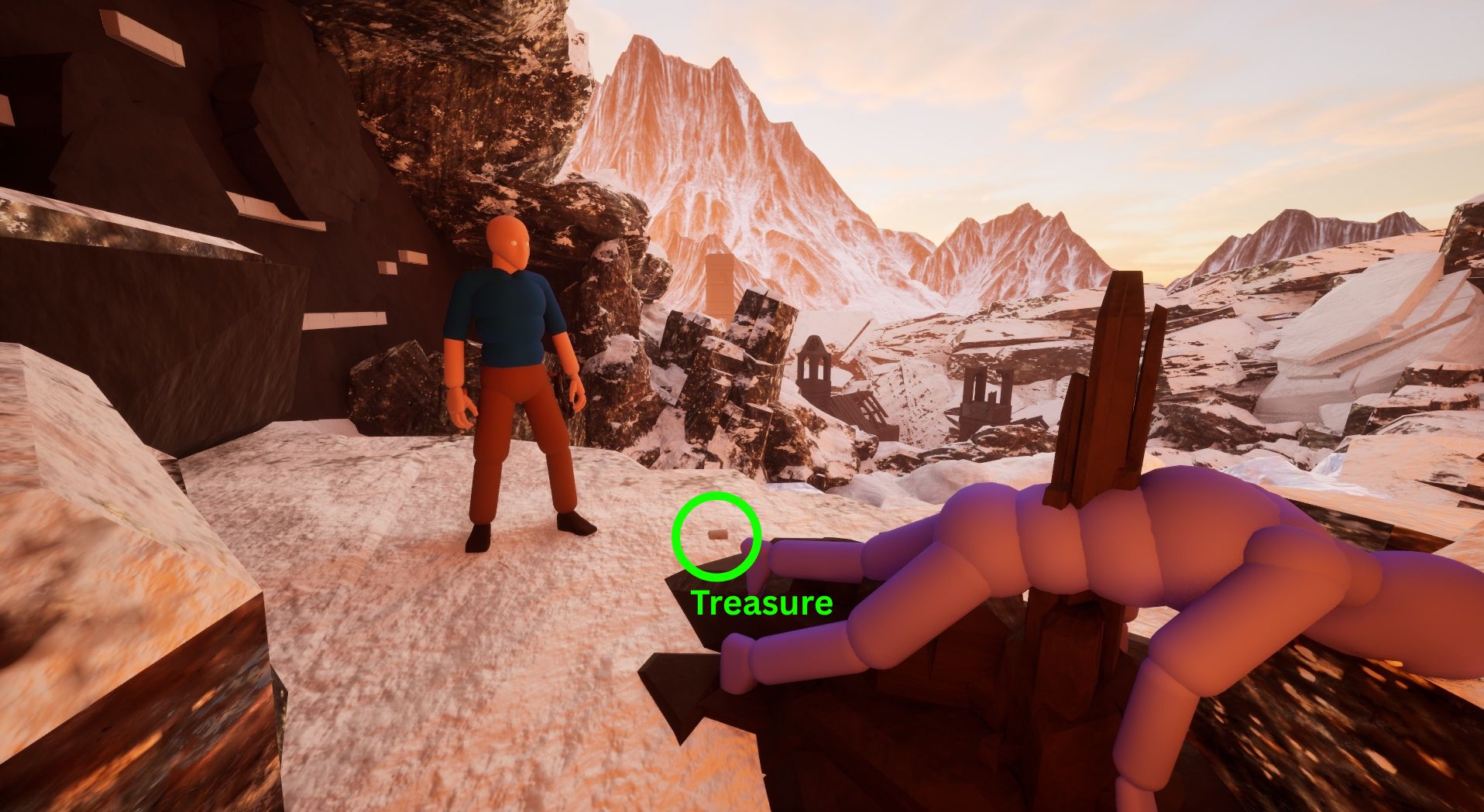
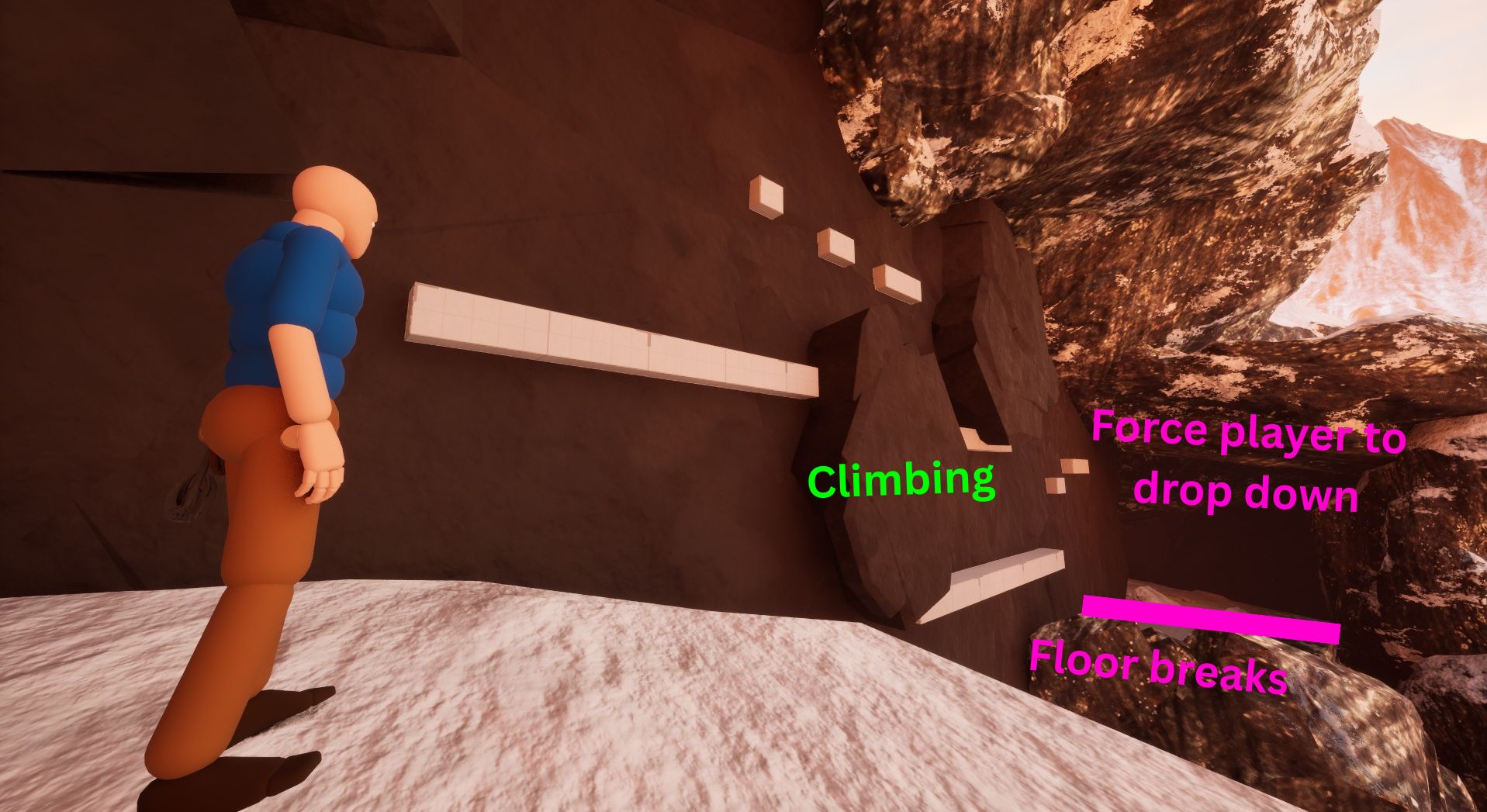

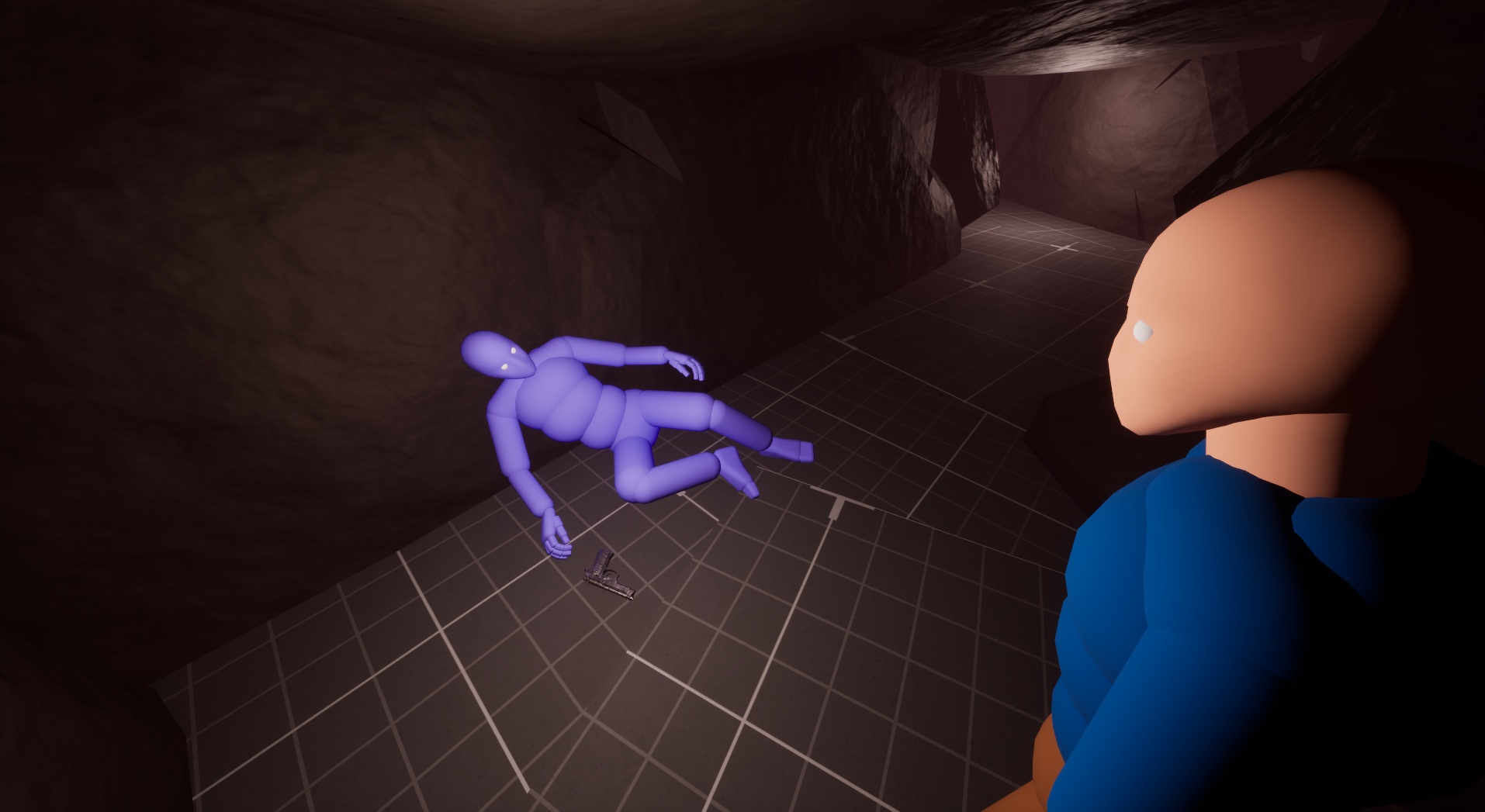
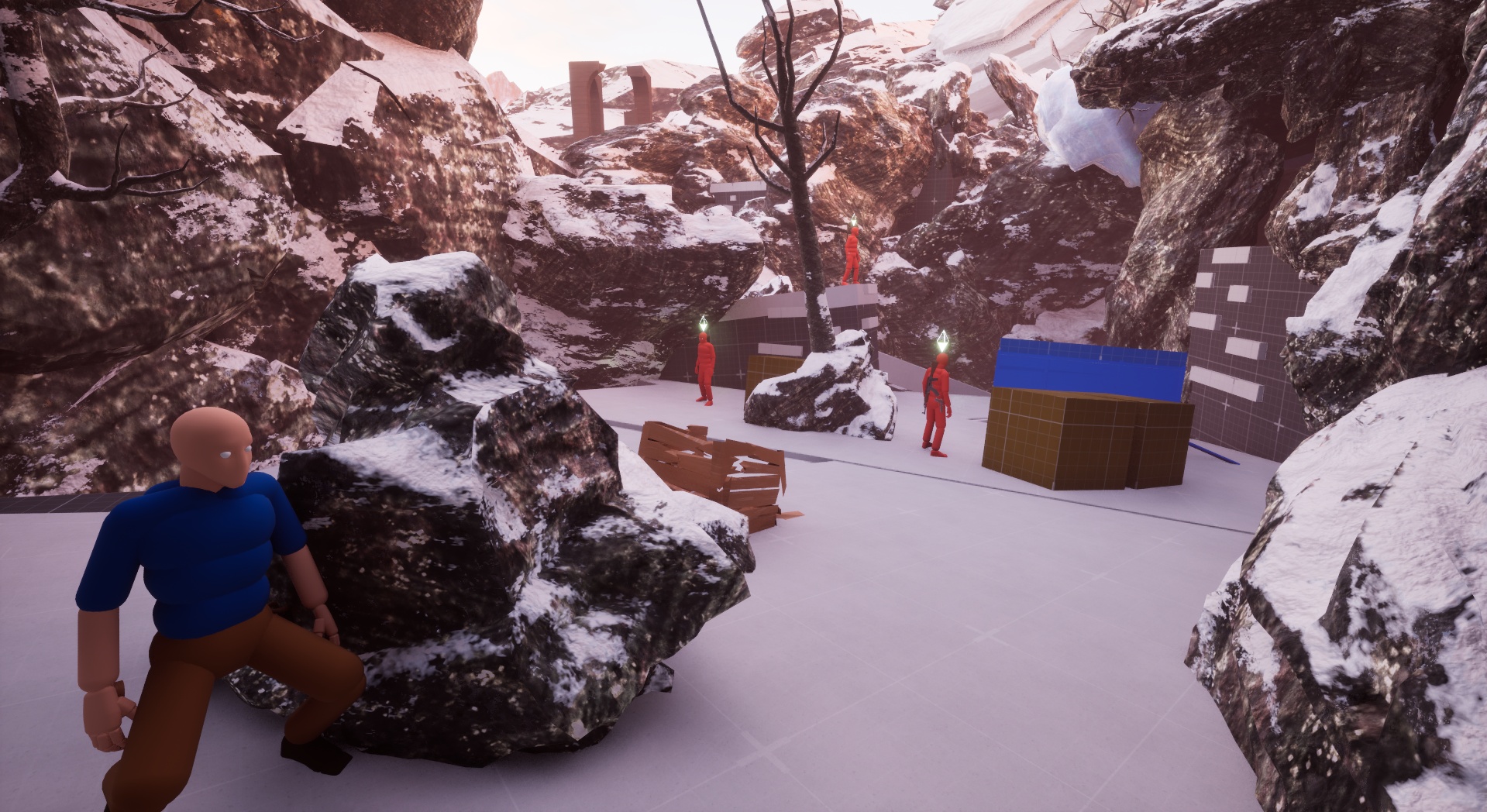
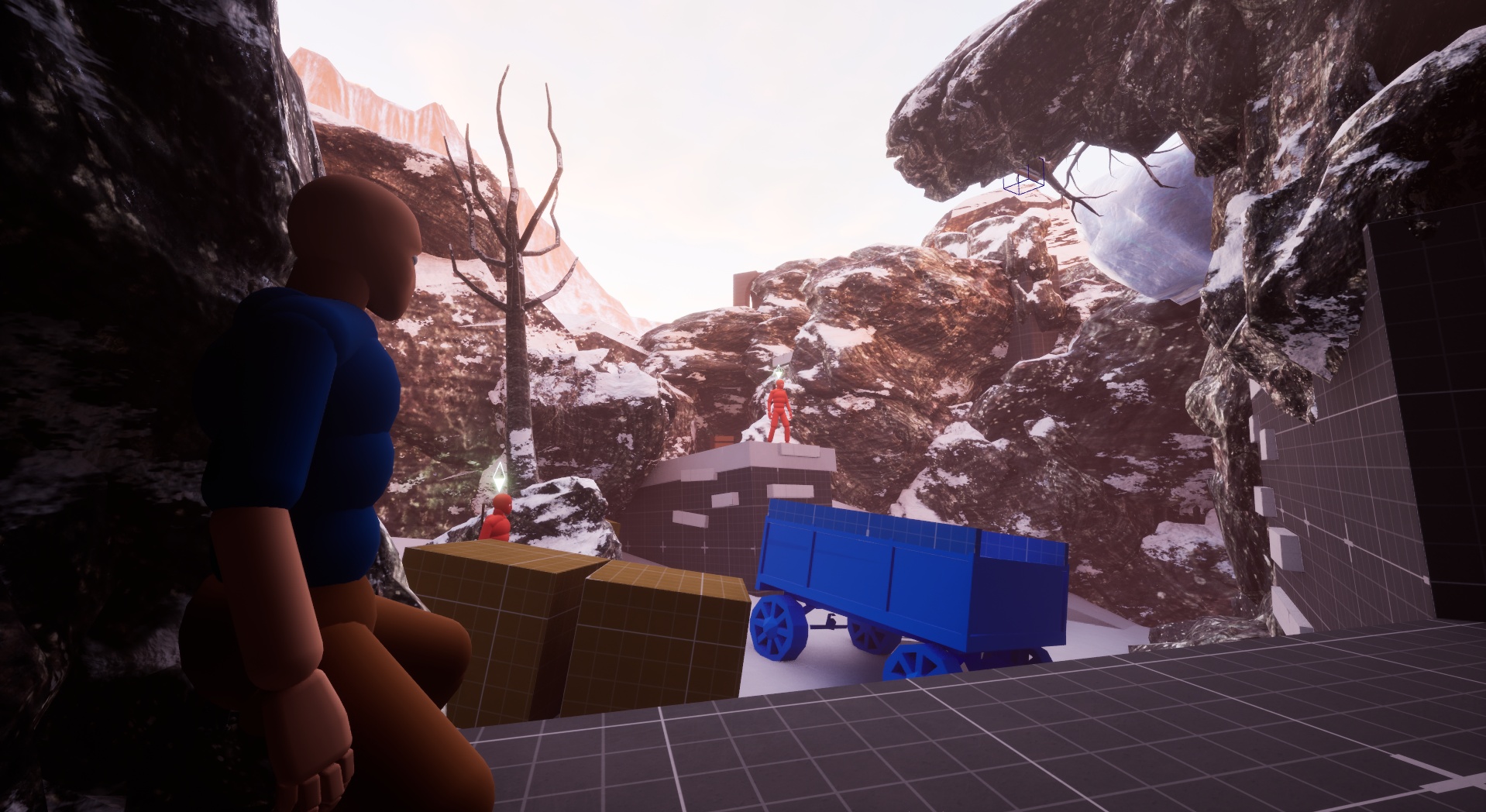
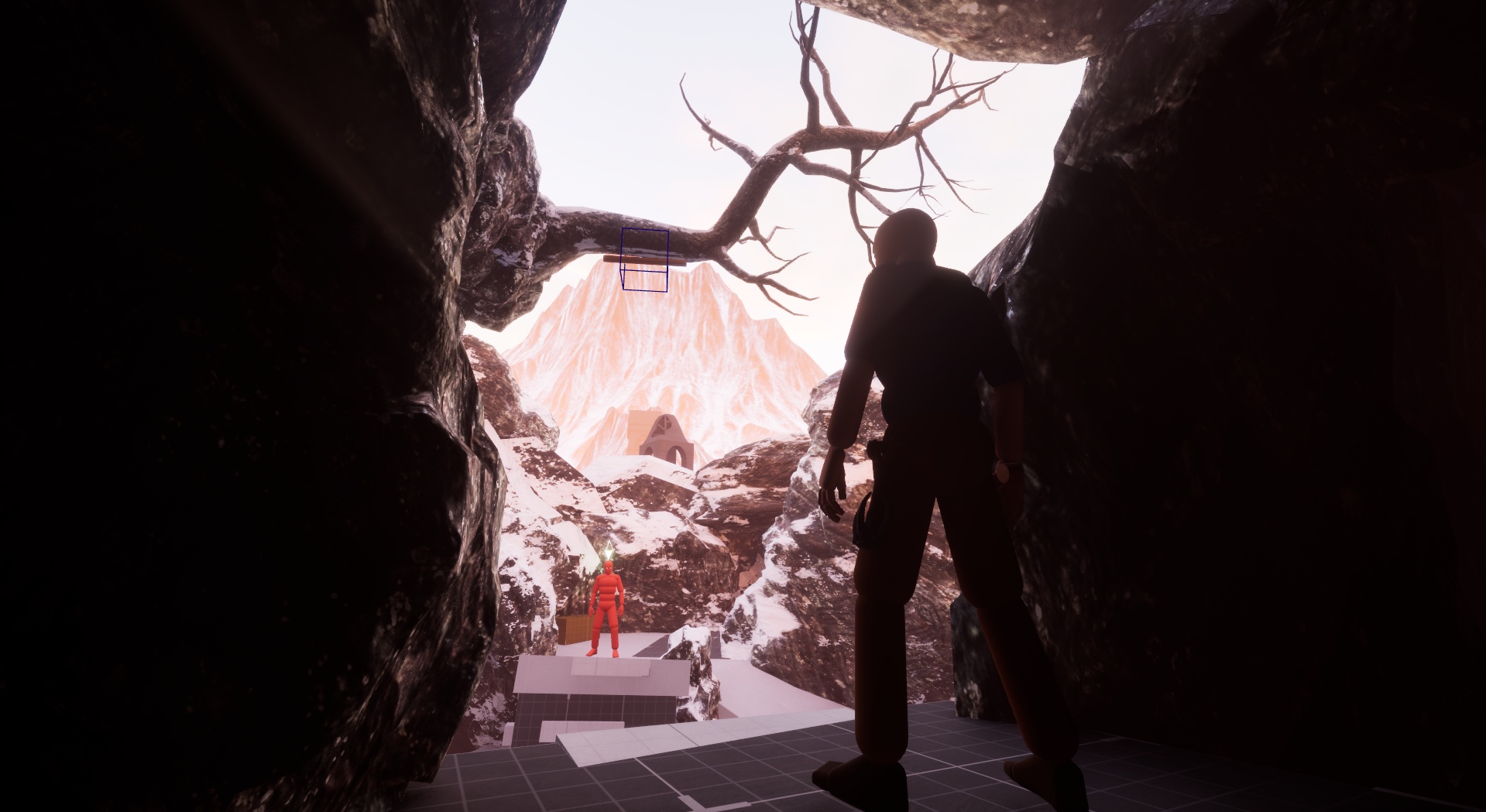
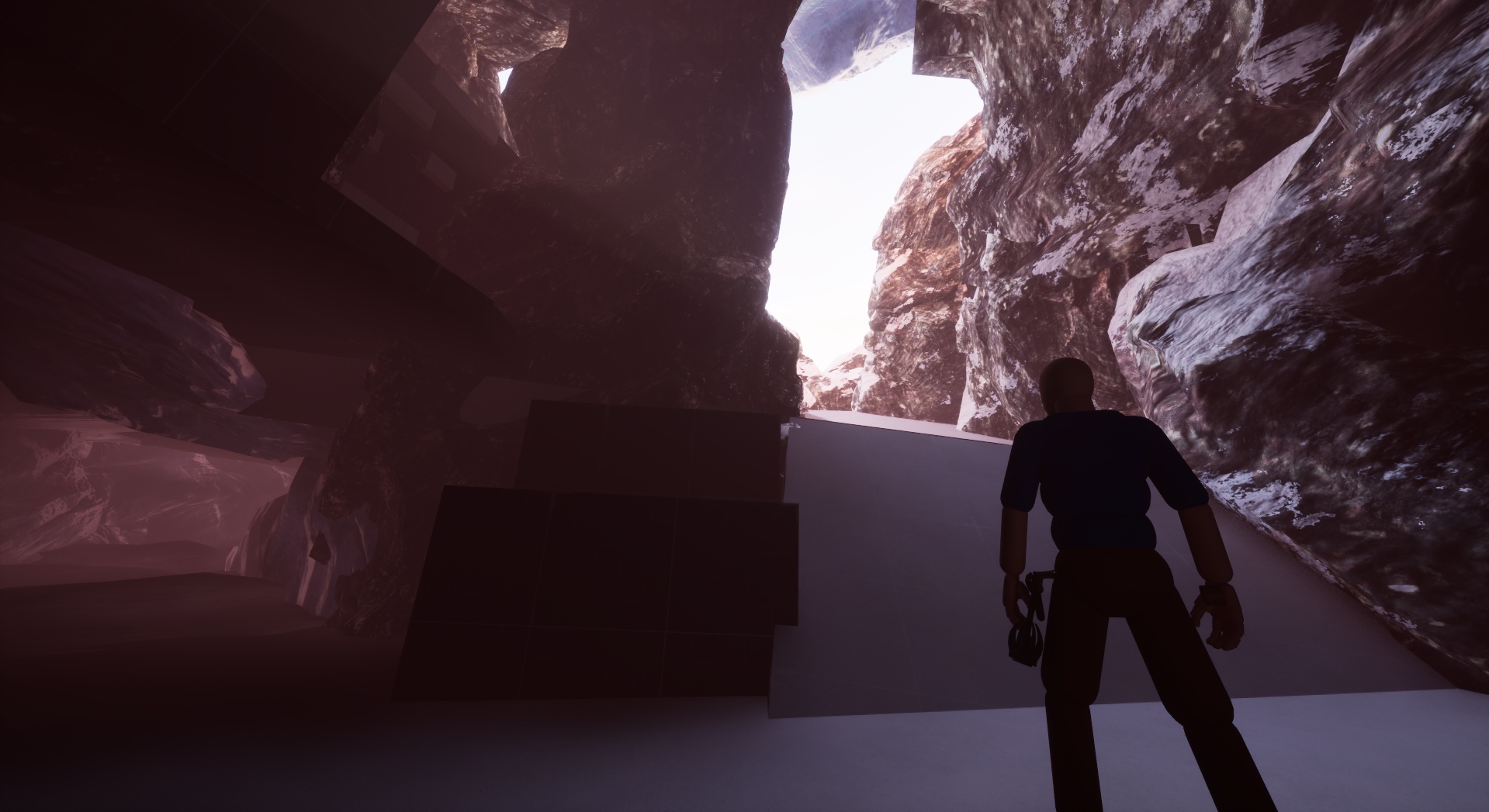
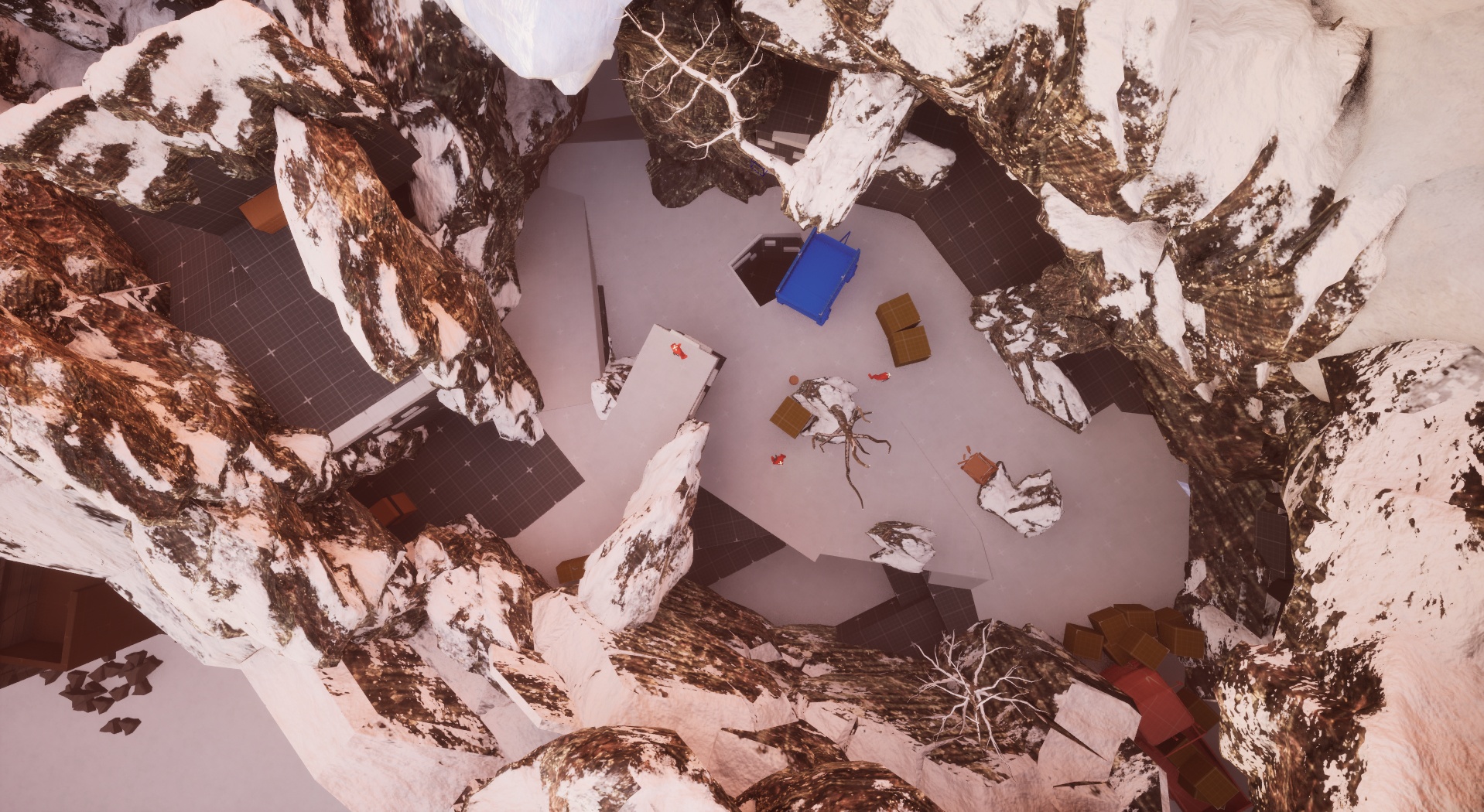
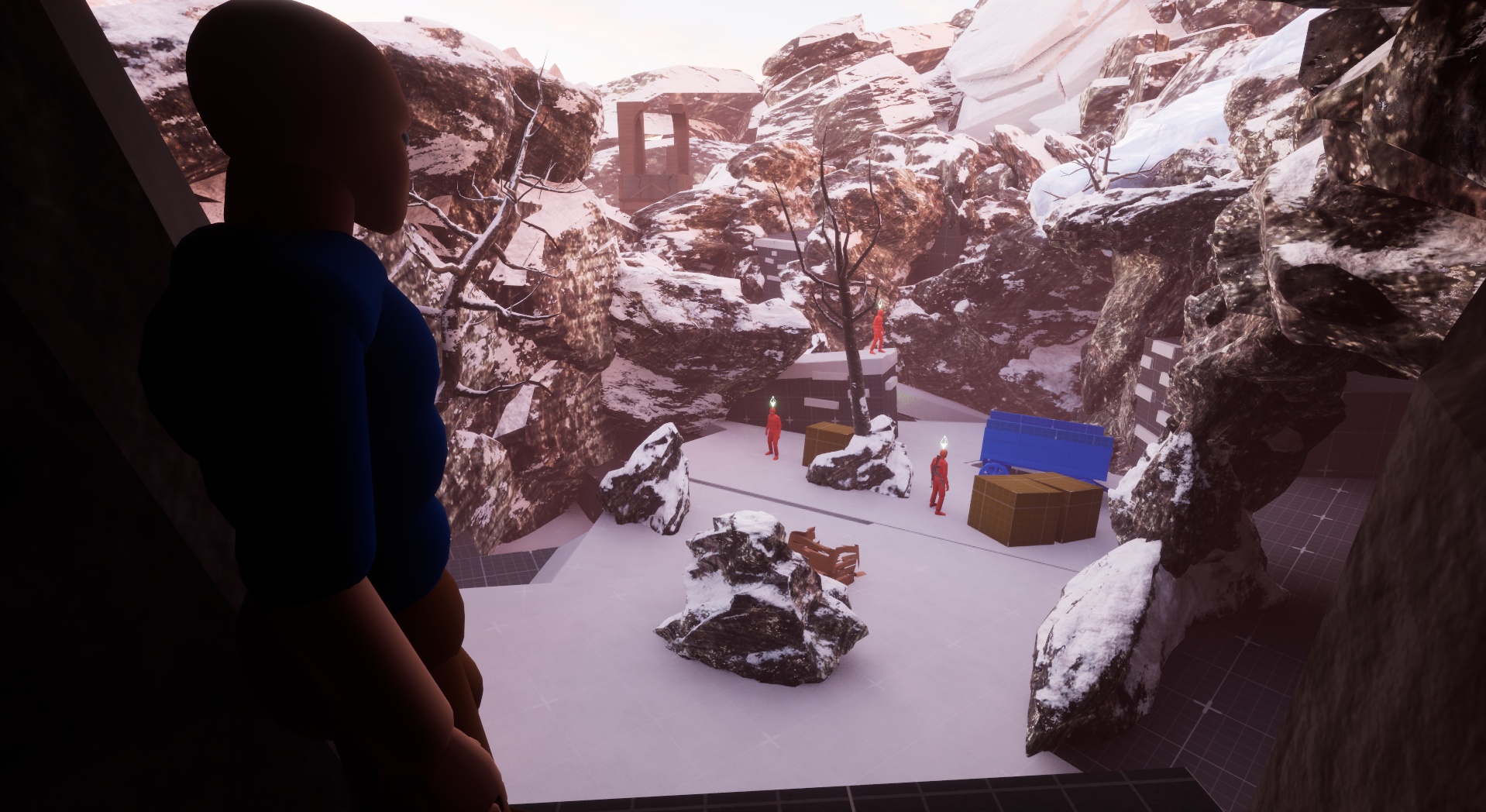
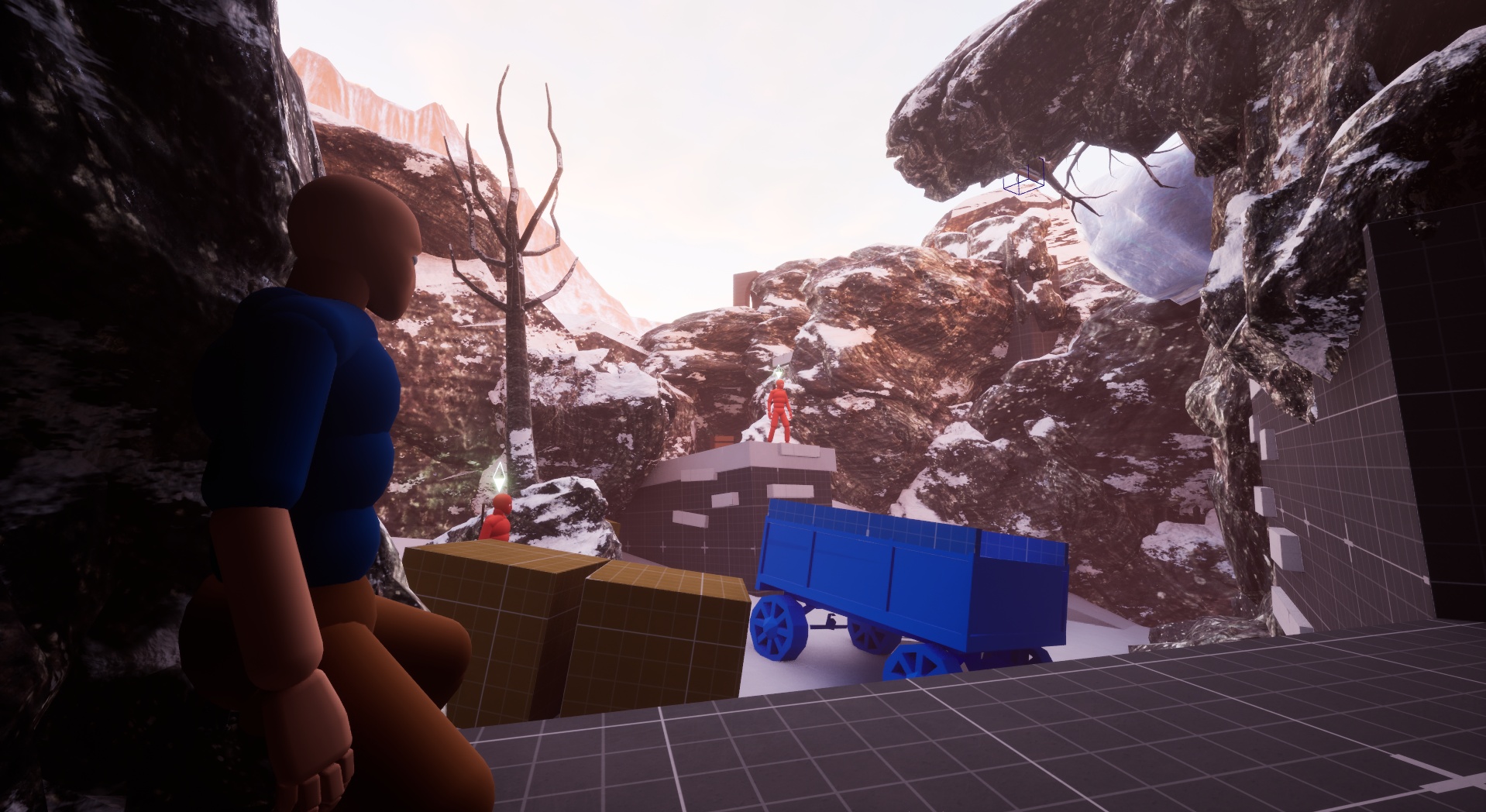
With the forest encounter, I wanted the player to feel empowered by their mobility while also feeling the tension of an enemy threat. I strategically placed a dead body right before the encounter to hint to the player that danger is approaching. I then set them up from a vantage point to have a clear read of their opportunities before properly entering.
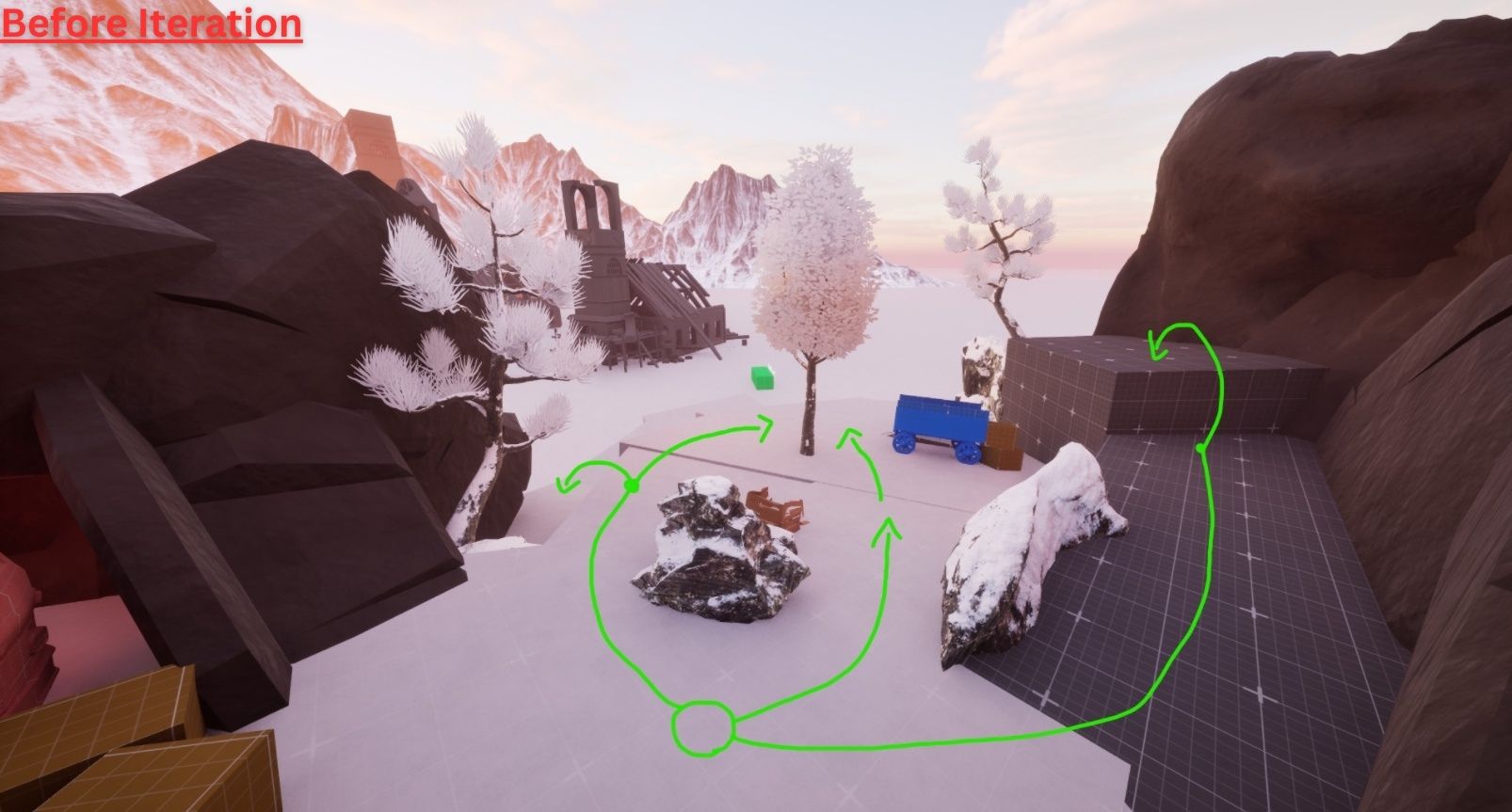
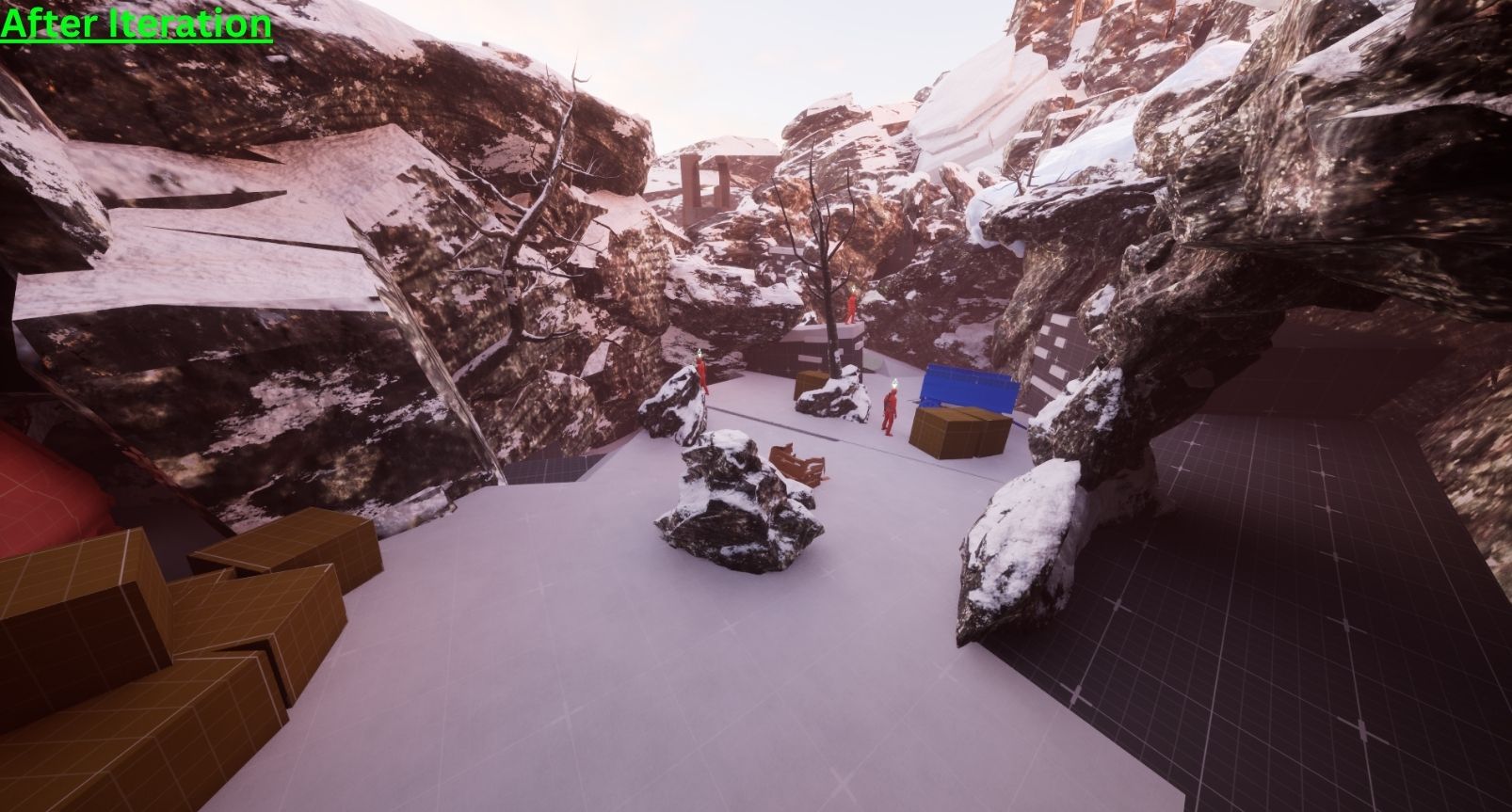
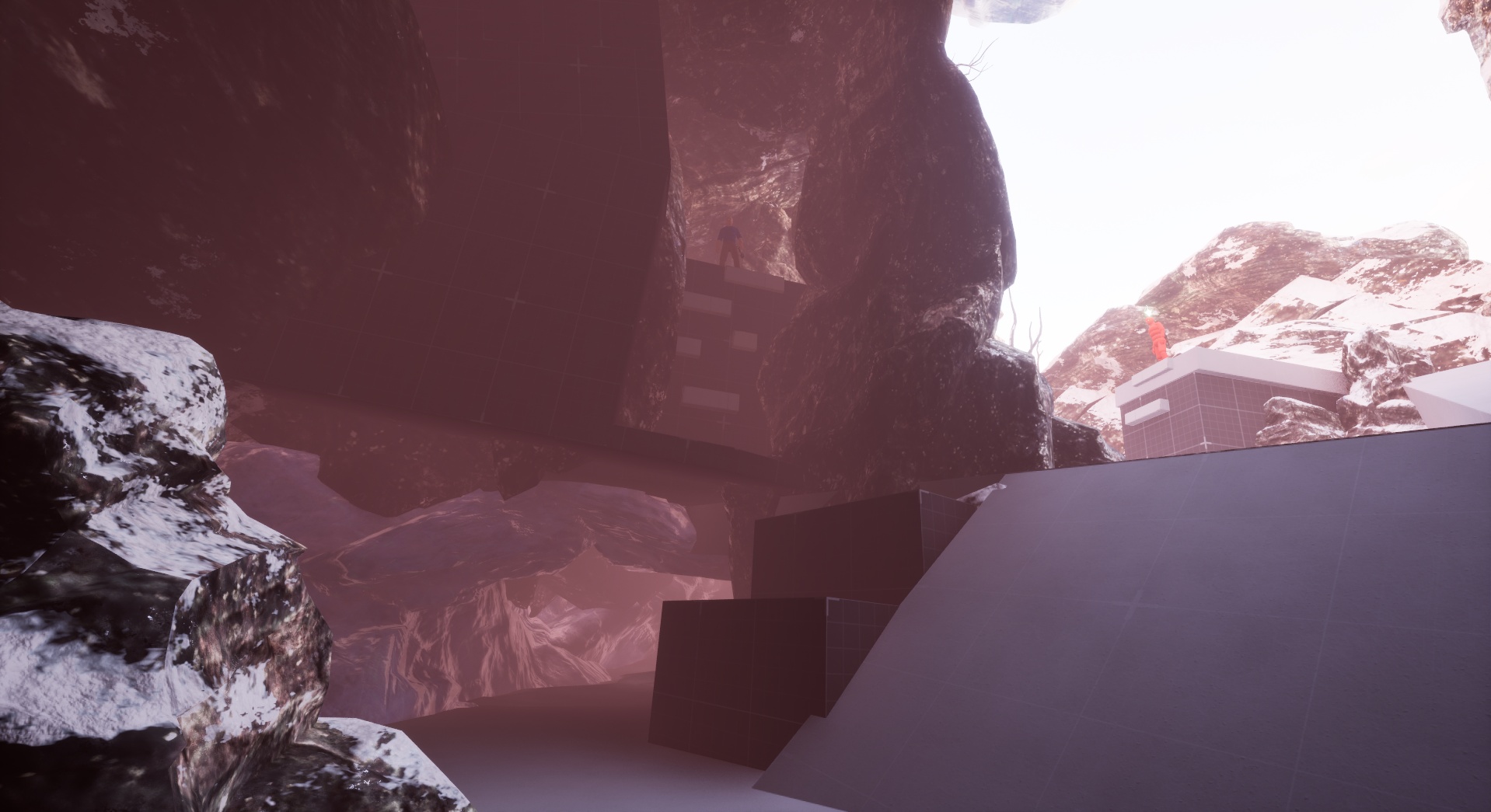
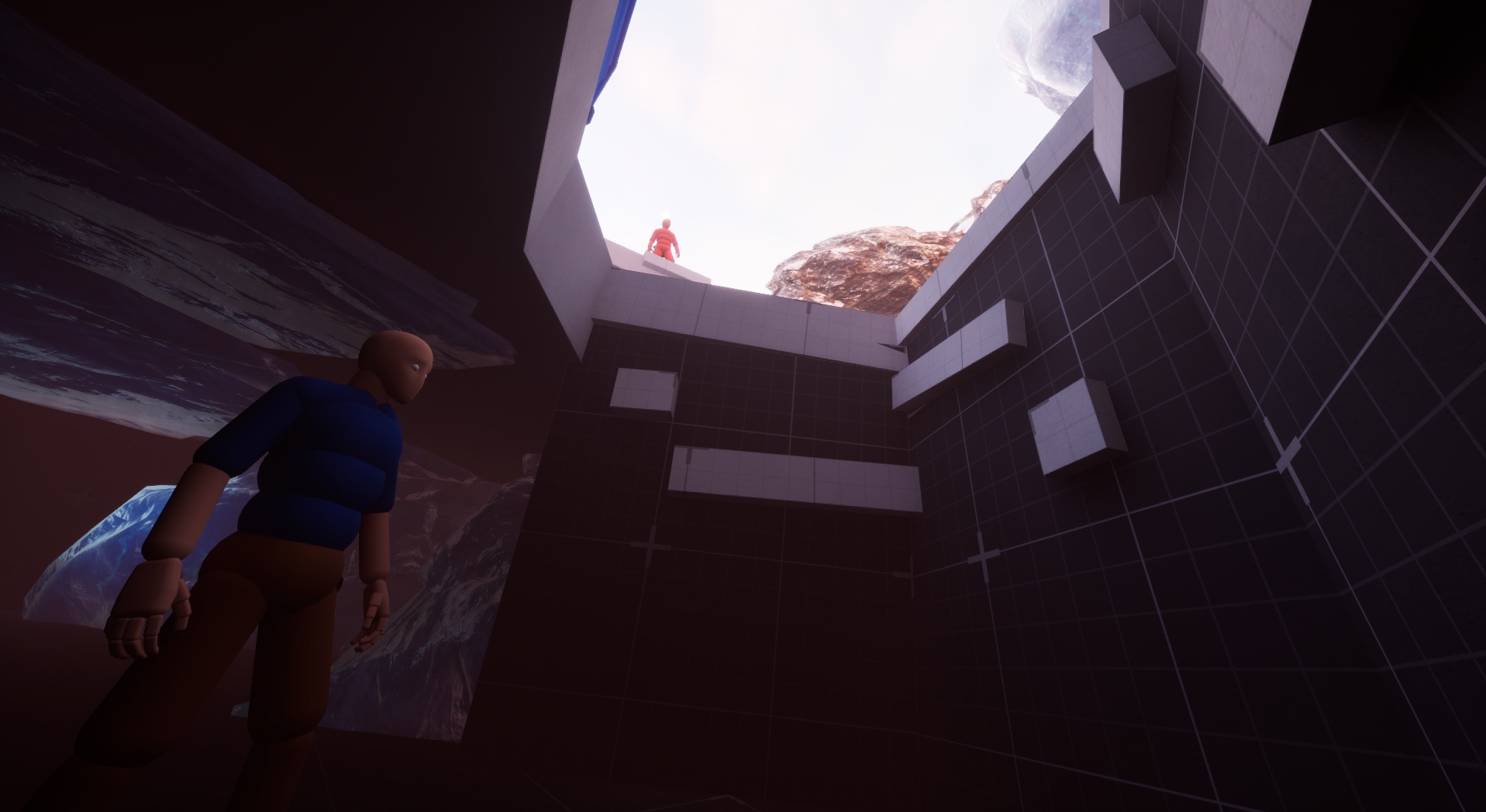
I took a 3-lane approach to this combat space when building it, but I wanted an added layer to that formula. So, I implemented a small ice cave underneath the snow floor that provides a nice flank route to those who find it. It also provides access to a hole in the ground that can be used mid-combat to get the advantage on the enemy. In addition, I also added a tree for the player to utilize as a grapple point to incorporate a familiar mechanic in a new situation.
I gated this combat arena by requiring the player to do a crate-moving puzzle in order to climb out. This way, if the player attempted to skip past everything, they’d be likely killed by enemies before being able to progress.